Skip to content
RACK:RATIO

HUB 06 · Small-Space Gym Guides

Apartment Home Gym Flooring: Protect the Floor and the Neighbor

The cheapest, most renter-friendly floor is interlocking foam tiles — they lift out when you move and quiet the room below.

By Stephen V.Reviewed How we research
#ad

We earn a commission when you buy through our Amazon links, at no extra cost to you. It never changes our rankings, and we say so when the cheaper product is the better buy. How this works.

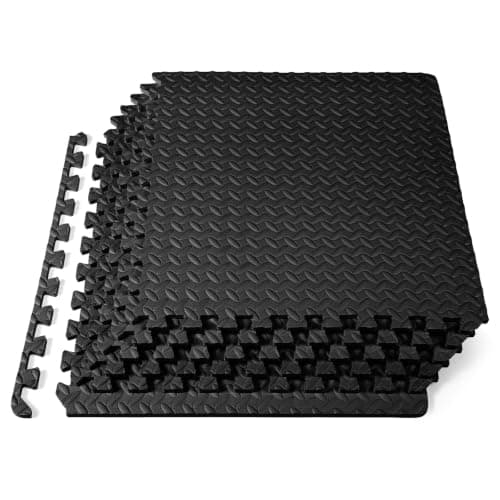
For an apartment gym, the best flooring is interlocking half-inch EVA foam tiles: they protect a rented floor from dropped weights and rack feet, cut the impact noise reaching the neighbor below, need no adhesive, and lift out in seconds when you move. Our pick is the ProsourceFit puzzle mats.

Flooring is the piece of a home gym people skip and then regret — usually after a scuffed floor costs a deposit or a downstairs neighbor knocks. It does two jobs at once: it protects the surface you don't own, and it absorbs the impact that would otherwise travel through the floor as noise and vibration. In a rental, both of those matter more than they would in a garage, which is exactly why we treat flooring as core kit rather than an accessory.

Why interlocking foam tiles win for renters

Rubber rolls and glued-down mats do a great job in a garage you own, but they are the wrong answer in a rental. Interlocking foam tiles win on the two things a renter cares about: reversibility and cost. They jigsaw together with no adhesive, so there is nothing to peel up or damage on move-out; you can cover exactly the footprint you train on and no more; and they cost a fraction of a rubber floor. When you leave, they lift out and come with you.

What foam tiles do well

  • Protect hardwood, laminate or tile from dumbbells, bench feet and rack posts.
  • Deaden footfall and light impact so less noise reaches the unit below.
  • Give a stable, slightly cushioned surface for floor work and stretching.
  • Interlock with zero adhesive and lift out clean when you move.

Where foam has limits

Half-inch foam cushions but does not silence a heavy loaded barbell dropped from height — no thin mat does. For that you want a dedicated lifting platform or thicker rubber under the drop zone, and ideally you avoid dropping at all in an apartment. Foam edges can also dent under a loaded rack foot over time, so put the densest support under concentrated loads. For the drop problem specifically, see our guide on lifting without annoying the neighbors.

Our pick

The ProsourceFit puzzle mats are the default for a compact apartment gym: half-inch EVA tiles that cover a useful area per pack, interlock without tools or glue, and lift out when you move. They are the cheapest, most renter-friendly way to protect a floor and quiet a room at once — which is why they appear in every kit we recommend, from the compact home gym to the under-$500 build. Put them down before your first session, not after the first scuff.

Flooring is one line of a bigger plan. If you're setting up from scratch, our apartment setup plan puts the floor in the right order among the other decisions, and if cardio is part of your gym, the treadmill-and-neighbors guide covers the vibration side of the same problem.
The short answer

Quick picks

#ProductBest forScorePrice
01
ProsourceFit ProsourceFit Puzzle Exercise Mats
ProsourceFit Puzzle Exercise Mats

Half-inch interlocking foam tiles that protect a rented floor, cut impact noise to the apartment below, and lift out in seconds when you move. The cheapest, most renter-friendly flooring for a compact gym.

Protecting the floor (and the neighbor)
8.8
$26.99Amazon

#ad · Live prices from the Amazon Product API, as of Jul 22, 2026. Where we have no verified live price, we show none — we would rather leave a gap than print a number that has rotted.

In detail

The picks, in full

01
ProsourceFit ProsourceFit Puzzle Exercise Mats

Protecting the floor (and the neighbor)

ProsourceFit Puzzle Exercise Mats

½-inch EVA foamInterlocking tiles24 sq ft / packRemovable
8.8/10

Half-inch interlocking foam tiles that protect a rented floor, cut impact noise to the apartment below, and lift out in seconds when you move. The cheapest, most renter-friendly flooring for a compact gym.

Good

  • Protects a rented floor with zero adhesive
  • Deadens dropped-weight and footfall noise
  • Lifts up and moves with you

Trade-offs

  • Half-inch foam won't fully silence heavy drops
  • Edges can dent under a loaded rack foot
Fit
9
Value
9
Install
10
Build
7

Skip this if…

you'll drop heavy loaded barbells — foam tiles cushion but don't replace proper lifting platforms for that.

Spec sheet

Type
Interlocking EVA foam tiles
Thickness
½ inch
Coverage
24 sq ft (6 tiles) per pack
Install / renter
Interlock — no adhesive, lifts out
Noise / floor
Cuts impact + protects the floor below
Unit weight
Light
$26.99View on Amazon

Price as of Jul 22, 2026. Prices change — Amazon's is the one that counts.

#ad · we may earn a commission from this link to ProsourceFit Puzzle Exercise Mats

How we picked

We don't run a testing lab

We compiled published specifications, manufacturer documentation and aggregated owner reviews, then scored each product against a published rubric that weights fit-for-small-space, value, install reversibility and build. The scores are judgments from documented research — they are notmeasurements we took, because we don't have a lab and we're not going to pretend we do. Every dimension is cited in Sources.

Questions

Frequently asked

What is the best flooring for an apartment home gym?
Interlocking half-inch EVA foam tiles are the best all-round choice for a renter: they protect the floor, cut impact noise, need no adhesive and lift out when you move. Rubber rolls are tougher for heavy garage use but are heavier, pricier and far less renter-friendly. For a compact apartment gym, foam tiles like the ProsourceFit mats hit the right balance.
Do foam mats reduce noise for downstairs neighbors?
They reduce it, within limits. Foam tiles absorb footfall and light impact, so ordinary dumbbell and bench work transmits much less to the unit below. What they can't do is silence a heavy barbell dropped from height — that needs a thicker platform, or better, not dropping the bar. For light-to-moderate training, mats make a real, audible difference.
Will foam tiles protect hardwood or laminate floors?
Yes — that is their primary job. A half-inch foam layer keeps dumbbells, bench feet and rack posts from denting or scratching hardwood, laminate or tile, and spreads the load so concentrated points do less damage. Put the densest support under a loaded rack foot, since foam can compress under very high point loads over time.
How much flooring do I need for a small home gym?
Cover the footprint you actually train on, plus a little margin. For a bench-and-dumbbells setup that is a modest patch; interlocking tiles let you buy packs and expand the area exactly to your zone rather than flooring the whole room. Measure your training area and add a row of tiles around it for movement.
Can I use foam tiles under a squat rack or power tower?
Yes, with a caveat: foam supports these fine for normal use, but concentrated point loads from a loaded rack foot can dent thin foam over time. Place the equipment on the flattest, most supported tiles, consider a firmer pad or plywood spreader under the feet for heavy setups, and check periodically for compression.

Keep reading

Receipts

Sources

We don't run a testing lab, and we don't pretend to. Every dimension and rating traces to a manufacturer spec sheet or manual, named and linked above. Where a maker doesn't publish a number, the spec reads "Not published" rather than a guess. Read our full method.