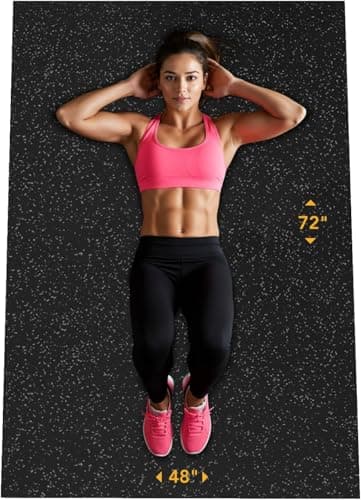
For most apartments the Rubber King 7 mm mat is the pick: 24 square feet of real recycled rubber in a single 36 lb piece, which one person carries upstairs in one trip, and the only product here whose low-odor claim carries a third-party certification. Buy the American Floor Mats Fit-Lock tiles instead if the stairwell is the problem or you want 3/8 in of thickness — they arrive as six separate 4 sq ft pieces. If the room cannot air out, the Baselayer TPE tiles are the no-odor answer at roughly double the price.
Rubber is the floor every garage gym uses and the floor most apartment guides quietly skip, for three reasons that have nothing to do with how it performs underfoot: it is heavy, it smells when it is new, and the standard formats — 4 by 6 ft stall mats and 50 ft rolls — are built for a truck and a concrete slab, not a stairwell and a lease. None of that makes rubber wrong for an apartment. It makes the format the decision.
What this page covers, and what it does not
"Gym flooring" covers two different materials that behave differently under weight, and mixing them up is how people end up with the wrong floor:
- True rubber (this page). Recycled crumb rubber or molded TPE, dense and heavy, 3 mm to 1/2 in thick. It resists point loads, does not dent under a rack foot, grips the subfloor, and lasts effectively forever. It is what you want under weights.
- EVA foam tiles. Light, cheap, thick, and soft. They cushion a floor and a knee, and they compress permanently under a rack upright or a dumbbell corner. We rank those separately in the home gym mat roundup, and for a renter on a budget they are still often the right call — our apartment flooring guide explains when foam wins outright.
If your gym is bodyweight work, bands and a yoga mat, stop here and buy foam. This page is for the apartment that has actual iron in it.
The three specs that decide it upstairs
Rubber flooring listings lead with thickness and square footage. In a house those are the right numbers. In an apartment these three come first:
- The weight of one carryable piece. Not the order weight — the weight of the heaviest single object you have to get from the curb to your door. That is 13 lb for the thin Rubber King mat, 36 lb for the 7 mm, 60 lb for the roll, and an unpublished per-tile figure for the interlocking sets. A 4 by 6 ft, 3/4 in horse stall mat — the format every garage gym article recommends — weighs close to 100 lb, and that is why no stall mat appears on this page.
- Format: mat, tile or roll. A mat is one piece and one trip. Tiles come apart, go up a staircase in armfuls, and can be extended later or split between two rooms. A roll gives the most coverage per dollar and the fewest seams, and it is the hardest of the three to move alone and to trim correctly.
- Odor. Recycled crumb rubber off-gasses, strongly at first. In a garage you open the door. In a one-bedroom with the gym corner ten feet from the bed, it is the complaint that gets the floor returned. Look for a published air-quality certification, or buy TPE, which does not smell at all.
What rubber does for the neighbor below — and what it doesn't
This is the honest part, and it is the reason most people buy rubber in an apartment in the first place. Rubber under weights does two things well: it protects the floor finish from point loads and scuffs, and it takes the sharp crack out of metal meeting a hard surface. That crack is the airborne noise in the room with you.
What it does not do is decouple your floor from the structure. A dropped dumbbell puts energy into the joists as a low-frequency thud, and low frequencies pass through mass rather than being absorbed by a few millimeters of it. Half an inch of rubber measurably softens the impact; it does not make a 50 lb drop inaudible one floor down. Anyone promising that is selling something.
The practical version: rubber plus controlled lowering solves the neighbor problem. Rubber plus dropping does not. That is the same conclusion we reach from the other direction in lifting in an apartment without annoying neighbors and in how to soundproof a home gym, and it has not changed because the floor got thicker.
How the five compare
| Floor | Format | Coverage | Thickness | Heaviest piece |
|---|
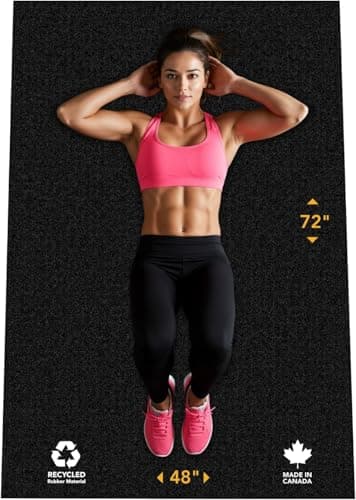
| Rubber King 7 mm | One-piece mat | 24 sq ft | 7 mm | 36 lb |
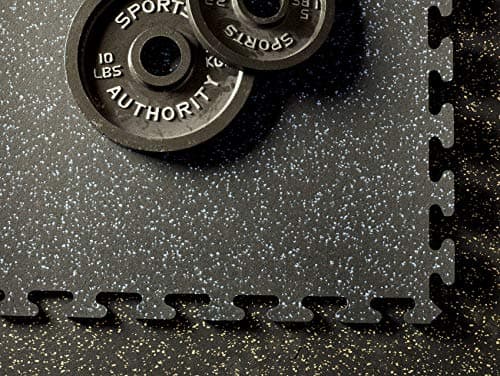
| AFM Fit-Lock 3/8" | 6 interlocking tiles | 24 sq ft | 3/8 in | Not published |
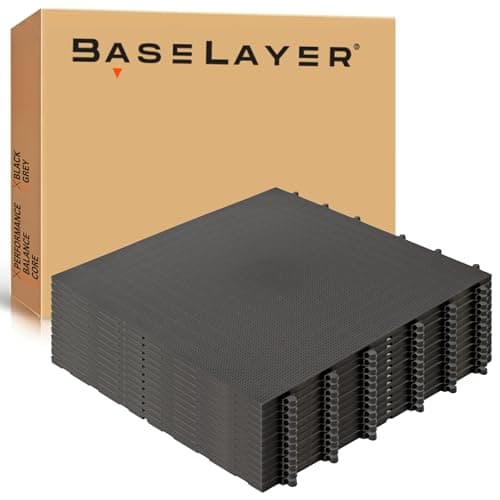
| Baselayer TPE 1/2" | 12 interlocking tiles | 30 sq ft | 1/2 in | Not published |
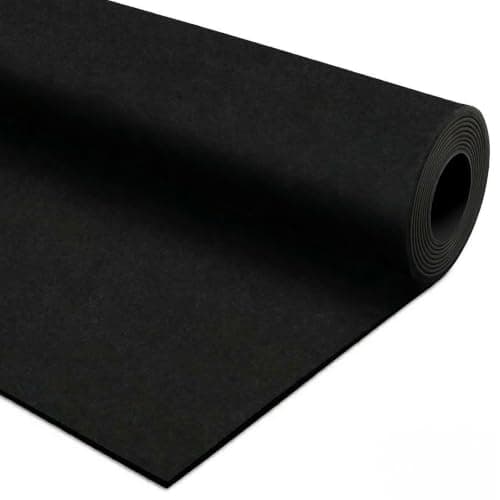
| Traxxon roll 1/4" | Roll, cut to fit | 40 sq ft | 1/4 in | 60 lb |
| Rubber King 3 mm | One-piece mat | 24 sq ft | 3 mm | 13 lb |
Two makers do not publish a per-tile weight, which is the figure an upstairs buyer most needs. We are not going to estimate it from thickness and area — but a 2 ft square of 3/8 in rubber is a two-hand lift rather than a one-hand one, and you will be making several trips.
Thickness: what each step actually buys
Rubber is dense, so small thickness increases are large weight increases. What each band is for:
- 3 mm. Floor protection and grip. It stops castors, sweat and scuffs and keeps a bike or treadmill from walking. It absorbs nothing.
- 1/4 in (6.4 mm). The general-purpose apartment thickness. Fine under a bench, a rack that stays put, and dumbbells you set down rather than drop.
- 3/8 in to 1/2 in. Where rubber starts to genuinely spread a point load — the thickness worth having under a loaded rack upright or a kettlebell that gets returned to the floor with some enthusiasm.
- 3/4 in and up. Drop territory, and out of scope here: stall-mat weights, stall-mat smell, and a stack that no one is carrying up two flights.
A note on the layer underneath. Rubber over carpet is explicitly not recommended by both Rubber King products here, and the reason is stability rather than damage — the mat floats on the pile and a rack on top of it rocks. If the room is carpeted, read home gym on carpet before you buy any floor at all.
The smell, and how long it lasts
Recycled crumb rubber is made from tires, and new rubber flooring smells like it. In a ventilated garage the smell is a two-week story. In an apartment it is the single most common reason this purchase gets returned.
Three ways to deal with it, in order of how well they work. Buy TPE instead — the Baselayer tiles are molded thermoplastic rather than ground tire, and the maker states plainly that there is no odor. Buy a product with a published air-quality certification — both Rubber King mats here state third-party FloorScore certification, which is a real VOC standard rather than an adjective. Or air the new floor out somewhere else first: a balcony, a garage, a spare room with the window open for a few days before it comes into the room you sleep in.
What does not work is masking it. A rubber floor in a closed bedroom will announce itself for weeks, and no amount of cleaner changes that.
Getting it into the building
Measure the path, not just the room. The awkward parts of this delivery are the stair turn, the elevator door and the apartment door frame — a 4 by 6 ft mat arrives rolled into a tube roughly four feet long, and a rolled 40 sq ft sheet is both heavy and floppy, which is a worse combination on stairs than heavy and rigid.
Tiles are the format that solves this outright: a 24 sq ft set is six separate pieces, so it goes up in two or three armfuls and through any door in the building. That advantage is worth more than the price difference if you are above the second floor without an elevator, and it is why the Fit-Lock set ranks where it does despite costing more per square foot than the roll.
Whatever you buy, let it relax flat before you judge it. Rolled rubber remembers the tube for a day or two; weighting the corners with plates or books while it settles saves a lot of swearing.
What it costs you at move-out
Nothing on this page uses adhesive, and that is deliberate — every product here lays loose or interlocks, so the floor lifts out and leaves with you. Two cautions worth knowing before you lay it:
- Dark rubber on light vinyl or LVT can stain. Some rubber compounds migrate into soft vinyl over months. On hardwood, tile and laminate this is generally not a problem; on a cheap vinyl plank floor in a rental, put a thin barrier sheet underneath and check it after a few weeks.
- Trapped moisture marks anything. Sweat under a mat that never gets lifted will eventually mark the floor beneath it. Lift the floor and let it breathe every few months — with tiles that is a two-minute job.
The other half of protecting a deposit is what happens on the way out the door; how to move a home gym covers the rest of it, and renter-friendly home gym ideas covers everything else in the room that installs without a drill.
Rubber or foam: decide by what hits the floor
The clean rule: buy foam if nothing heavy ever touches the floor, and rubber the moment something does. Foam tiles are thicker per dollar and kinder to knees, and they take a permanent dent from a rack foot or a dumbbell corner within weeks. Rubber is thinner per dollar and unkind to knees, and it does not remember anything you put on it.
The hybrid answer most small apartments end up at is both: foam across the general working area for comfort, with a rubber mat where the weights actually live. A 4 by 6 ft rubber mat is almost exactly the footprint of a bench plus the space you stand a pair of dumbbells in, which is why that size dominates this category. If that is your plan, the rubber-topped tiles in our mat roundup are the middle option worth reading about first.
How much to buy
Measure the equipment, not the room, then add a standing margin:
- A bench and dumbbells: roughly 4 by 6 ft, which is one mat or one tile set.
- A squat stand or folding rack: the rack footprint plus about two feet in every direction you step. In practice 6 by 6 ft or more, so a roll or two tile sets.
- A treadmill, bike or rower: the machine footprint plus a foot at the back. A thin mat is enough; thickness under a machine buys you nothing but height.
Work out the equipment footprints first — how much space you need for a home gym lists them by item — and buy the floor to fit the gym rather than the room. Covering a whole bedroom in rubber is a lot of money and a lot of weight to carry upstairs for square footage you will never lift on.
Who should buy something else instead
- Your training is bodyweight, bands and yoga. Foam is thicker, softer and a third of the price — the mat roundup is the right page.
- The room is carpeted and staying that way. Read home gym on carpet first; both Rubber King mats advise against carpet, and a floating floor under a rack is a real hazard.
- You are trying to silence dropped weights. No floor sold to consumers does that in an apartment. Change what hits the floor instead — lifting in an apartment sets out what actually works.
- You only need a base under one machine. The thin mat here covers it, and the quietest cardio machines matters far more than what you put under them.
If none of that applies — if there is iron in the room, the floor is not carpet, and you would rather not explain a dent to a landlord — then rubber is the correct floor, and the five above are the ones whose published weights, thicknesses and certifications we can stand behind.