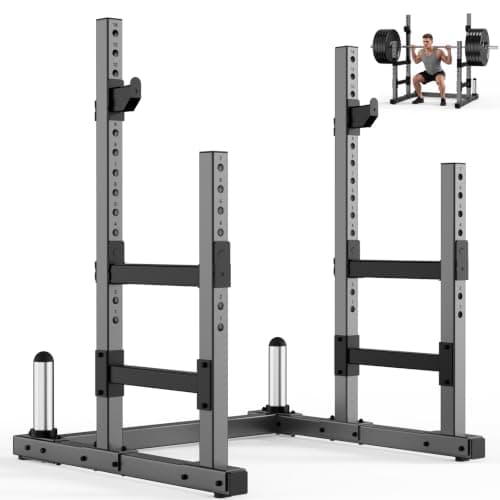
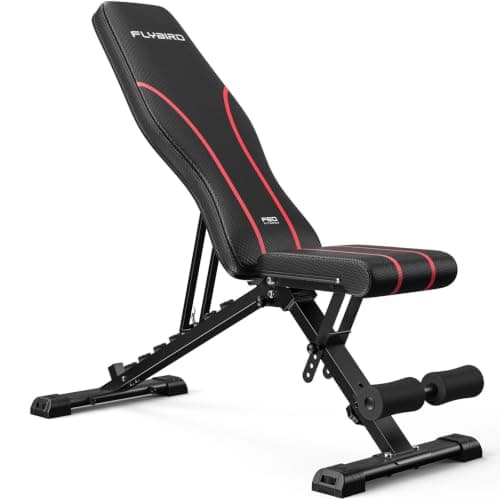
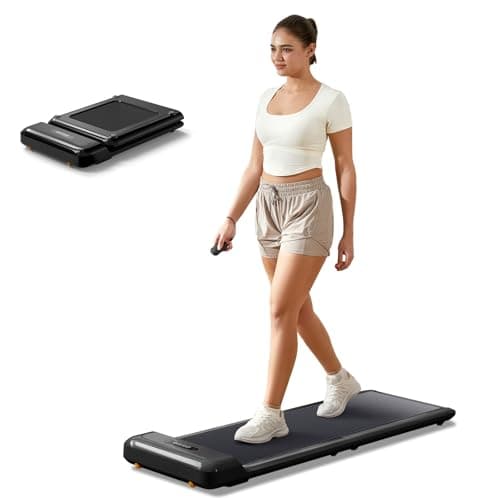
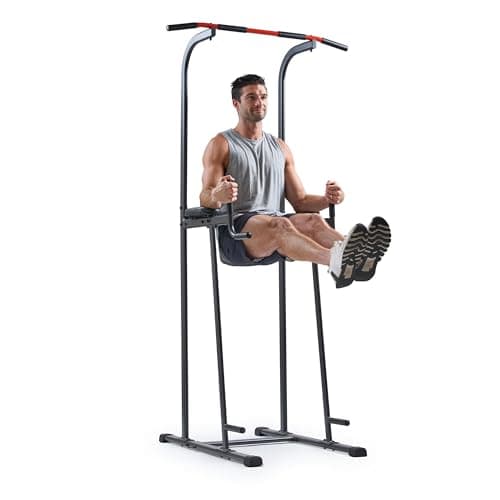
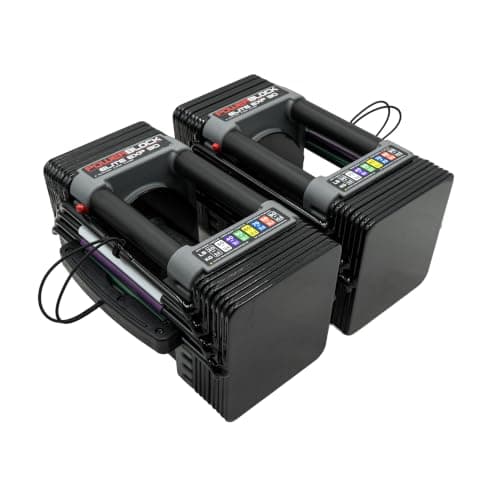
A compact home gym doesn't have to be a compromised one. Five well-chosen pieces — one adjustable dumbbell set, one no-drill rack, one folding bench, one walking pad and one power tower — cover strength, cardio and full-body work in a footprint you can still walk through. Our top small-space kit is the PowerBlock Elite EXP, the freestanding PASYOU squat stand, the FLYBIRD WB2 bench, the fold-in-half WalkingPad C2 and the Sunny Health power tower — one no-drill pick from each of the five categories on this site, chosen on footprint and fold rather than on topping its category's spec sheet.
The mistake almost everyone makes is shopping by feature list. In a small space the feature list is the wrong list: the number that decides whether a piece of gear works in your room is its footprint while you're using it and its footprint once it's put away. We build every Spec Block around those two numbers, plus the one the boxes never print — whether a renter is even allowed to install it. Buy by dimension first, and the feature list sorts itself out.
Here is how the five categories fit together. Start with load: a single pair of adjustable dumbbells replaces a whole rack of fixed weights, and the block-shaped PowerBlock is the shortest of them at every setting, so it eats the least shelf. Add a squat rack only if you barbell train — the freestanding PASYOU stand is the pick for renters because it needs no wall and no drill. A folding weight bench like the FLYBIRD WB2 stands flat against a wall between sessions. For cardio, a walking pad that folds in half — the WalkingPad C2 — stores in a closet instead of owning the room. And a single power tower adds pull-ups, dips and bodyweight range for the least money per square foot of anything here.
Not every small space needs all five, and that is the point of buying this way. A studio-apartment renter who can't drill might take the dumbbells, the bench and the walking pad and stop there — three pieces that fold or store against a wall and leave the floor clear. Someone with a garage corner and a landlord's blessing to anchor a wall rack builds up from there. Read our dimension-first setup plan before you buy anything: measuring the room is the step that saves you from a return.
If your constraint is money as much as space, the same logic points at a leaner list. Our best home gym for small spaces leans on value picks like the FLYBIRD dumbbells, and the best home gym under $500shows how far a strict budget goes when every piece earns its footprint. We have lab-tested exactly zero of these units — we don't own a lab, and we won't pretend to — so every ranking here is built from published manufacturer specs, install requirements and aggregated owner feedback, weighted for the one thing a small space cares about most: whether it fits.
How to build a compact gym one category at a time
You don't buy a compact gym in one go — you buy it in the order your training actually needs. For most people the sequence is dumbbells, then a bench, then cardio, then a rack, then a bodyweight tower, and you can stop at any point without leaving a gap.
Start with the piece that does the most jobs
One pair of adjustable dumbbells covers presses, rows, curls, lunges and carries, which is why it is the first buy for nearly every small space. Pair it with a folding bench and you have a genuine full-body strength setup that stores in the space of a suitcase. See our adjustable dumbbell picks and folding bench roundup.
Add cardio and a rack only if you'll use them
A walking padearns its place if you sit at a desk; a barbell rack earns its place only if you barbell train. Don't buy either on spec. If you do add a rack, decide renter-first: a freestanding stand if you can't drill, a fold-flat wall rack if you can — the trade-off is covered in our folding rack roundup.
Protect the floor before you regret it
Whatever you buy, put interlocking mats under it. They protect a rented floor, quiet the impact reaching a neighbor below, and lift out when you move — the cheapest insurance in the whole kit. See our apartment flooring guide.