HUB 01
Compact Racks & Squat Stands
A rack that folds flat or bolts to the wall, so you can still park the car and walk through the room. Ranked by the two numbers most reviews leave out: folded depth and ceiling clearance.
We earn a commission when you buy through our Amazon links, at no extra cost to you. It never changes our rankings, and we say so when the cheaper product is the better buy. How this works.
Start here
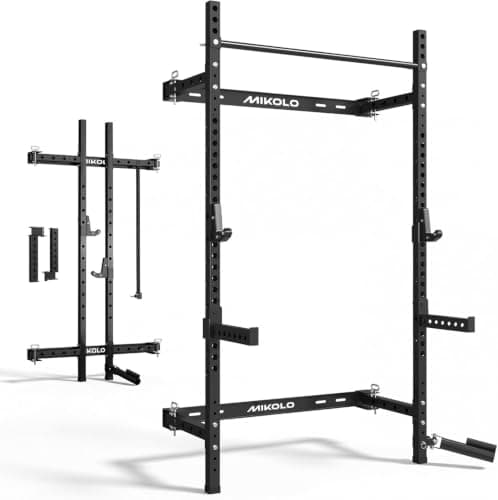
The Best Folding Squat Racks for Small Spaces
Wall-mounted racks that fold to a few inches, plus a no-drill freestanding option — ranked by folded depth and install type.
Top pick: Mikolo Folding Wall-Mounted Squat Rack
$264.92View on AmazonThe two racks a small space actually chooses between
Almost every "best squat rack" guide is written for a garage with a permanent corner to give up. In a small room you don't have that corner, so the whole decision changes: you're not choosing the beefiest cage, you're choosing the rack that gives the floor back when you're done. That narrows the field to two real options.
A folding wall-mounted rackbolts into your studs and hinges flat against the wall, reclaiming almost all of its footprint between sessions. It's the highest- leverage buy on this site for a small space — but you have to be able to drill, and your studs have to be roughly where you want to lift. A freestanding squat stand needs no wall and no tools, so a renter can own one and move it out of the way, at the cost of a little stability compared with a bolted rack. That's the entire choice, and it comes down to one question: can you drill?
What decides the price
Rack prices track three things: steel gauge (2×2-inch, 11-gauge uprights cost more and feel planted), the rated capacity, and what's in the box. A bare pair of J-hooks is cheap; a rack that includes safeties, a pull-up bar and a landmine costs more but saves you buying attachments piecemeal. For a small space, the fold mechanism itself is worth paying for — a rack that folds truly flat is a different product from one that merely takes up "less" room.
The mistake buyers make
The classic error is buying capacity instead of buying the right install. A 1,000-pound rack anchored into drywall is far less safe than a modestly-rated one lag-bolted into studs — the rack is almost never the weak link, the anchor is. The second mistake is forgetting the ceiling: a pull-up bar needs clearance to hang and pull, and a low basement or apartment ceiling is the most common reason a rack simply doesn't work in the room you planned for it. Measure the wall and the ceiling before you measure your budget.
Where to start
If you can drill, start with the folding wall racks; if you can't, start with the freestanding stands. Either way, plan the floor underneath at the same time — dropped and racked loads travel straight into the structure below you. Then pair the rack with a bench and a bar, and you have the core of a real strength setup in a footprint you can walk through.
Everything in this hub
All compact racks & squat stands
Roundup
The Best Folding Squat Racks for Small Spaces
Wall-mounted racks that fold to a few inches, plus a no-drill freestanding option — ranked by folded depth and install type.
Top pick: Mikolo Folding Wall-Mounted Squat Rack
$264.92View on AmazonRoundup
The Best Wall-Mounted Squat Racks
Fold-flat wall racks ranked by folded depth, rated load and what's in the box — plus the freestanding option for non-drillers.
Top pick: Mikolo Folding Wall-Mounted Squat Rack
$264.92View on Amazon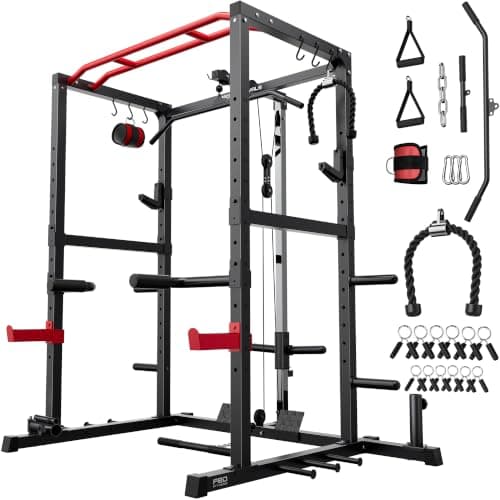
Roundup
The Best Power Racks for Small Spaces
Four-post cages ranked for small rooms by capability per square foot, ceiling clearance and how honest the published rating is.
Top pick: SPORTSROYALS Squat Rack Power Cage with Lat Pulldown
$309.99View on Amazon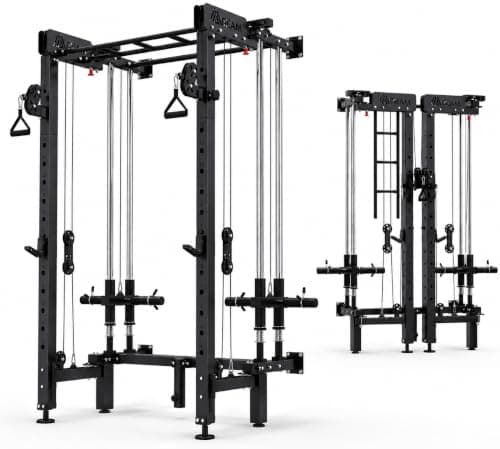
Roundup
Folding Squat Racks With Cables
Racks that combine barbell work with a cable pulley — ranked by whether they fold, what they anchor to and how much floor they give back.
Top pick: Mdeam Folding Wall-Mounted Rack with Pulley
$299.99View on AmazonHead to head
Power Rack vs Squat Stand
The cage-versus-stand decision run on footprint, ceiling height and solo-lifting safety — with picks on both sides and the folding third option.
Top pick: SPORTSROYALS Squat Rack Power Cage with Lat Pulldown
$309.99View on Amazon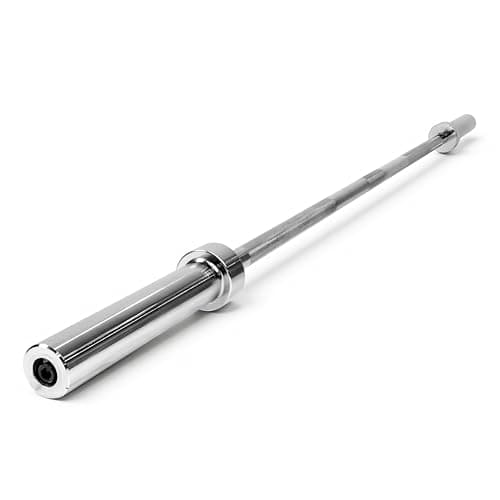
Roundup
The Best Barbells for Small Spaces
Olympic barbells at 5, 6 and 7 feet, ranked by what each length actually needs in wall clearance, sleeve room and rack width.
Top pick: CAP 28 lb 6 ft Olympic Barbell (Chrome)
$64.72View on Amazon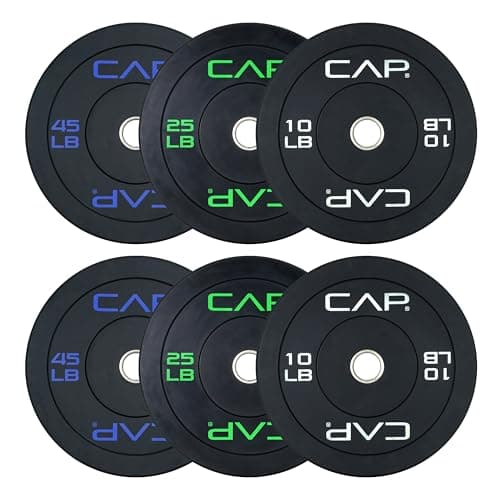
Roundup
The Best Weight Plates for Small Spaces
Bumper and cast iron Olympic plate sets ranked on the two things that matter in a small space: noise into the floor and thickness per pound of sleeve.
Top pick: CAP 160 lb Economy Olympic Bumper Plate Set
$167.99View on Amazon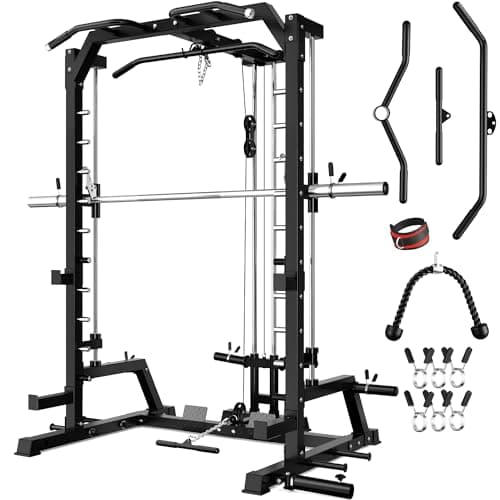
Roundup
The Best Smith Machines for Small Spaces
Three Smith machines ranked on the numbers that decide whether one fits: floor footprint, overall height, and how much of the room is gone permanently.
Top pick: JELENS SR01 Smith Machine with Lat Pulldown
$422.99View on Amazon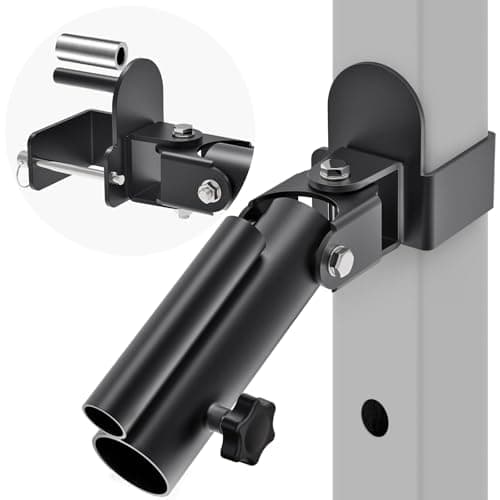
Roundup
The Best Landmine Attachments for Small Spaces
Three rack-mounted landmine bases compared on published rating, upright size and bar fit — plus why the landmine is the small room's best pressing answer.
Top pick: SELEWARE Rack-Mounted Landmine Attachment
$35.99View on AmazonRoundup
The Best Squat Racks Under $500
Five racks under $500 ranked by rated load, folded depth and install type — two folding wall racks, a fold-flat rack with a pulley, and two freestanding cages — with the drill-or-don't decision that sorts them.
Top pick: Mikolo Folding Wall-Mounted Squat Rack
$264.92View on Amazon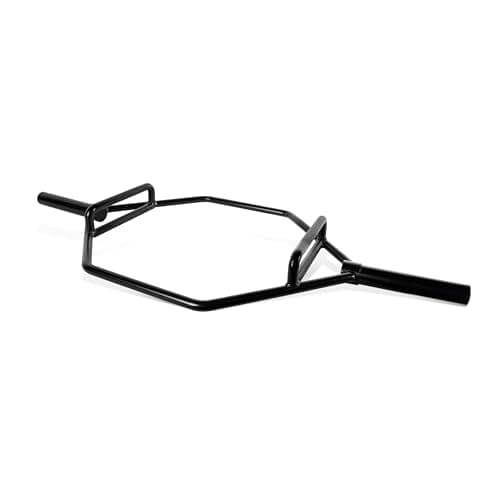
Roundup
The Best Trap Bars for Small Spaces
Five trap and hex bars ranked on overall length, interior opening, loadable sleeve length, bar weight and published capacity — including the shortest bar on the market and the only open-ended frame.
Top pick: CAP Olympic Hex Trap Bar, Combo Grip (OBIS-89HB)
$79.99View on AmazonHead to head
Wall-Mounted vs Freestanding Squat Rack
The install decision that comes before every rack ranking: bolt into studs and fold flat, or drill nothing and keep the footprint. Four racks compared on rating, folded depth and what the install actually commits you to.
Top pick: Mikolo Folding Wall-Mounted Squat Rack
$264.92View on Amazon
Guide
Are Wall-Mounted Squat Racks Safe?
The install details that decide whether a wall rack is safe: stud anchoring, rated load vs anchor strength, catch bars, and the common mistakes.
Guide
How Much Weight Can a Wall-Mounted Squat Rack Hold?
Rated capacity versus real capacity: why the studs and lag bolts, not the steel, set the working limit on a wall-mounted rack.
Guide
How to Install a Folding Squat Rack
The full install sequence for a folding wall-mounted rack — tools, stud location, mounting height, pilot holes, lag bolts and the test load.
Guide
Squat Racks for Low Ceilings
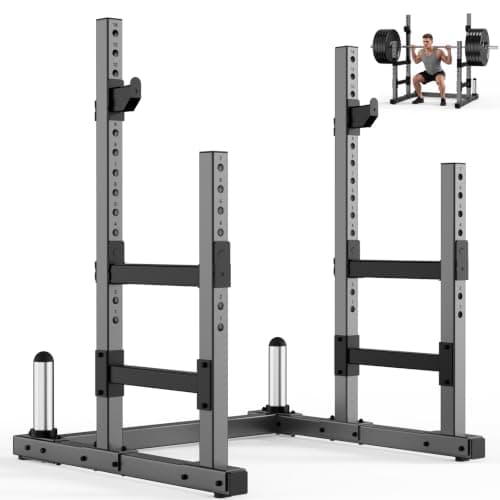
The height math for a low-ceiling room: what a cage actually needs, why the pull-up bar is the failure point, and the three rack types that fit under 7 ft 6 in.
Top pick: PASYOU SR30Pro Adjustable Squat Rack Stand
$219.99View on AmazonGuide
Are Folding Squat Racks Worth It?
When a folding squat rack earns its cost (a room that has to be a room again), when it does not (a garage corner you never reclaim), the renter's no-rack alternative, and the four checks before drilling.
Top pick: Mikolo Folding Wall-Mounted Squat Rack
$264.92View on AmazonGuide
Do You Need a Squat Rack at Home?
The honest version of the squat rack question: a rack exists to get a heavy bar onto your back and to catch it if you fail. If you are not lifting a bar that heavy, a trap bar or a pair of heavy adjustable dumbbells covers the same movements in a fraction of the floor.
Top pick: PASYOU SR30Pro Adjustable Squat Rack Stand
$219.99View on Amazon