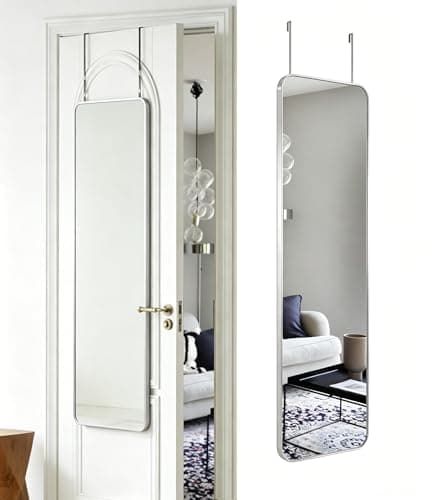
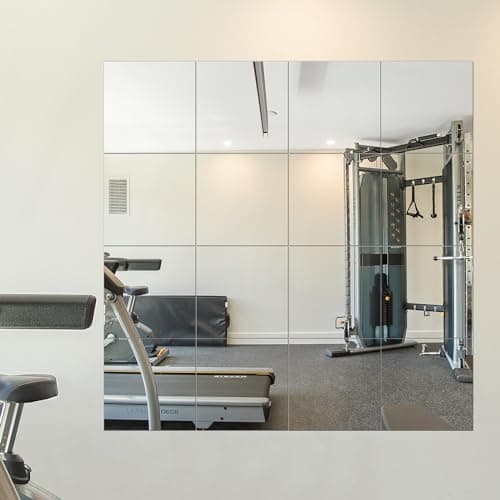
For most renters the best home gym mirror is a large leaning floor mirror: it gives you a full-body view with zero fixings, and it moves with you. The 71-by-28-inch Antok is our pick. If even leaning is too much object for the room, an over-the-door mirror attaches to nothing at all. If you want a real mirror wall and can accept adhesive, tiles cover four feet square for the price of one framed panel.
A mirror is the cheapest coaching you can buy. Without one, form checking in a home gym means filming yourself, and almost nobody keeps that up past the first month. With one, you correct a caving knee or a drifting bar path in the rep it happens, which is the entire point. Commercial gyms line their walls with mirrors for exactly this reason, and it is one of the few things a home setup can copy cheaply.
The problem is that the standard advice — mount a large mirror to the wall — is precisely what a lease forbids and what a small room cannot spare the wall for. So we rank by two numbers instead: how much of your body you can actually see, and how completely the install reverses on move-out day.
How much mirror do you actually need?
More than people expect, and less than a commercial gym. The useful benchmarks:
- Full-body squat check from the side: you need roughly 60 inches of height and the mirror positioned about 6 to 8 feet from where you stand. Height is the binding number here, not width.
- Front view for pressing and stance width: width matters more — a 14-inch-wide panel shows your torso but cuts off a wide stance entirely.
- Bar path on a deadlift or clean: a side view again, and you want the mirror low enough to see the floor at the start of the pull.
This is why the leaning full-length wins the top spot despite being the most expensive and the most physically present of the three. Seventy-one inches tall by twenty-eight wide is the only option here that shows a whole squat.
The three install types, and what each costs you
Leaning
Zero holes, fully reversible, and the mirror comes with you. The costs are a strip of wall you can no longer put anything against, and a safety consideration: a large sheet of glass leaning in a room where you swing weights needs to be secured against being knocked, and positioned so nothing can fall into it. Many leaning mirrors ship with a wall tether for exactly this — use it. A tether uses one small anchor, which most leases treat like hanging a picture rather than a modification.
Over the door
The only genuinely zero-contact option: the bracket hangs over the top of the door and nothing touches a wall. It is the safest choice for a strict lease and the easiest to move. The cost is width — over-door mirrors are narrow by definition, so you get a slice of the lift rather than the whole picture. It is also on a door, which means it moves whenever the door does and cannot be positioned where you want it.
Adhesive tiles
The only way to get a real mirror wall at home for a sane price, and the only one with genuine deposit risk. Adhesive mirror tiles hold well, which is the problem: removing them frequently takes paint, and sometimes drywall paper, with them. If you go this route, use removable mounting strips rather than permanent adhesive, mount to a wall you can repaint, and take a photo of the wall before you start.
Safety, because this is glass in a room with weights in it
A gym is the worst room in a house for a mirror. Dropped dumbbells bounce, bars get racked carelessly, and a shattered full-length mirror in a small room is a genuinely bad afternoon. Three rules:
- Buy tempered or shatter-resistant glass where it is offered, and treat any listing that does not state the glass type as ordinary glass.
- Do not put a mirror in the drop zone. Position it to the side of where weights come down, never behind or in front of a lifting platform.
- Secure anything that leans. Either tether it or wedge it so it physically cannot be tipped by a knee or a rolling plate.
Where the mirror goes in a room that already has no space
In practice the mirror goes on the one wall you are not using for storage, which means you should plan it alongside where the plates and dumbbells live rather than after. If your rack is wall-mounted, the mirror generally wants the adjacent wall so you see yourself from the side. If your gym is a garage corner, a leaning mirror against the car-side wall works well because that wall was never going to hold equipment anyway.