A garage-corner gym is a different problem from an apartment gym. You usually have the square footage and the ceiling; what you do not have is permanence, because the car needs the same floor at 6pm. The solution is a wall-mounted folding rack on the wall the car does not reach, a bench that folds, adjustable dumbbells on a shelf, and mats that lift. Everything else is about cold, damp and dust.
Most home gym advice assumes one of two situations: an apartment, where space is the enemy, or a dedicated garage gym, where the car has already been evicted. The garage corner is the third case and by far the most common — a single-car garage, or one bay of a two-car, that has to keep doing its day job. It gets almost no coverage, and it is the situation where folding equipment genuinely earns its price premium rather than being a nice-to-have.
The good news is that a garage corner solves the two constraints that make apartment training hardest. Nobody lives below you, so impact noise stops being a design constraint — you can drop weights, run a treadmill, and lift at 6am. And you usually have a real ceiling: garages commonly run 8 to 9 feet, which clears a pull-up bar that an apartment often cannot. Read those two facts as permission to buy differently than an apartment guide would tell you.
Start with the door swing, not the floor plan
The first measurement is not the corner — it is where the car actually stops and where its doors open. Park the car as you normally would, then get out on both sides and open the trunk. Mark the outline in chalk or tape. What is left over is your gym, and it is almost always narrower than the empty garage suggested.
Then check the garage door tracks. An up-and-over or sectional door has tracks that run along the ceiling and down the side walls, and they will interfere with anything mounted high on those walls. The wall you want for a folding rack is almost always the end wall, opposite the door, or the side wall behind where the car parks.
The kit that folds back into a garage
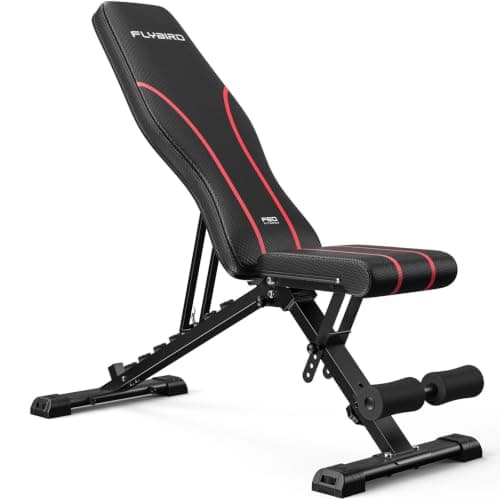
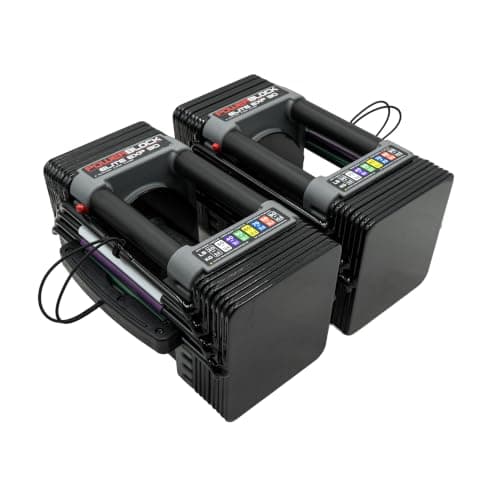
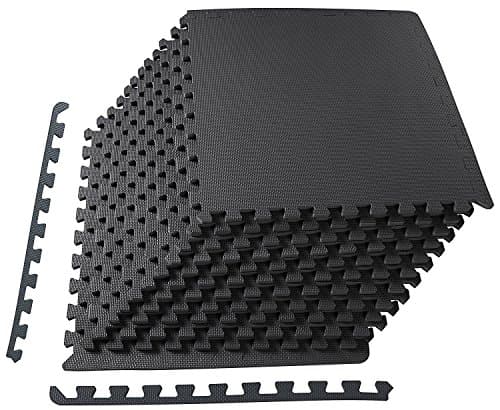
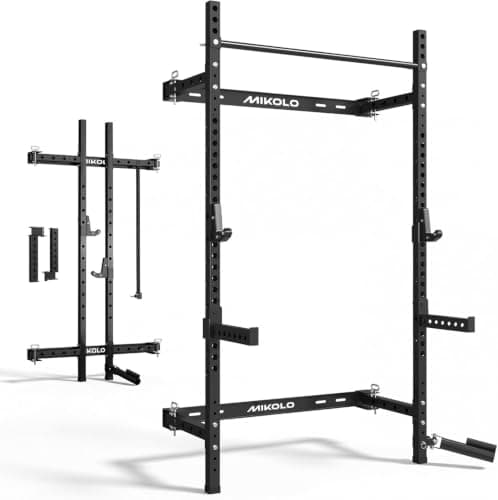
The four picks on this page are the core, and they were chosen on one criterion: every one of them gets out of the way.
- A wall-mounted folding rack. In a garage you can drill — that is the single biggest advantage you have over an apartment. A rack that bolts into studs and folds to a few inches of wall depth gives you a full squat and press station that the car parks past. Our wall-mounted rack roundup ranks the field.
- A folding bench. Stands upright against a wall between sessions and takes about a square foot doing it.
- Adjustable dumbbells. One pair on a shelf instead of a rack of fixed weights along a wall you need for storage.
- Interlocking mats you can lift. Not a permanent rubber floor — puzzle tiles that come up and stack when you need the bare slab for a project.
Notice what is not on the list: a power cage. In a garage corner, a cage is the wrong object for the same reason it is wrong in a living room — it never moves. If the corner is genuinely permanent, our power rack versus squat stand comparison makes the case for the cage properly.
The three problems apartments do not have
Cold
An unheated garage in winter is genuinely hard to train in, and the equipment feels it too: steel is unpleasant to grip, rubber mats stiffen, and dial mechanisms on adjustable dumbbells get notchy. A small ceramic heater run for fifteen minutes before you start makes more difference than insulating the space. Keep a set of gloves for the coldest weeks, and let a walking pad or treadmill warm up for a minute before use — cold lubricant is harder on a motor than cold air is.
Damp and rust
Garages breathe, and a bare barbell in a damp garage rusts in weeks. Three cheap habits fix it: wipe the bar down after sessions, store plates and bars off the concrete rather than on it, and keep the whole setup away from the door where rain blows in. If your garage is seriously humid, a small dehumidifier costs less than replacing a barbell. Vertical storage also keeps steel off a slab that wicks moisture — our weight storage guide covers the options.
Dust and the car itself
Concrete dust, brake dust and exhaust residue all settle on everything, and they end up on your hands and on the bench pad. Mats help more than you would expect because they stop the slab shedding directly into the training area. A cheap cover over a folded bench solves the rest.
Layout: the corner that works
The arrangement that works in almost every single-car garage:
- Rack on the end wall, folded flat when not in use, positioned so the unfolded rack sits over the mats and not over where a wheel goes.
- Mats in a rectangle in front of the rack, roughly 6 by 8 feet, which is enough to squat, press and do floor work.
- Shelving on the side wall at car-door height or above — dumbbells, plates, small gear. Above door height means nothing gets knocked when the car doors open.
- Bench folded against the shelving, so the entire training zone is empty when you are done.
If you are working out how much room each piece actually needs, our space requirements guide has footprint numbers for every category on the site, and the ceiling height guide covers whether your garage clears a pull-up bar and an overhead press.
What a garage corner lets you buy that an apartment does not
Two things, and they are worth the trip. First, a full-length barbell — most garages have the wall-to-wall width a 7-foot bar needs, and length buys sleeve room and stability. Second, cast iron plates. With nobody below you, the noise argument for bumper plates disappears and iron is cheaper and thinner. Our weight plate guide explains why that trade flips the moment you leave an apartment.