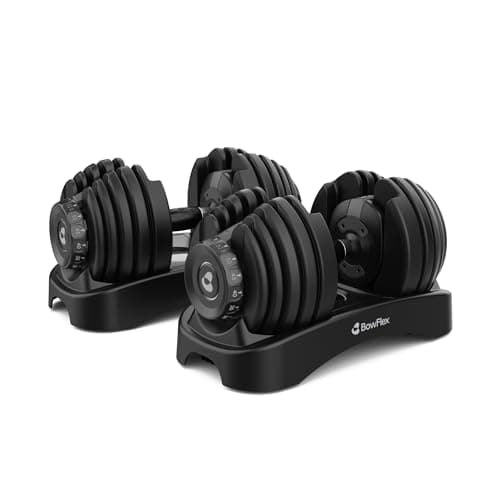
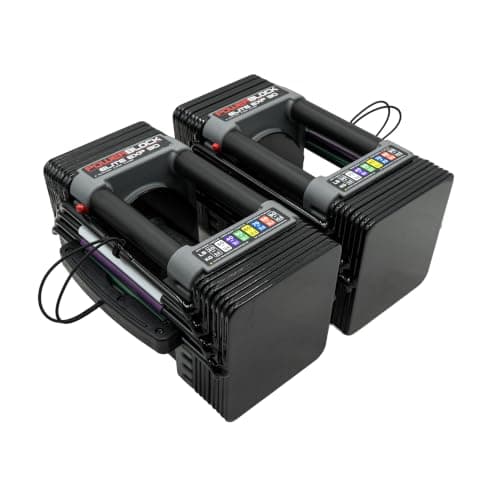
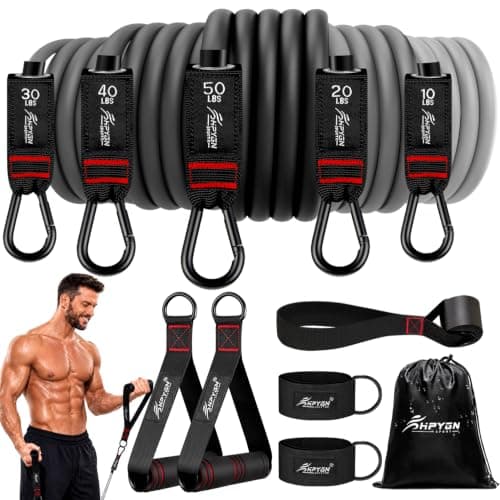
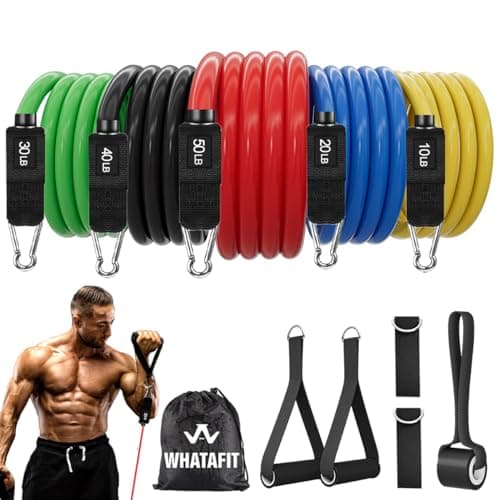
Buy bands first if you cannot make noise, cannot store anything, or are not yet sure you will train consistently — they cost about thirty dollars, take zero floor and give you the pulling movements a small room is worst at. Buy dumbbells first if you already train, want to log measurable progress, and have about two square feet you can commit. Most people who stick with it end up owning both, and that is not a failure of the decision.
This is the first real fork for someone building a gym in a room they also live in, and the usual internet answer — "dumbbells are better, bands are for rehab" — is written by people with a garage. In a studio apartment, in a dorm, in a bedroom with a downstairs neighbor, the constraints that decide the question are not about which tool builds more muscle. They are about square footage, noise, storage and what your lease says.
So we run this comparison on the same four numbers we use everywhere on this site: the floor it holds when you are not training, whether install is reversible, what the neighbor hears, and what happens as you get stronger. Then picks on both sides.
Head to head
| Factor | Resistance bands | Adjustable dumbbells |
|---|
| Floor held when idle | None — a drawer | About 2 sq ft of shelf or floor |
| Noise to the neighbor | Silent | Low, unless set down hard |
| Install / renter | Door anchor — nothing left behind | Freestanding — nothing left behind |
| Loadable range | Stacks to a stated 100–150 lb | Up to 50 lb+ per hand, calibrated |
| Progress tracking | Approximate — tension varies through range | Exact — the number on the dial is the number |
| Rows and pulldowns | Excellent, via the door anchor | Rows yes; pulldowns not at all |
| Heavy lower body | Poor — tension curve fights the squat | Good to grip-limited |
| Typical cost | Under $30 | $150–$400 |
| Lifespan | Latex ages and eventually fails | Years to decades |
Two rows decide it for most people. The cost row, because thirty dollars versus three hundred is a different kind of commitment. And the pulldown row, because it is the one thing bands do that dumbbells structurally cannot — and vertical pulling is the movement small-space gyms most often go without.
When bands are genuinely the right answer
Four situations, and in all four this is not a compromise pick.
- You cannot store anything. A dorm room, a shared bedroom, a studio where every surface is already spoken for. Bands are the only strength equipment that genuinely disappears.
- You cannot make noise. A thin-floored apartment, a sleeping housemate, an early-morning schedule. Bands make no sound at all — nothing hits the floor.
- You are not sure yet. Thirty dollars is the right amount to spend on finding out whether you train at home. Three hundred is not.
- You travel. The set weighs under a kilogram.
When dumbbells win, and it is not close
If you already train and know you will keep training, dumbbells are the better core purchase. The reason is progression: 27.5 lb is a real, repeatable, loggable number and "the green band plus the blue band" is not. Over a year of consistent lifting, that difference is the whole ball game, because progressive overload needs a number you trust.
Dumbbells also handle lower body far better. Band tension is lowest at the bottom of a squat, where you need it most, and highest at the top, where you need it least — the tension curve fights the movement. A pair of 50 lb dumbbells does not have that problem. Our 50 lb adjustable roundup covers that end of the range.
The honest recommendation: sequence, not either/or
Buy bands now. Buy dumbbells when you have trained three times a week for a month. That sequence costs thirty dollars to find out whether you will actually do this, and the bands do not become useless afterwards — they stay the best tool you own for face pulls, pulldowns, warm-ups and travel.
The reverse sequence — expensive dumbbells first — is how a lot of adjustable dumbbell sets end up on resale sites in March. If budget is the constraint, our under $500 build sequences a whole small gym in the order that wastes the least money.
What each one cannot do at all
Bands cannot give you a calibrated heavy squat or deadlift. Dumbbells cannot give you a vertical pulldown. Neither can give you a bench press with a spotter, which is why a folding rack eventually enters the conversation for people who keep going.
There is a third tool worth knowing about here: a suspension trainer sits between the two. It anchors in a door like a band, loads with your own bodyweight rather than latex tension, and handles rows better than either. See our suspension trainer roundup.
The other implement that competes with dumbbells for a small room's first purchase is the kettlebell — one object on the floor that swings and carries in a way neither bands nor dumbbells can. That comparison is in kettlebell vs dumbbells for a small space.