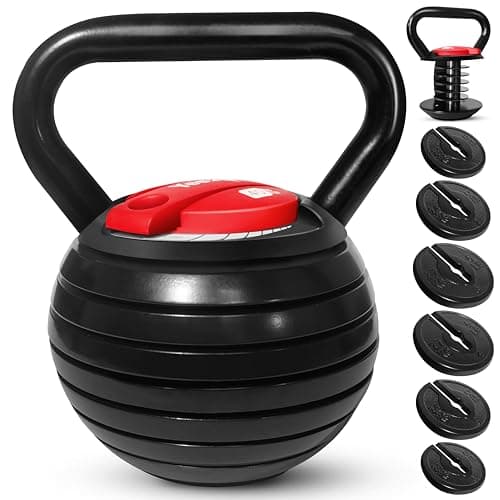
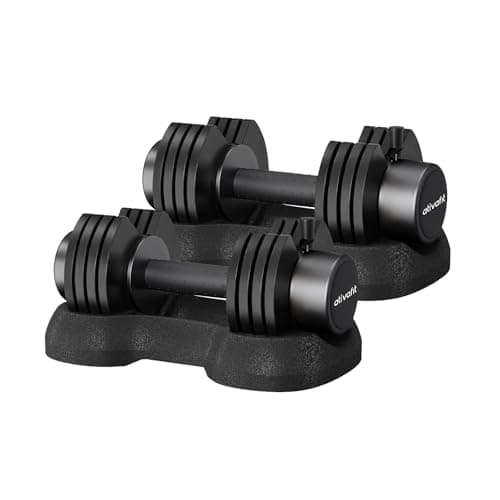
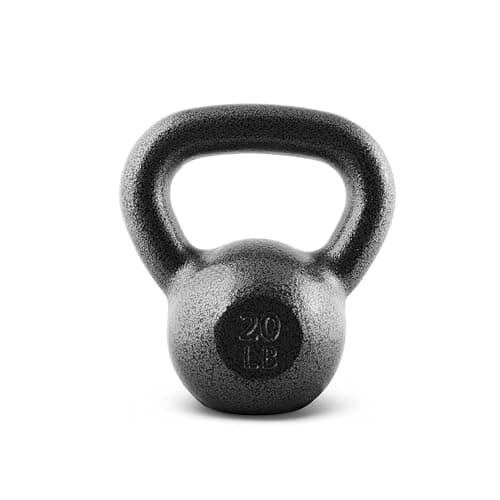
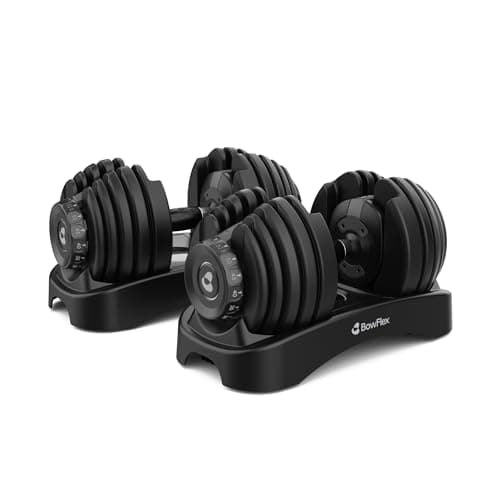
Buy adjustable dumbbells first if you want to build strength across a whole program; buy a kettlebell first if you want one object that does swings, carries and conditioning and takes up the floor space of a shoebox. The Bowflex 552 is the dumbbell side's default; the Yes4All adjustable handle is the kettlebell side's small-space answer; the ATIVAFIT and the CAP cast iron bell are the light and fixed alternatives on each side.
Most versions of this comparison are about biomechanics. This one is about a room, because in a small apartment the question is not “which is better” — they are different tools — but “which earns its footprint first.” So we compare them the way this site compares everything: by what they cost in floor and shelf, what they do to the floor below, and what each does that the other cannot.
Footprint per pound of usable weight
This is where the adjustable dumbbell wins by a distance, and it is the reason it anchors this hub. A pair of 552s in their cradles replaces fifteen pairs of fixed dumbbells on a shelf about two dumbbells wide. A kettlebell is one weight; to progress you buy another, and a row of cast iron bells on the floor is exactly the wall of weight this site is built to avoid.
The exception is the adjustable kettlebell handle, which is why the Yes4All is here. It clamps around standard plates to become several bells, so the footprint is one handle plus the plates you already own — and if you own a compact plate set, it is close to free space. The balance is not quite a cast bell's, which is the honest trade.
What a kettlebell does that dumbbells cannot
The handle above the mass is the whole point. It makes the swing possible — the hip hinge under load, at speed, with the weight passing between your legs — and the swing is the single most time-efficient conditioning movement you can do in a small room without a machine. It also makes the goblet squat, the rack position, the Turkish get-up and the loaded carry feel right in a way a dumbbell held by its handle does not.
It does this in almost no space: the bell lives on the floor in a corner and the swing needs a strip of clear floor in front of you and nothing above. No bench, no shelf, no ceiling concern. For a studio or a dorm, that is the argument.
What dumbbells do that a kettlebell cannot
Progress in known steps. A dial dumbbell moves in 2.5 or 5 lb increments across a wide range, which is what a strength program needs: pressing, rowing, curling, lunging, all loaded to a number you can log and add to. A kettlebell is one number, and the next number is another purchase.
Dumbbells are also symmetrical, which matters for pressing on a bench and for anything two-handed with matched weights. A kettlebell's offset mass is a feature for swings and a nuisance for a bench press. If a folding bench is in your plan, dumbbells are the implement that makes it useful.
Noise and the floor
Both are quiet when set down under control and both are loud when they are not. The differences are small but real: a cast iron bell dropped from a swing that got away is a single heavy impact; a dial dumbbell dropped is an impact plus, potentially, a broken mechanism. Neither should be dropped in an apartment, and a mat under the training area is the minimum for both. If noise is the deciding constraint, a sandbag is the implement that beats both.
The comparison in one table
| Adjustable dumbbells | Kettlebell |
|---|
| Footprint | One shelf, two cradles | One bell on the floor (or one handle + plates) |
| Weights covered | A full range in fine steps | One weight per bell; several with an adjustable handle |
| Best at | Pressing, rowing, logged progression | Swings, carries, conditioning, get-ups |
| Needs a bench | To get the most from it, yes | No |
| Noise / floor | Low if never dropped; mechanism at risk if it is | Low if never dropped; mat essential |
| Buy first if | You want a strength program | You want one object and conditioning |
Which to buy first, by room
- Studio or dorm, no bench, no shelf. A kettlebell. It lives in a corner and needs nothing else. Start with one bell — the CAP is the dependable fixed one — or the Yes4All handle if you have plates.
- A bedroom corner with a folding bench. Adjustable dumbbells. The bench and the dumbbells are a complete strength setup; the 552 is the default and the full roundup covers the alternatives.
- Beginner, light loads, tight budget. The ATIVAFIT 5–25 lb adjustables are the smallest and cheapest way into a dial dumbbell, and 25 lb a hand is plenty for a first year of pressing and rowing.
- You already have dumbbells. Add one bell for swings and carries. That is the combination most small-space lifters end up with, and it is the one we would recommend from the start if the budget allows.
Which weight kettlebell to start with
Heavier than you think for swings, lighter than you think for presses — which is exactly why one bell is limiting and why the adjustable handle exists. A common starting point for a swing is a bell you can deadlift easily but would not want to press overhead for reps. If you buy one fixed bell, buy it for the swing and use the dumbbells for pressing; our kettlebell roundup has the sizes and the flat-base question.
What about resistance bands?
The third implement in this argument, and the one with zero footprint. Bands lose to both on measured progression and win on storage and silence; we compared them to dumbbells directly in resistance bands vs dumbbells. For a lot of small rooms the honest kit is a pair of adjustables, one kettlebell and a band set — and it all fits on a single shelf and a square of floor.