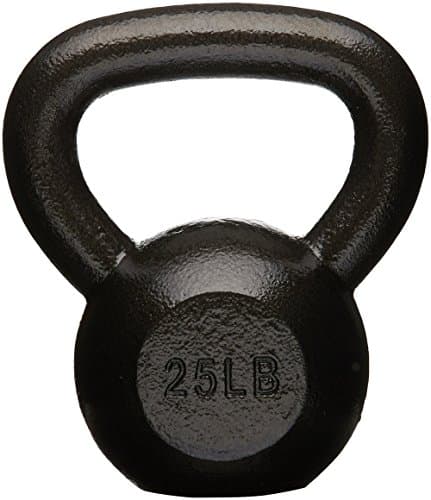
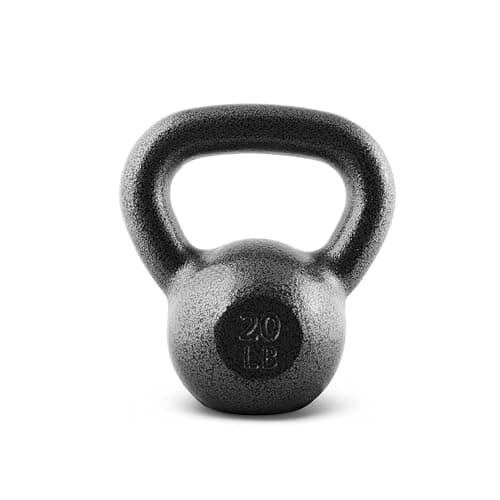
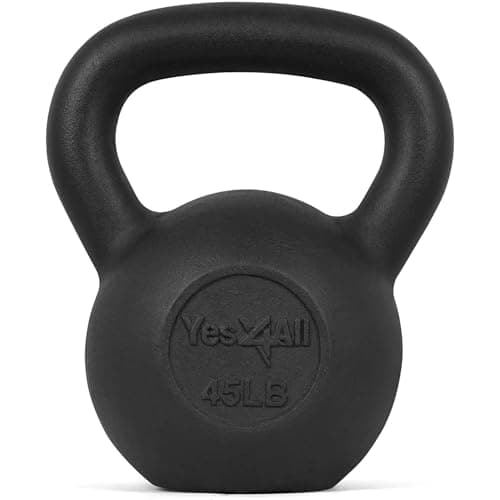
For a small space, the best kettlebell is the Yes4All solid cast iron bell: a single-piece casting with a wide, smooth handle and a flat base, so it swings the way a kettlebell should and stores standing up in a corner you weren't using anyway. There is nothing to loosen, nothing to crack and nothing to assemble — which is exactly why a bell is the highest gym-per-square-foot object in home strength training.
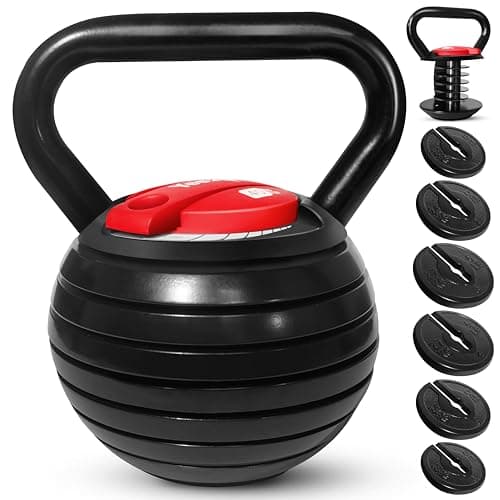
The Amazon Basics bell is the cheapest sane way to own your first kettlebell and does the same job with a slightly less refined handle finish. The CAP Barbell bell is the dependable middle: consistent casting, comfortable handle diameter, and available across enough weights that you can add a size later without changing brands. And the Yes4All adjustable kettlebell handleis the space-saving alternative — one grip that clamps around standard 1-inch plates to become several bells. It's the answer when you want a range of loads and refuse to give a row of cast iron a permanent square of floor.
The trade between fixed and adjustable here is different from the dumbbell version, and it's worth understanding before you spend. A fixed bell is one weight forever, but its balance is perfect and it will outlive you. An adjustable handle covers several loads in a single object, at the cost of a swing balance that isn't quite a cast bell's and a dependency on plates you have to already own or buy. If you want one bell and one movement pattern, go fixed. If you want a range and you're already storing plates, the handle is the space-efficient call.
We rank kettlebells on four things a small room actually feels. Handle geometry comes first — width and finish decide whether two-hand swings feel smooth or shred your palms. Then casting quality, because a single-piece bell has no seam, no bolt and no failure point. Then the base: a flat, wide base means the bell stores upright against a wall instead of rolling somewhere you'll kick it at night. Finally floor impact, which in an apartment is the constraint that decides whether you can own one at all. Every one of those lands on the Spec Block.
On that last point we'll be blunt: a dropped cast iron kettlebell is loud, and it damages floors. A bell is only an apartment-friendly tool if you commit to setting it down under control onto a mat. Read apartment home gym flooring before the bell arrives, not after your downstairs neighbor knocks.
How to choose a kettlebell when floor space is the constraint
Buy one bell first, and buy it for the movement you'll do most. This is the opposite of how people shop kettlebells — the instinct is to buy a light one, a medium one and a heavy one so you're covered. In a small space that instinct is how you end up with three pieces of iron in a walkway and a training program that uses one of them. Pick the movement that will anchor your sessions, choose the weight that challenges you in that movement, and let the rest of your training adapt around it. A single well-chosen bell covers swings, goblet squats, presses, rows, carries and getups. That is a remarkable amount of gym for one object that lives behind a door.
Handle width and finish decide whether you keep using it
The handle is where a cheap bell reveals itself. You want a handle wide enough to fit both hands comfortably for two-hand swings, with a smooth, consistent finish and no casting seam running through the grip. Bare iron gives excellent grip and a little friction burn on high rep sets; a painted or coated finish is gentler on the hands but wears at the contact points over time. Neither is wrong. What matters is that the handle diameter suits your hand — too thick and your grip fails before your hips do, which turns a hinge movement into a forearm workout you didn't plan.
Weight selection: heavier than you expect, and only one to start
Most people choose their first bell too light for swings and too heavy for overhead pressing, because those two movements want very different loads. If you have to compromise into one bell, bias toward the swing — the hinge is the movement kettlebells do better than anything else, and you can scale a press with reps and tempo more easily than you can scale a swing with a bell that's too light to load the hips. If you genuinely need both ends of that range, that's the argument for the adjustable handle rather than for buying two bells.
Fixed or adjustable: decide before the first purchase
Make this call up front, because it's expensive to reverse. Buy fixed if you want one load, permanent balance and an object with no failure points — the bell you buy today is the bell you own in twenty years. Buy the adjustable handle if you expect to need several loads and you already store standard plates, since it replaces a row of bells with a single grip and a stack you have anyway. What doesn't work in a small apartment is drifting: buying one fixed bell, then another, then a third, until you own three weights, a walkway you can't use and no clear reason why.
Noise and floors are the apartment veto
Cast iron on a hard floor is the loudest thing in this category, and it's the reason some apartment lifters can't own a bell at all. Mitigate it in three layers: a dense mat under the working zone, a strict habit of guiding the bell down rather than dropping it, and session timing that respects the people below you. Our apartment noise guidecovers what actually transmits through a floor. If the answer for your building is "nothing that hits the ground," adjustable dumbbells are the quieter path — see our budget adjustable dumbbells. The other answer, if you want the swinging and carrying without the iron, is a workout sandbag: no metal to ring, and it lands with a thud rather than a clang.
Deciding between a bell and a pair of adjustables as the first purchase? We compared them the way this site compares everything — footprint per pound, noise, and what each does the other cannot — in kettlebell vs dumbbells for a small space.