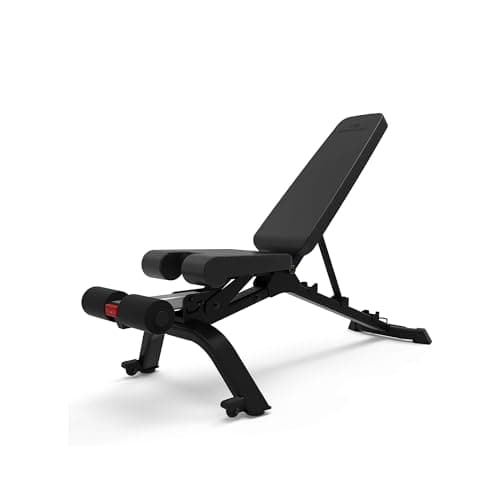
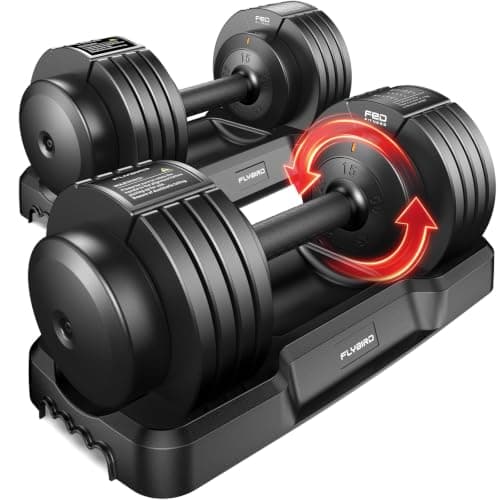
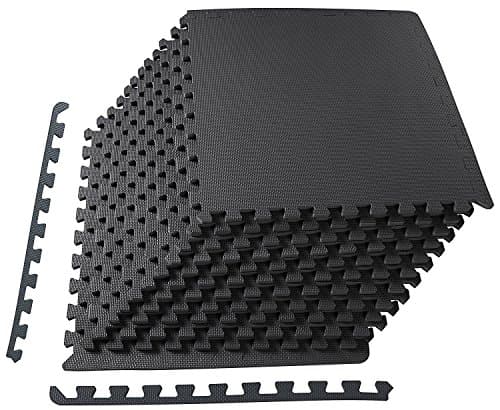
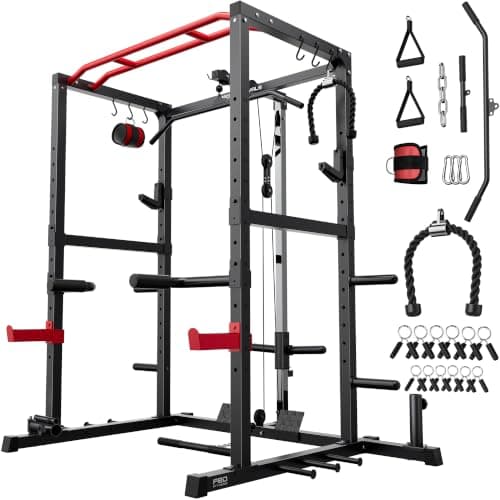
At this tier the kit finally buys a real rack without giving up the rest of the gym: the SPORTSROYALS power cage with its built-in lat pulldown and low row, the Bowflex 3.1S bench that stows upright, FLYBIRD adjustable dumbbells as the deliberate value pick, and BalanceFrom floor mats underneath all of it. Four pieces, four jobs — cage safety, pressing angles, adjustable load, and a floor that survives the other three.
We aren't going to print a total, because we'd have to invent one. Every price on this site renders live from the retailer and moves week to week, so the figure that decides whether this build lands inside your budget is the one sitting on the cards below on the day you buy — not a number we typed months earlier. Treat "under $1,000" as the design constraint the list was chosen against: four pieces meant to sit inside one budget together, with the live prices settling the arithmetic.
The step up from our under-$500 kitisn't more equipment. It's better equipment in the two slots you touch every session, plus the one thing a tight budget always has to skip: a cage. Under $500 the honest advice is to leave the rack out and let a power tower cover the pulling half. At this tier a four-post cage with a lat tower comes into range, and that changes what your training can look like. Catch bars mean you can squat and bench alone without a spotter. A pulldown and low-row stack in the same frame means you get cable back work without buying a second machine or a second footprint.
The ranking follows the same criteria we use everywhere: coverage per square foot first, install type second, and what the box actually contains third. The cage takes rank one because it does more distinct jobs per square foot than anything else here — squats, presses, pull-ups and cable back work out of one frame that needs no drilling. The bench is rank two because it's the piece you are physically in contact with every session, and a wide, well-finished pad that still stows upright is worth more of the budget than most people give it. The dumbbells are rank three on purpose: this is the slot where a budget gets rescued, and the value pair gives up fine increments rather than core function. The mats are rank four in order and first in sequence — put them down before session one, not after the first scuff.
What the build deliberately leaves out is cardio, and that's a choice rather than an oversight. At this tier a treadmill or a rower would have to come out of the rack's share, and the rack is the piece you can't improvise — you can walk outside, take the stairs, or add a compact machine later for a fraction of what the cage costs. If a desk job means daily steps are your actual problem, invert the priorities: drop the cage, keep the bench and the dumbbells, and put the difference into a walking pad. Four pieces is what fits the budget, not a magic number.
There is a catch you have to accept, and if you can't, this build isn't yours. A four-post cage does not fold. It owns a permanent square of floor and it needs real ceiling height for the pull-up bar, so measure both before you commit. It's also plate-loaded: the bar and the plates are a separate purchase and real money, which is another reason we won't pretend to know your total. If you can't give up permanent floor, swap the cage for a fold-flat wall rack from our folding rack roundup, or read best power racks for small spaces for the footprint comparison in full.
As everywhere on this site: the number of these units we have lab-tested is zero, because we don't run a lab and won't pretend to. What you get instead is published manufacturer dimensions and load ratings, install requirements read carefully, owner feedback at scale, and a ranking weighted for the one thing a small room cares about — whether it fits. Our methodology page shows exactly how that works.
How to allocate an under-$1,000 budget
A four-figure budget is enough to buy either one impressive machine or one complete gym, and the complete gym is almost always the better trade in a home. The rule is to spend on the frames you buy once and save on the parts you can upgrade later.
Buy the frame once, buy the small stuff twice
Steel is the thing you don't want to re-buy. A cage and a bench are structural purchases: if they're solid and correctly sized for your room, they outlast several rounds of everything else. Dumbbells, mats and accessories are the opposite — cheap to upgrade, easy to resell, and no great loss if you outgrow them. So put the budget into the rack and the bench, take the value dumbbells, and revisit the load slot later against our adjustable dumbbell rankings.
Remember the bar and the plates
A plate-loaded cage arrives without weight. That's not a hidden catch — it's how every rack in the category works — but it's the line item people forget when they set a budget. Decide up front whether the barbell side of your training is real, because if it's not, the same money buys a much better dumbbell and bench setup plus cardio. Our essentials priority list is the honest counter-argument to buying a cage at all.
Check the ceiling before you check the price
Cage height plus a pull-up bar plus your reach is the constraint that sends racks back. Get the tape measure out first, and if the ceiling is tight, look at a wall-mounted rack or skip the overhead bar entirely. And whatever lands in the room, put mats under it — see our flooring guide.
To see this tier against the ones on either side of it, and the costs that never make it onto a listing, how much does a home gym cost walks the ladder from a drawer of bands to a fold-flat rack with a barbell.