Buy an ab roller. A dual-wheel roller with a published 440 lb rating costs about twenty dollars, stores in a drawer, and loads the anterior core harder than any dedicated ab machine at ten times the price. Add parallettes if you want L-sits and dips too, and consider a hanging station only if you already wanted pull-ups.
The ab equipment market is the worst-value corner of home fitness. Rocking chairs, vibrating belts, spring-loaded benches — almost all of it takes floor, costs more than it should, and trains the core less effectively than movements you can do with nothing. This page is short on picks for that reason: there are three genuinely good pieces of core equipment for a small room and a long list of things not to buy.
The core responds to two things: resisting extension under load, and resisting rotation. Rollouts do the first better than anything else. Hanging leg raises and L-sits do it while also loading the hip flexors. Everything else is a variation on a plank, which needs no equipment at all.
Floor and storage, by pick
| Equipment | Floor while training | Storage |
|---|
| Ab roller | About 4 ft of clear floor | A drawer |
| Parallettes | About 3 x 2 ft | Under a sofa |
| Power tower | About 4 sq ft, permanently | None — it stays |
Why the ab roller is first
A rollout is a moving plank with a long lever arm. As the wheel travels away from you, the distance between your hands and your hips grows, and the load on the anterior core grows with it. That is a genuinely progressive movement, which almost nothing else in bodyweight core training is — you progress by rolling further, not by doing more reps.
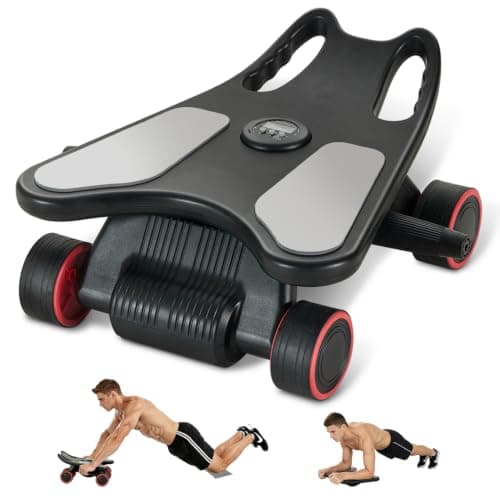
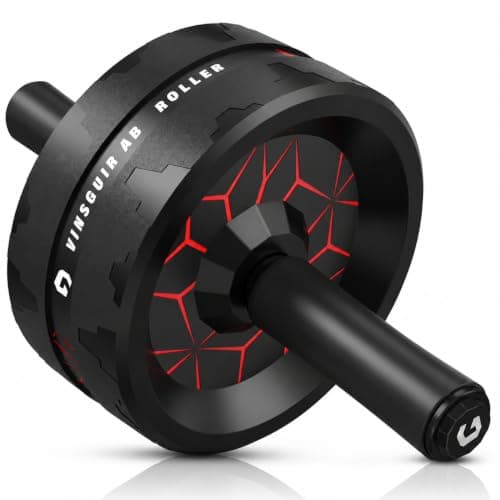
Extra wheels track straighter than a single wheel and are worth the negligible price difference. The Vinsguir is the plain version — two wheels on a published 440 lb rating. The Forkidinnn runs four and adds a spring rebound and elbow rests, which makes the movement trainable before you can do a full rollout, though it publishes no capacity of its own.
Start here if you cannot do a rollout yet
Most people cannot on day one, and attempting one anyway is how you strain a lower back. The progression, in order:
- Plank, 30 seconds, no sag. If you cannot hold this, work here first — the roller is not the tool yet.
- Kneeling rollout to a wall. Set up close enough that the wheel hits the wall before your form breaks, then move back an inch a week.
- Full kneeling rollout.
- Standing rollout. Genuinely advanced — most people never need to get here.
The rebound roller shortcuts step two by assisting the return. That is a real benefit if you are starting from nothing and a mild disadvantage once you are not.
Parallettes: the second-smallest thing that works
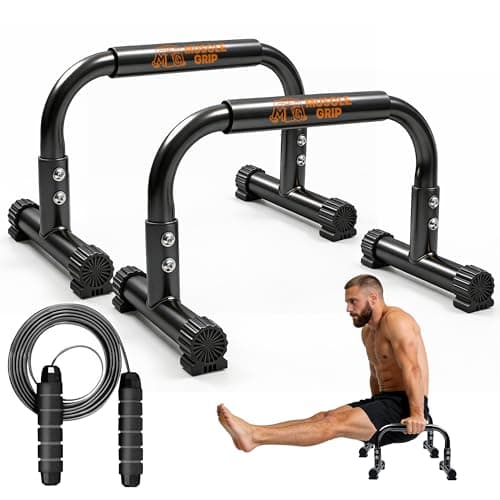
A pair of short steel bars, about ten inches tall. They store under a sofa and unlock L-sits, tuck holds, dips, deficit push-ups and elevated planks — a genuine core and pressing library from an object smaller than a pair of shoes. We cover them fully in our dip station roundup, and they are the pick if you want core work and pressing from the same purchase.
When a hanging station makes sense
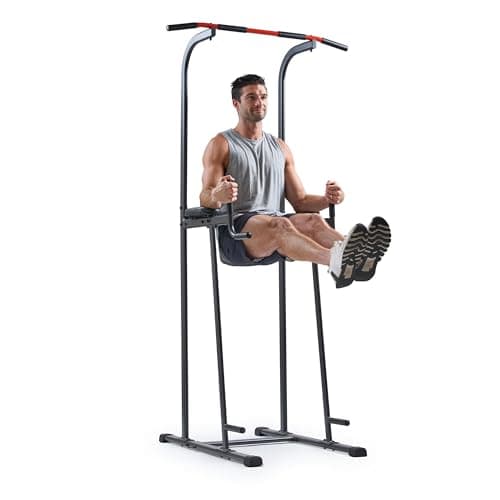
Hanging leg raises are excellent, and they need something to hang from. If you already own or want a pull-up bar or a power tower, that station gives you the movement for free — which is the honest way to think about it. Buying a power tower purely for core work is not justifiable; buying one for pull-ups and getting core work as well is.
The cheapest route to hanging work is a doorway bar. Bent knees do not affect a hanging knee raise the way people assume — see power tower vs doorway pull-up bar for the full comparison.
What not to buy
Three categories, plainly:
- Ab rockers and assisted crunch chairs. They take floor, they store badly, and they reduce the load on the muscle you are trying to train. That is the opposite of the point.
- Vibrating and electrical stimulation belts. Not core training in any meaningful sense.
- Anything marketed on spot fat reduction. Core training builds the muscle. It does not selectively remove fat from the area, and no equipment changes that.
What goes underneath
A rollout puts your knees on the floor and the wheel on it too. On hardwood that is uncomfortable and on carpet the wheel tracks badly. Both rollers here include a knee pad; a larger mat under the whole rollout path is better still. See our gym mat roundup.