For most small-space gyms, half-inch interlocking EVA foam tiles are the right answer: they protect a rented floor, cut impact noise, cost very little and lift out with no adhesive on move-out day. If you are putting a rack, a Smith machine or heavy plates on top, step up to rubber-top tiles — plain foam dents permanently under steel feet.
Flooring is the purchase people skip and then pay for twice: once in a scuffed floor and once in a downstairs neighbor. It does two separate jobs, and picking the wrong mat usually means picking one that does the first job and not the second. Protection is about surface hardness and puncture resistance. Noise reduction is about mass and compliance. A thin, hard mat protects a floor and transmits impact; a thick, soft mat absorbs impact and dents under a rack foot.
This page sorts the category by what you are actually putting on it. The picks below cover the three real cases — general training, heavy equipment, and jumping — and there is a fourth case at the end that no mat solves.
Match the mat to the load
| What sits on it | What to buy | Why |
|---|
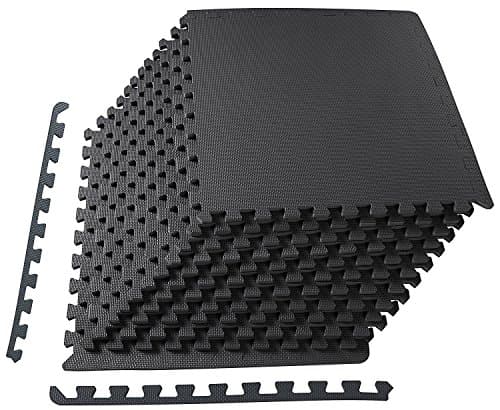
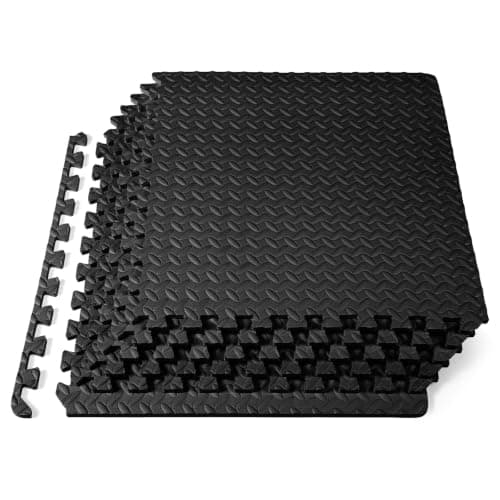
| Bodyweight, dumbbells, a bench | Half-inch EVA foam tiles | Cheapest, quietest, fully reversible |
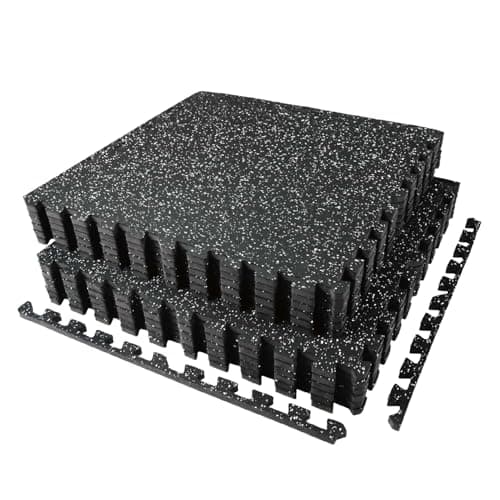
| A rack, a Smith machine, plate storage | Rubber-top tiles | Steel feet dent plain foam permanently |
| A treadmill or walking pad | Foam tiles, or a purpose-made equipment mat | Damps vibration and catches belt dust |
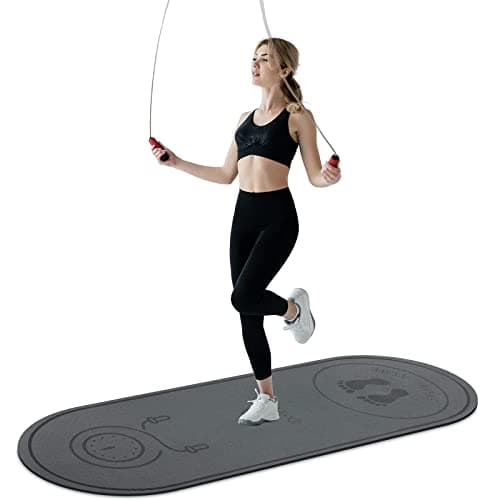
| Jumping rope | A long, thin jump mat over tiles | Rope strike is a separate problem from landing |
| Dropped loaded barbells | Nothing sold here — do not do this upstairs | No consumer mat isolates that impact |
Thickness: what the numbers mean
Home gym mats cluster around three thicknesses and each has a job.
- About a quarter inch. Surface protection and grip. Good under a bike, a walking pad, or a jump rope. Almost no impact absorption.
- Half an inch. The default. Protects the floor, absorbs meaningful impact, comfortable to kneel on. This is what most small-space gyms should buy.
- Three quarters of an inch and up. More cushioning, and more give under equipment. Better for bodyweight and floor work, worse under a rack, because a soft thick mat lets a rack rock.
Note the tension in that last one. Thicker is not simply better. A rack or bench on a thick soft mat becomes slightly unstable, which is exactly what you do not want under a loaded bar. For heavy equipment, prioritize a hard wear layer over raw thickness.
Why rubber-top tiles exist
Plain EVA foam has one failure mode: point loads. A rack foot, a plate corner, or a dumbbell end concentrates weight on a small area and leaves a permanent dent. It is cosmetic damage to the mat rather than the floor, so it is not a disaster — but it means the mat is consumable under heavy gear.
A dual-layer tile with a recycled-rubber wear surface bonded to EVA underneath solves it: the rubber spreads the load, the foam still absorbs impact. The AIRHOP tiles above are that construction, and they cover 48 square feet — an 8 by 6 foot platform, which is a real training area rather than a patch.
The step beyond a rubber-topped tile is a floor made entirely of rubber, which does not dent at all and weighs several times as much. That trade — no dents, but a piece you have to carry up the stairs — is the subject of rubber gym flooring for apartments.
Renter rules
Everything on this page interlocks or rolls, and none of it uses adhesive. That is deliberate. Three things to get right:
- Never glue or tape mats to a floor you do not own. Adhesive residue on hardwood is a deposit problem in a way a loose mat never is.
- Lift them occasionally. Moisture and dust get trapped underneath. Once a month is plenty.
- Watch dark rubber on light vinyl. Some rubber compounds can stain vinyl and LVT over long periods. A thin barrier layer or a lighter-colored tile avoids it.
Mats on carpet
Carpet already damps noise well, so the reason to add a mat on top is stability, not sound. A bench or a rack on carpet rocks, and plate edges permanently crush pile. A firm interlocking tile gives you a level base and protects the carpet underneath. We cover the whole question, including the underlay problem, in home gym on carpet.
What no mat can do
A mat cannot make dropping loaded barbells acceptable in an upstairs apartment. That impact is measured in hundreds of pounds arriving in milliseconds, and it travels through joists as structure-borne sound that a half-inch of foam does not touch. The honest answer is not to drop weights above someone — see lifting in an apartment for what does work.
A mat also cannot fix a floor-load concern, though it is worth saying those are usually overblown for home gym weights. Our floor load guide runs the actual numbers.
How much to buy
Measure the training area, not the room. For a typical small setup:
- Dumbbells and a bench: about 24 to 32 sq ft — roughly a 6 by 5 ft area.
- A rack and a bar: about 48 sq ft, and extend beyond where the plates land.
- A walking pad or treadmill: the machine footprint plus a foot at each end.
Buy a few tiles more than you calculate. Interlocking tiles are trimmed with a craft knife at the edges, and you will lose some to fitting around door swings and skirting.