Skip to content
RACK:RATIO

HUB 05 · Cable, All-in-One & Power Towers

The Best Compact Cable Machines for Small Spaces

Ranked by the number the listing buries: how much floor it eats, and whether a renter can put it up.

By Stephen V.Reviewed How we research
#ad

We earn a commission when you buy through our Amazon links, at no extra cost to you. It never changes our rankings, and we say so when the cheaper product is the better buy. How this works.

For most small rooms the best compact cable machine is a wall-mounted one: it bolts to your studs and takes essentially no floor, so cables stop being a thing you need a spare room for. The GMWD wall-mounted cable station is our top pick because it hangs a dual-arm crossover on the wall with 22 height positions — pulldowns, rows, flyes and pressdowns from a unit that barely touches the ground. If you can't drill, the freestanding Mikolo functional trainer is the renter's answer: it needs a dedicated corner, but there's nothing to anchor.

Cable machines split into two shapes, and the difference decides which one fits your room. A wall-mounted station is anchored into studs and lives on the wall, so it reclaims almost all of its floor between sessions — but you have to drill. A freestanding functional trainer stands on its own footprint and moves without touching the wall, which is what a renter needs, at the cost of a permanent corner. We rank by footprint first, then by whether your living situation actually allows the install.

The other thing every listing glosses over is that both of these are plate-loaded: you supply the weight. That keeps the machine small and the price down, but it means the real footprint includes somewhere to keep plates. We put install and renter type on every Spec Blockso you can see, before you buy, whether it's a machine you're allowed to own. If cables aren't the only thing you want out of one purchase, an all-in-one home gym bundles pressing and pulling into a single frame — a different trade worth weighing before you commit.

The short answer

Quick picks

#ProductBest forScorePrice
01
GMWD GMWD Wall-Mounted Cable Machine
GMWD Wall-Mounted Cable Machine

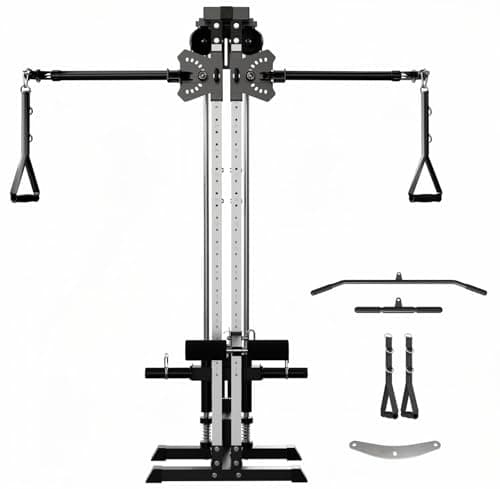
A dual-arm cable station that bolts to the wall and takes almost no floor — 22 height positions cover pulldowns, rows, flyes and pressdowns from one compact unit. The most space-efficient way to add cables.

Cable work in the smallest footprint
7.3
$349.99Amazon
02
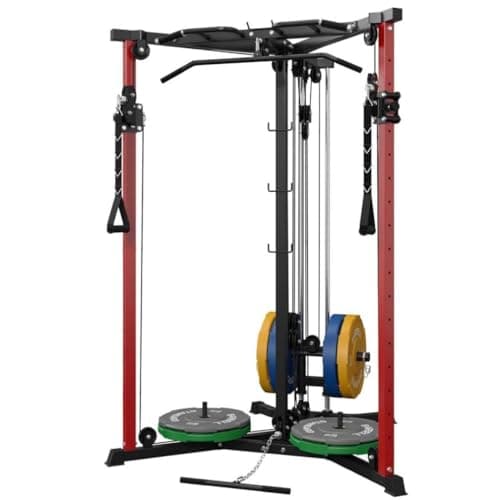
Mikolo Mikolo Cable Crossover / Functional Trainer
Mikolo Cable Crossover / Functional Trainer

A freestanding functional trainer with 17 pulley positions for the renter who wants cables without drilling. It takes more floor than a wall unit, but there's nothing to anchor and it does pulldowns, rows and flyes out of one frame.

Freestanding cable station
7.8
$349.99Amazon

#ad · Live prices from the Amazon Product API, as of Jul 22, 2026. Where we have no verified live price, we show none — we would rather leave a gap than print a number that has rotted.

In detail

The picks, in full

01
GMWD GMWD Wall-Mounted Cable Machine

Cable work in the smallest footprint

GMWD Wall-Mounted Cable Machine

Wall-mountedDual swivel arms22 positionsPlate-loaded
7.3/10

A dual-arm cable station that bolts to the wall and takes almost no floor — 22 height positions cover pulldowns, rows, flyes and pressdowns from one compact unit. The most space-efficient way to add cables.

Good

  • Takes essentially no floor space
  • Dual arms give true crossover movements
  • Loads with plates you may already own

Trade-offs

  • Must bolt to studs — not renter-friendly
  • Plate-loaded, so you supply the weight
Fit
9
Value
8
Install
5
Build
7

Skip this if…

you can't drill, or you don't own plates and don't want to buy them — a stack machine may suit you better.

Spec sheet

Type
Wall-mounted cable crossover
Footprint
Near-zero floor — on the wall
Positions
22 height settings, dual arms
Install / renter
Wall-anchor (studs) — landlord OK needed
Loads with
Standard weight plates
Ceiling needed
Wall run for the top pulley
$349.99View on Amazon

$399.9913% off

Price as of Jul 22, 2026. Prices change — Amazon's is the one that counts.

#ad · we may earn a commission from this link to GMWD Wall-Mounted Cable Machine

02
Mikolo Mikolo Cable Crossover / Functional Trainer

Freestanding cable station

Mikolo Cable Crossover / Functional Trainer

Freestanding17 positionsHigh + low pulleyPlate-loaded
7.8/10

A freestanding functional trainer with 17 pulley positions for the renter who wants cables without drilling. It takes more floor than a wall unit, but there's nothing to anchor and it does pulldowns, rows and flyes out of one frame.

Good

  • No wall anchoring — works for renters
  • High and low pulleys cover most cable moves
  • One frame replaces several stations

Trade-offs

  • Takes more floor than a wall-mounted unit
  • Plate-loaded — weight not included
Fit
7
Value
8
Install
9
Build
7

Skip this if…

your floor is the constraint and you can drill — a wall-mounted cable station reclaims that footprint.

Spec sheet

Type
Freestanding functional trainer
Footprint
Moderate — needs a dedicated corner
Positions
17 pulley heights
Install / renter
Freestanding — no drilling, renter-safe
Loads with
Standard weight plates
Ceiling needed
Clears the top pulley
$349.99View on Amazon

$499.9930% off

Price as of Jul 22, 2026. Prices change — Amazon's is the one that counts.

#ad · we may earn a commission from this link to Mikolo Cable Crossover / Functional Trainer

How to choose a cable machine for a small room

Start with the constraint that can't be negotiated: can you drill?If you own, or your lease allows anchoring into studs, a wall-mounted cable station is almost always the better small-space choice — it takes the least floor and the wall does the structural work. If you can't drill, the decision is made for you: a freestanding functional trainer like the Mikolo is the only cable machine you can keep.

Count the plates in your footprint

Both picks here are plate-loaded, so the honest footprint is the machine plus a home for the weight. If you already own standard plates, that's free capability; if you don't, budget for plates and somewhere to store them. A stack machine hides its weight inside the frame, which is one reason some small-space lifters step up to an all-in-one instead.

Measure the wall, not just the floor

A wall-mounted crossover needs studs where you want to train and enough clear wall height for the top pulley to run. Measure stud spacing before you buy, and confirm the arms have room to swing without hitting a door or window. Still deciding whether cables earn their place at all? Read do you need a cable machine at home? before you spend.

How we picked

We don't run a testing lab

We compiled published specifications, manufacturer documentation and aggregated owner reviews, then scored each product against a published rubric that weights fit-for-small-space, value, install reversibility and build. The scores are judgments from documented research — they are notmeasurements we took, because we don't have a lab and we're not going to pretend we do. Every dimension is cited in Sources.

Questions

Frequently asked

Do compact cable machines come with weight?
Both of our picks are plate-loaded, meaning you supply standard weight plates rather than getting a built-in stack. That keeps the machine small and cheaper, and it's free capability if you already own plates. If you'd rather not buy or store loose plates, a selectorized stack machine or an all-in-one home gym puts the weight inside the frame instead.
Can I fit a cable machine in an apartment?
Yes — that's exactly what these compact stations are for. A wall-mounted crossover takes almost no floor and is the smallest way to add cables, but it needs studs you can drill into. A freestanding functional trainer needs no anchoring and suits renters, but it claims a dedicated corner. Match the machine to whether you can drill and how much floor you can spare.
Wall-mounted or freestanding cable machine — which is better for small spaces?
A wall-mounted station wins on footprint and is the better call if you can drill into studs, because it reclaims nearly all of its floor and the wall shares the load. A freestanding functional trainer is the answer for renters who can't anchor anything — it just needs a corner it can keep. We tag every machine's install type on its Spec Block for this reason.
What can you actually train with a home cable machine?
A dual-pulley cable station covers most of the pulling and isolation work a small home gym misses: lat pulldowns, seated and standing rows, cable flyes, triceps pressdowns, face pulls and curls. With high and low pulleys and enough height positions, one frame stands in for several single-purpose stations, which is what makes cables worth the footprint.
Are plate-loaded cable machines hard to change weight on?
They're slower to change than a pin-select stack — you slide plates on and off the loading pins between exercises rather than moving a pin. For most home routines that's a minor chore, and it's the trade that keeps the machine compact and affordable. If quick weight changes matter more than footprint to you, a stack-based machine is worth the extra size.

Keep reading

Receipts

Sources

We don't run a testing lab, and we don't pretend to. Every dimension and rating traces to a manufacturer spec sheet or manual, named and linked above. Where a maker doesn't publish a number, the spec reads "Not published" rather than a guess. Read our full method.