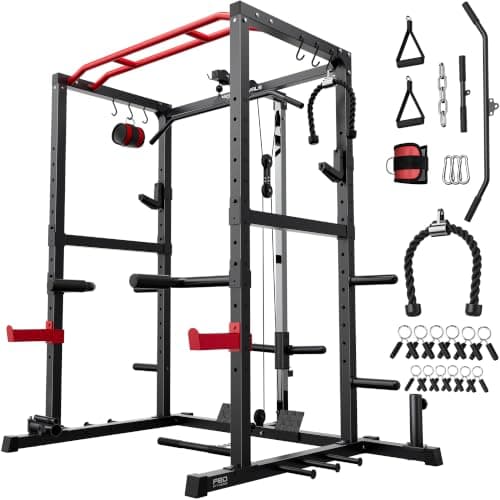
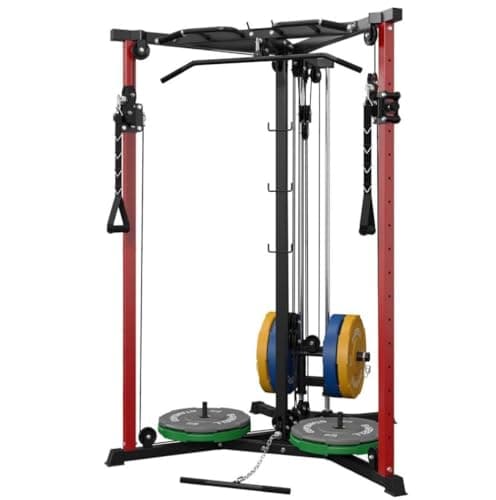
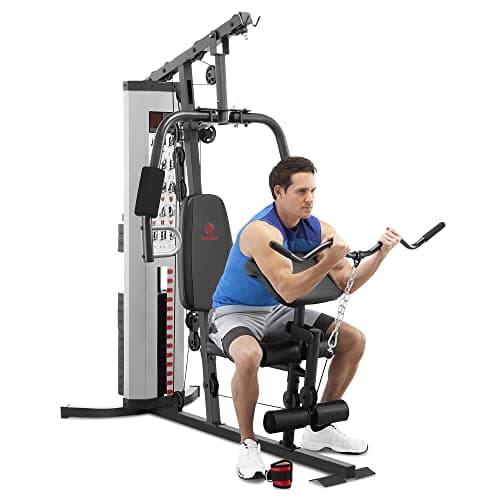
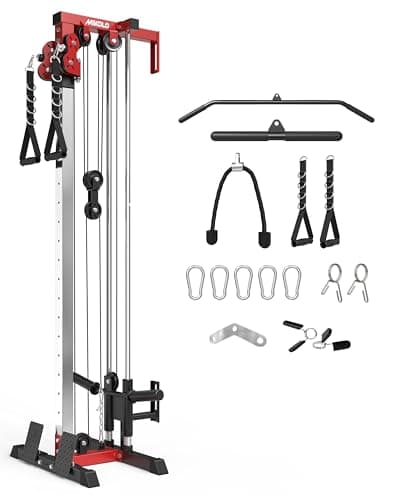
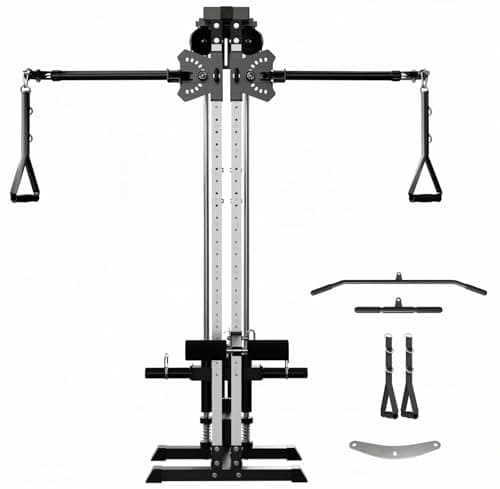
If you can drill into studs, the GMWD wall-mounted cable machine is the best lat pulldown for a small space: 22 height positions on dual swivel arms give you pulldowns, rows, flyes and pressdowns from near-zero floor space, because the whole machine lives on the wall. If you cannot drill, the Mikolo freestanding functional trainer does the same movements from a corner with nothing anchored. The SPORTSROYALS cage is the pick if you want the pulldown bundled with a squat rack, and the Marcy MWM-988 is the one to buy if you do not own weight plates and do not want to.
A lat pulldown is the single hardest gym movement to replicate at home, and it is worth being clear about why before spending money. Pull-ups need a bar and your bodyweight. A pulldown needs a high anchor, a downward cable path, and something holding you to the floor— because the load wants to lift you, not your arms. That third requirement is the one almost every "home lat pulldown" listing is quiet about, and it is the reason this page ranks the way it does.
The three things a pulldown needs at home
- Height for the top pulley.The anchor has to sit above a seated or kneeling person's reach, which in practice means a wall run or a frame that clears your head and then some. Our ceiling height guide has the clearances, and a low basement ceiling genuinely rules some of these out.
- Something to hold you down. A commercial pulldown has a thigh pad. Most compact cable stations do not, so you either kneel — which works fine and is how most people use a wall cable — or you load the stack lighter than you could handle seated. Neither is a problem, but you should know which one you are buying into.
- A weight source. Four of these five are plate-loaded, meaning the machine is the cheap part and the plates are a separate purchase and a separate storage problem. One is selectorized: pick the weight with a pin, no plates at all.
Plate-loaded or a stack? This is the real decision
If you already own Olympic plates, buy plate-loaded and the arithmetic is easy — the wall-mounted options are the cheapest route to a pulldown on this page, and they borrow the weights you already have. If you do not own plates, add their cost and their storage to the machine price before comparing anything, because 150 lb of cast iron is both real money and a real object. Our weight plate guide covers what to buy and plate storage covers where it goes.
If the answer is "I want a pulldown and I never want to touch a plate," the Marcy MWM-988 is the honest recommendation: a 150 lb pin-select stack with a chest press, a lat pulldown, a leg developer and pulley work in one corner unit. It is the largest permanent object on this page and it does not fold, which is the trade. Our all-in-one ranking and buying guide go further on that category.
How the five compare
| Machine | Route | Weight source | Floor used | Install |
|---|
| GMWD wall cable | Wall-mounted crossover, 22 positions | Your own plates | Near zero — on the wall | Stud anchors |
| SPORTSROYALS cage | Power cage with lat tower and low row | Your own plates | Permanent cage footprint | Freestanding |
| Mikolo functional trainer | Freestanding, 17 pulley heights | Your own plates | A dedicated corner | Freestanding |
| Marcy MWM-988 | Selectorized multi-station | 150 lb built-in stack | Fixed corner unit | Freestanding |
| Mikolo wall cable | Wall-mounted crossover, value pick | Your own plates | Near zero — on the wall | Stud anchors |
Why the wall wins in a small room
Both wall-mounted stations give up the thigh pad and the seat, and both give you back the entire floor. In a room you also live in, that is usually the right trade: you kneel for pulldowns, you stand for pressdowns and rows, and when you walk away there is nothing in the room. The price is a landlord conversation and a stud finder — these bolt into framing, not drywall, and there is no no-drill version of them. Our wall-mounted cable ranking has the install detail, and how much weight a wall-mounted rack holds explains what the anchors are doing.
If drilling is off the table entirely, the freestanding trainer is the answer and the comparison worth reading is functional trainer vs cable machine. It costs floor rather than wall, and for a renter that is usually the cheaper currency.
What a pulldown gives you that a pull-up does not
Worth stating, because for a lot of small-space lifters the cheapest answer to "I want to train my back vertically" is a doorway pull-up bar for under forty dollars and no machine at all. A pulldown is not a substitute for a pull-up; it is a different tool. It lets you load below your bodyweight, which is the whole reason the movement exists for most people, and it lets you add weight in small steps rather than hanging a belt off yourself. If you can already do sets of pull-ups and the goal is more of them, buy the bar. Our doorway pull-up bar ranking and power tower vs doorway bar comparison are the cheap end of this question answered properly.
Measure the cable path, not just the machine
Two measurements that catch people out. First, the top pulley needs clearance above it for the cable and the bar to travel, so the number to check is not the frame height but the frame height plus the bar hanging below it plus your reach. Second, a kneeling pulldown needs about three feet of clear floor in front of the wall — not much, but it is three feet you cannot put a sofa in. Mark both with tape before you order anything that bolts to a wall.
If the room genuinely has no wall run with studs in the right place, the compact cable machine ranking is the freestanding field, and do you need a cable machine at home is worth reading first — it is the page where we argue the other side.
The bundled option, and when it makes sense
The SPORTSROYALS cage is on this page because it answers two problems with one footprint: a 1,200 lb-rated four-post cage with a plate-loaded lat pulldown and low row built in. If you were going to buy a rack anyway and you have a permanent square of floor to give, it is by some distance the most capability per square foot here — squats, presses, pull-ups and cable back work from one object. If you need the floor back between sessions it is exactly the wrong answer, and a folding wall rack plus a wall cable is the pairing to look at instead. Our power rack ranking and folding racks with cables cover both sides of that fork.