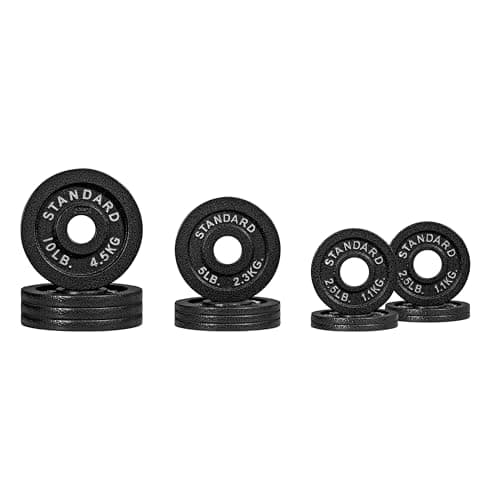
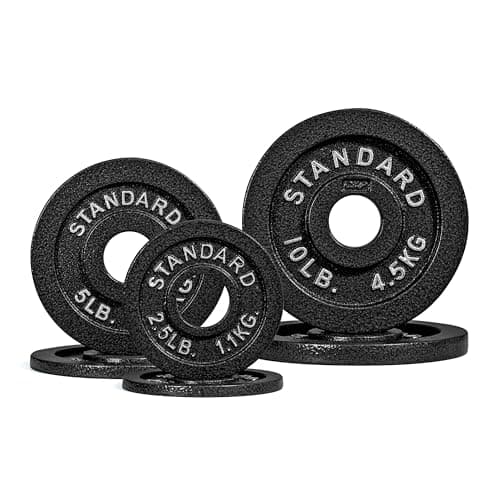
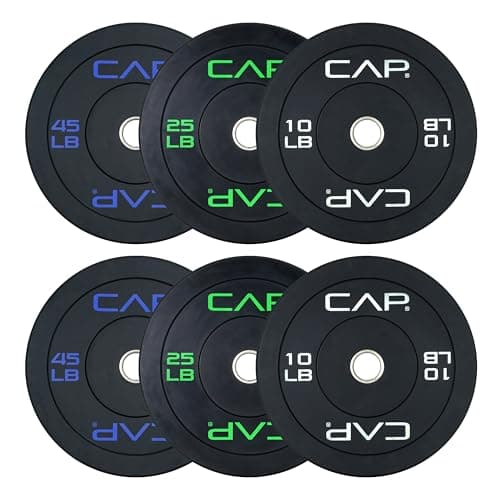
If anyone lives below you, buy rubber bumper plates — the rubber absorbs the strike that cast iron sends straight into the joists, and that single choice prevents more noise complaints than any mat or technique change. If you are on a slab, or your bar has short sleeves, cast iron is thinner per pound and cheaper, and it is the better buy. Everyone eventually wants the small change plates, and almost nobody buys them first.
Plates look like the boring part of a home gym purchase. In a small space they are not: they are the loudest thing you own, the heaviest load you will ever put on the floor, and the item whose thickness decides whether your short barbell can actually hold the weight you want to lift. Three specs matter, and none of them is on the front of the box — noise, thickness per pound, and total set weight versus the sleeve length you have.
We rank three sets that answer three different rooms. Below the picks, the buyer's guide covers the sleeve math, what actually goes under the plates, and why the second thing you buy should almost always be a set of small plates rather than more big ones.
Noise: the only spec your neighbor cares about
The complaint a home gym generates is almost never music or grunting. It is impact — energy that goes into the floor structure and comes out of the ceiling below as a thump. A cast iron plate meeting a hard floor, or another cast iron plate, is about the most efficient way to create that impact. A rubber bumper plate deforms on contact and turns a large part of that energy into heat instead.
That is why bumpers are the top pick here despite costing more per pound and eating more sleeve. If you live above someone, no amount of matting fully compensates for iron, and bumpers plus a mat is dramatically quieter than either alone. Our soundproofing guide covers the rest of the stack.
Thickness per pound: the spec that decides if it fits your bar
Every barbell has a loadable sleeve length, and every plate consumes some of it. Bumper plates are thick because the rubber that makes them quiet also makes them bulky. Cast iron plates are thin and dense. On a full 7-foot bar the difference rarely matters. On the 5 and 6 foot bars small rooms need, it decides your ceiling on load.
The practical rule: if you own a short bar and expect to load past roughly bodyweight, cast iron is the sane choice and a mat handles the floor. If you are training in the range most home lifters actually train in, bumpers will fit fine and you get the quiet.
Buy small plates earlier than you think
A typical starter set gives you 45s, 25s and 10s. That means your smallest jump on the bar is often 20 lb, which is a fine jump on a deadlift and an impossible one on an overhead press. Six small plates — a pair each of 2.5, 5 and 10 — cost less than a single 45 and turn a stalled lift into a progressing one. They also take almost no storage, which in a small room is the second-best thing about them.
Where plates live, and what they weigh on your floor
Plates are the densest thing in a home gym and they concentrate load in one spot. A vertical plate tree or a wall-mounted plate holder gets them off the floor, protects your baseboards, and — importantly in an apartment — spreads the weight rather than stacking 300 lb on one square foot. Our weight storage guide ranks the options, and the floor load guide explains why concentration matters more than total weight.
Whatever you buy, put something under it. Bare cast iron on laminate, tile or hardwood will leave a mark on the first set. See apartment home gym flooring.