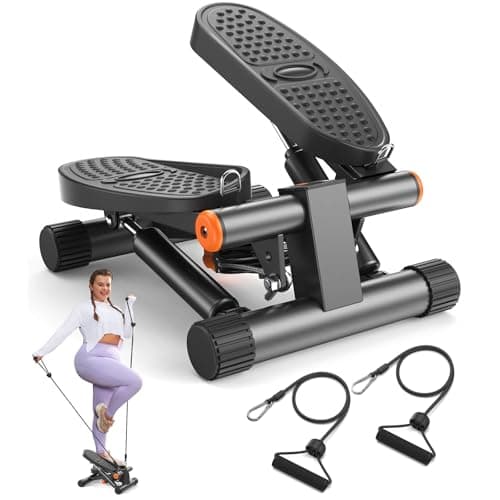
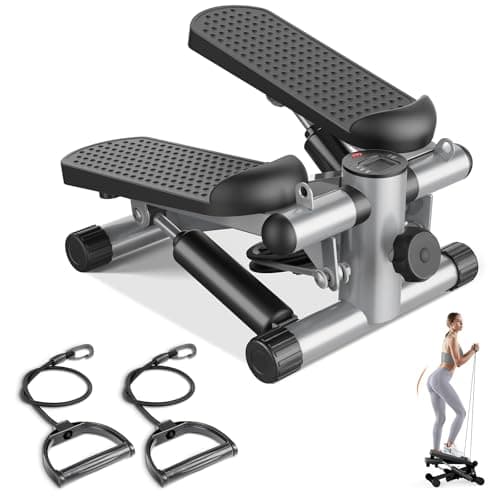
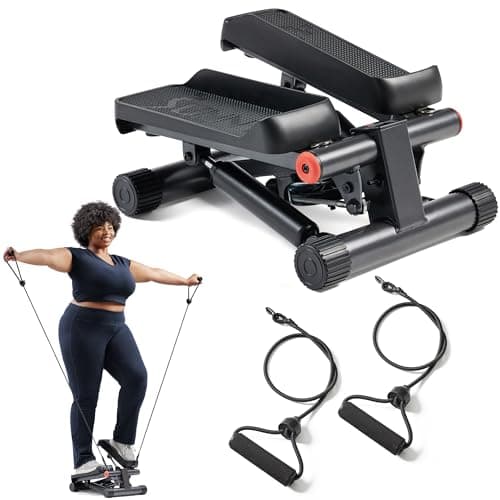
For most small rooms the Sunny Health mini stepper is the pick — 15.9 by 12.2 inches, a published 300 lb capacity, and hydraulic cylinders with no motor to hum through a floor. Choose the Niceday instead if the neighbor below is your binding constraint: it is the only one here with a silicone cushioning pad and an adjustable stride.
A mini stepper is the answer to a question the rest of the cardio market ignores: what do you buy when even a walking pad is too much object? A walking pad is roughly 55 inches long and needs somewhere to slide. A folding treadmill needs a wall to stand against. A mini stepper is about the size of a shoebox turned sideways, weighs 12 to 16 pounds, and lives under a desk permanently without anyone noticing.
It is also the quietest powered-cardio alternative there is, because it is not powered. All three picks here use hydraulic cylinders — no motor, no belt, no roller. Nothing spins. In a building where a treadmill motor is the thing that generates complaints, that structural fact matters more than any decibel claim on a box.
What a mini stepper actually trains
A short, loaded vertical range through the hips, quads and calves, plus whatever your arms do with the bands. It is genuinely useful cardio and genuinely limited: the stride is a few inches, so it does not replicate walking, stairs or running. Treat it as a way to accumulate low-impact minutes rather than a substitute for a treadmill.
If step count and daily walking are the goal, a walking pad is the right machine and we cover it in the walking pad roundup. If what you want is something you will actually use because it never has to be set up, this category wins on that alone.
How the three compare
| Stepper | Footprint | Height | Weight |
|---|
| Sunny Health | 15.9 x 12.2 in | 13.6 in | About 15.9 lb |
| Niceday | 13.5 x 12.5 in | 16 in | About 13.9 lb |
| Sweetcrispy | 14.6 x 11.4 in | 7.1 in | 11.8 lb |
The height column is the one to read if the plan is under-desk storage. At 7.1 inches the Sweetcrispy clears most desk aprons and sofa bases; at 16 inches the Niceday does not, and needs a corner instead.
Hydraulic resistance and what it does over a session
Every mini stepper in this price range uses hydraulic cylinders, and they behave in a way worth understanding before you buy. The fluid warms as you work, and resistance drops as it does. Niceday states this openly on its listing — high resistance for about 30 minutes, then a deliberate decrease. That is honest, and it applies to the others too whether or not they say so.
Practical consequence: a mini stepper is best used for sessions of about half an hour or in several short blocks through a working day. If you want an hour of consistent resistance, a magnetic machine — a folding bike or a compact rower — is the right tool.
Noise, honestly
There is no motor, so the mechanical noise floor is genuinely low — the cylinder makes a soft hydraulic sound and that is it. What reaches the floor below is your bodyweight shifting, and that is a contact-point problem rather than a machine problem. The Niceday's silicone base pad addresses it directly; for the other two, put a mat underneath.
We do not measure decibels and will not repeat a manufacturer's number as if we had. The Niceday listing claims 25 dB; treat that as the maker's claim, not a verified figure. Our quiet cardio roundup explains how we reason about noise across the category.
Stride height and why it matters
Two of these adjust stride via a knob underneath. A low stride makes each step easier and lets you go longer; a high stride makes it harder and works balance more. That adjustment is the main thing separating a stepper you use for months from one that gets boring in three weeks, and it is worth prioritizing over an app connection.
Where to put it, and what goes underneath
The whole appeal of this category is that it does not need to be put away, so the best placement is wherever you already stand or sit. Under a standing desk works well; beside a sofa works if the height allows. Whatever the spot, put something under it:
- On hardwood: a mat stops the frame walking and protects the finish.
- On carpet: a firm mat gives the frame a level base — carpet lets a light stepper rock. See home gym on carpet.
- On an upper floor: a mat is the single cheapest thing you can do for the neighbor below. Our gym mat roundup covers the options.
Who should skip this category
If you want to run, walk meaningful distance, or train cardio hard enough to need consistent resistance for an hour, buy a different machine. A mini stepper is deliberately small, and being small is the whole of its argument. Anyone with room for a walking pad or a folding treadmill will get more out of those. If you want the same stepping movement with a handlebar, a much longer stride and your arms involved, that machine is a vertical climber — four to five square feet instead of one, and it asks for ceiling height a stepper never does.
And if you are over about 200 lb and step hard, weight the frame choice accordingly — the lightest option here is also the one most likely to shift on a hard floor.