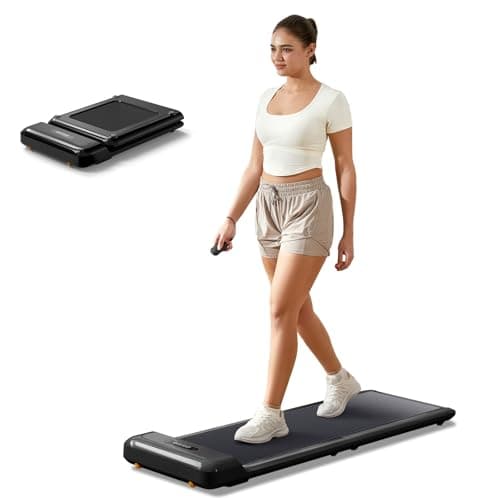
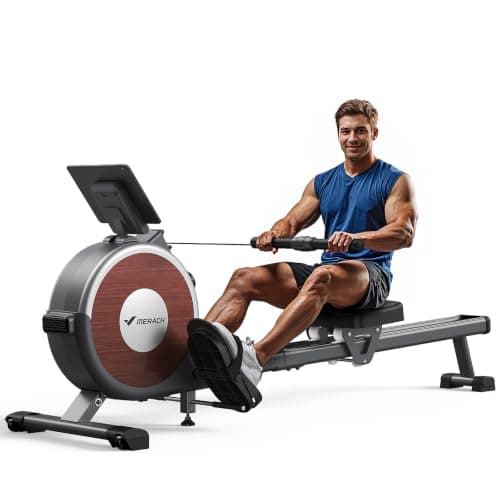
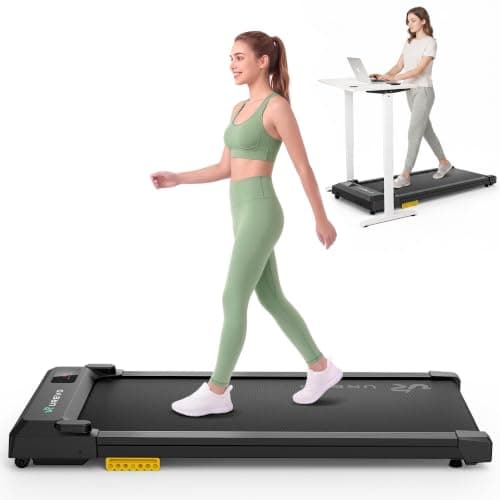
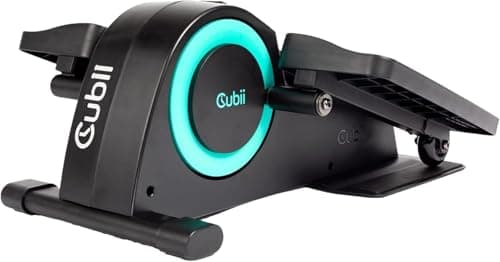
The quietest cardio machine for an apartment is one with no impact at all: the Cubii JR1 tops this list because a seated elliptical never puts a footfall into the floor, and footfall is what the neighbor below actually hears. Everything else here is ranked by how much impact it sends downward, not by how loud it sounds in your own room. The WalkingPad C2 is the quietest way to get real steps, the Merach magnetic rower is the quiet full-body session, and the UREVO walking pad's double shock absorption makes it the value pick for a floor you share.
Almost every "quiet cardio" article ranks the wrong thing. Airborne sound — motor hum, belt whir, the fan on a console — is what youhear, and it mostly stays in your room, muffled by walls that are perfectly good at stopping air-carried noise. What travels is impact: structure-borne energy that couples through the machine's feet into the floor, runs along the joists, and radiates out of the ceiling below as a low thud. That's why your downstairs neighbor can hear your treadmill but not your television. Rank by decibel claims and you optimize for the sound that was never the problem.
So the hierarchy is straightforward once you look at it this way. Zero-impact seated machines — under-desk ellipticals and pedal units — put essentially nothing into the floor structure; the load path is you, the chair and a frame that never gets struck. Low-impact machines like a magnetic rower add the roll of a seat and a light catch, which is a fraction of a footfall. Walking puts a real but modest impulse into the floor on every step, cushioned by the deck and by whatever you put underneath. Running is a different order of magnitude, which is why no running machine appears on this page at all.
The corollary is that the mat is not an accessory — it is part of the machine's noise performance. A dense mat decouples the feet from the floor and spreads each impulse over a wider area and a longer moment, which is precisely the mechanism that reduces structure-borne transmission. Foam tiles help; denser rubber helps more; a mat over existing carpet is better than either alone. Our apartment flooring guide covers what holds up under cardio, rubber gym flooring for apartments ranks the denser option for an upstairs unit, and the same logic drives lifting in an apartment without the noise.
One more variable sits outside the equipment entirely: your building. A concrete-slab high-rise behaves nothing like a wood-framed walk-up, and the same walking pad can be a non-issue in one and a nightly complaint in the other. If you're unsure, start with a seated machine and a mat, keep cardio out of quiet hours, and — genuinely the most effective move on this page — ask the neighbor below to tell you if they hear anything. For the treadmill-specific version of this question, read will a treadmill bother my downstairs neighbors?
How we ranked quiet — and what the ranking can't tell you
We ranked these machines by impact classfirst: no impact, low impact, then walking impact, with shock absorption and mass as tiebreakers within a class. That ordering reflects how noise complaints actually arise between floors in a residential building. It deliberately ignores manufacturer loudness claims, which are measured in conditions nobody replicates at home and describe the sound in your room rather than the thud in someone else's.
We did not measure decibels
We want to be explicit about this: we have not taken sound-level readings of any machine on this page, and we have not measured impact transmission through any floor. We don't have a lab and we're not going to imply otherwise. This ranking is reasoning from published specifications — resistance type, shock absorption, seated versus standing use, machine mass — applied to how structure-borne noise behaves. Any specific number you see quoted elsewhere for these products deserves the same skepticism, because test conditions are rarely stated. Our methodology page spells out exactly where our scores come from.
Seated beats standing, every time
If your only requirement is that nobody knows you're exercising, a seated machine wins and it isn't close. There is no footfall, so there is no impulse to transmit; the frame sits still and the moving parts are magnetic. The trade is intensity — a seated under-desk unit is movement rather than training. Our under-desk cardio roundup ranks that category properly, including the clearance measurement that decides which one fits your desk.
If you want steps, buy the shock absorption
Walking pads are the quietest way to get real step counts, and within the category the differences that matter for a shared floor are cushioning and where you put the machine. Deck shock absorption spreads each footfall; a mat underneath does the rest; and placing the pad near a load-bearing wall rather than the middle of a room span tends to help, because floors flex most at their center. Walk rather than jog, and the whole question usually stops being a question.
The free fixes are the good ones
Timing costs nothing and solves more complaints than any purchase: keep cardio out of early mornings and late evenings, and you remove the hours when a low thud is most noticeable. Shoes matter too — a cushioned trainer is quieter through the floor than a hard-soled shoe or bare feet slapping a deck. And if you have any doubt at all, a two-minute conversation with the person below turns a potential complaint into a heads-up. None of that shows up on a spec sheet, and all of it works.
If the shortlist has come down to a rower against a treadmill, the noise story is only half of it — the lane, the ceiling and the stored shape are the other half, and rowing machine vs treadmill for small spaces puts them side by side.