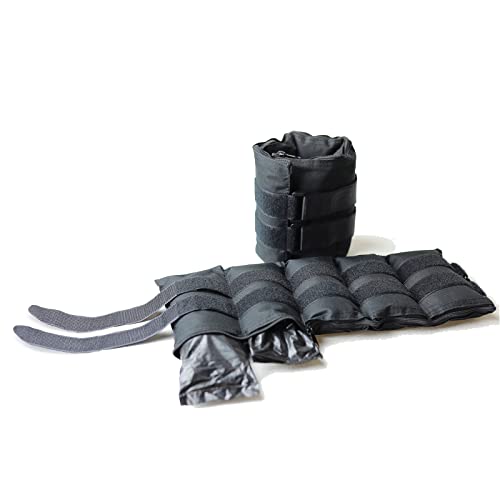
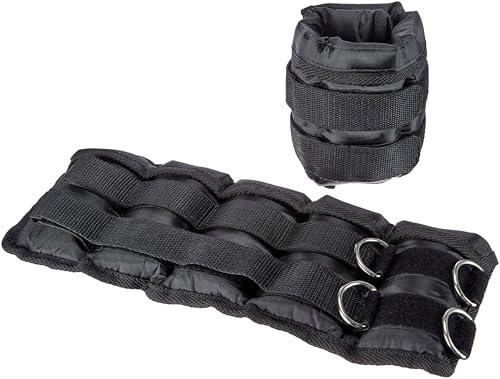
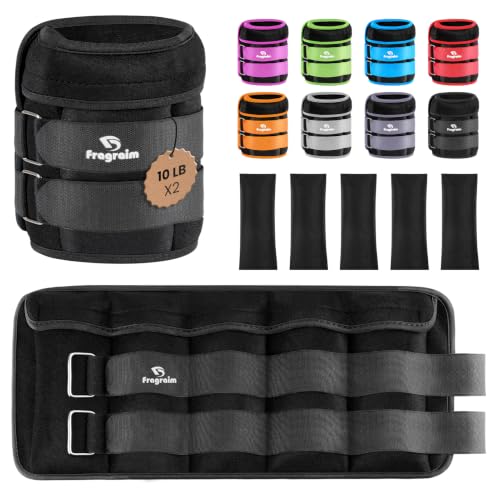
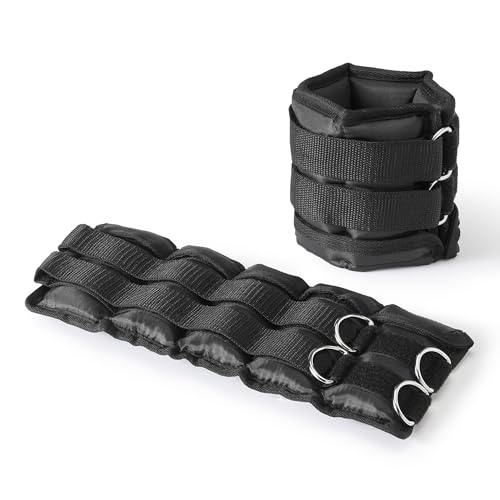
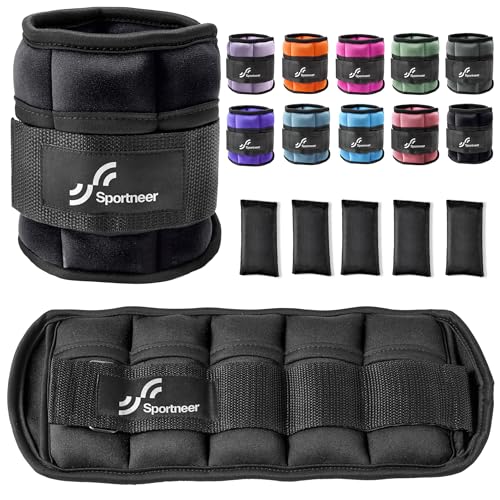
The Sportneer pair is our pick because it publishes the number that actually decides this purchase: it fits ankles from 7.5 to 12.5 in around, on a 12.5 in strap, and it adjusts in 1 lb steps. No other listing in this class states a fit range at all. The CAP Barbell 20 lb pair is the budget pick and the value story of the page — twice the load for roughly half the money. The Amazon Basics 10 lb set has the most secure closure here, a genuine dual strap. The Fragraim 2-20 lb pair has the highest ceiling and a double buckle, and costs about five times what the CAP pair costs for the same 20 lb. The Amazon Basics 5 lb set adjusts in 0.5 lb steps, which makes it the right first purchase rather than the cheapest one.
Every other product on this website costs you floor. A rack takes a corner, a bench takes a wall, even a walking pad takes the space under your bed. Ankle weights take nothing. They live in a drawer, they weigh what they weigh, and they add load to movements you were already doing — walking, stairs, a bodyweight circuit on a mat, leg work at the end of a session. For a reader in a studio apartment or a dorm room, that is a real category, and this site has never ranked it.
It is also a category with a narrow honest use case, and we are going to be direct about where that ends. These are accessories, not a strength program. A 10 lb pair of cuffs is not a substitute for adjustable dumbbells, and the marketing copy on every listing in this class oversells what strapping 5 lb to your shin does. What they are genuinely good at is covered below, along with what they are not.
The finding that shapes this page: fit is unpublished, and fit is everything
This is a product you wear. It either closes around your ankle with enough strap left to hold, or it is a return. Across five listings from four makers:
- Exactly one publishes an ankle circumference range. Sportneer states 7.5 to 12.5 in, with an approximately 12.5 in hook-and-loop strap.
- Two publish only a strap length. CAP states 10.5 in, which is the shortest figure in the group and the one most likely to catch out a larger calf. Sportneer states about 12.5 in.
- Two publish neither, and say "one size fits most" instead — including the most expensive pair on the page.
- Cuff length varies by 6 in across the group, from the 13.4 in Amazon Basics starter to the 19.3 in CAP cuff. A longer cuff spreads the same weight over more of your leg, which is more comfortable but rides further up the calf.
So the first thing to do is not read a review. It is to put a tape measure around your ankle just above the bone, and around your lower calf about 4 in higher, and write both numbers down. Then buy against them. That single step removes most of the returns in this category, and only one listing in five gives you anything to compare against.
The second finding: the price spread makes no sense
There are two 20 lb pairs on this page. Both are two cuffs holding five removable 2 lb packs each. Both close with hook-and-loop. Neither publishes an ankle circumference. One costs about five times the other.
We looked for the specification that justifies the gap and there is not one in the published data. The expensive pair uses iron shot rather than sand — denser fill, so a slimmer cuff for the same weight — and a double-buckle closure, which is a real advantage if you intend to run rather than walk. The cheap pair publishes its cuff dimensions, its strap length and a model number, and the expensive one publishes none of those and carries an item-weight field of 1.5 lb that cannot describe a 20 lb product. On the published evidence, you are paying for the fill material and the buckle. That is worth something to some readers. It is not worth five times, and this page ranks accordingly.
What we ranked on
- Published fit. Ranked hardest, because it is the one spec that makes the product work or not, and because publishing it is a choice the maker makes. Sportneer is the only set here that does.
- Total load, and the increment. Totals here run from 5 lb to 20 lb per pair. More interesting is the step: 0.5 lb on the Amazon Basics starter set, 1 lb on the Sportneer, 2 lb on both 20 lb pairs, and unstated on the Amazon Basics 10 lb set, which describes "a removable pocket" without saying how many packs are in it. Fine steps matter more than a high ceiling for most people in this category.
- The closure. A single hook-and-loop tab is the default. Two straps (Amazon Basics) or a double buckle (Fragraim) hold better under movement. A metal D-ring (Sportneer) stops the cuff creeping down the leg, which is the most common complaint about every product in this class.
- Fill and shell. Sand is cheap and conforms; iron shot and iron-sand packs are denser, so the cuff is slimmer for the same load. Neoprene is softer against skin; polyester is tougher and cheaper. Zippered inner compartments (CAP) stop a pack working loose mid-walk.
- Whether it is rated for wrists too. Two listings say so explicitly, which roughly doubles what the purchase does — the same cuffs add load to a bodyweight circuit or shadow-boxing as well as to walking.
- What is published at all. Model numbers, dimensions, strap lengths, warranty. One set in this group has a model field that reads "/", and one publishes an item weight that is off by a factor of thirteen. Where a figure is unusable we print "Not published" rather than repeat it.
What ankle weights are genuinely good at
- Adding load to walking, including on a walking pad. This is the honest headline use. If you already walk — outside, on the stairs, or on a walking pad under a desk — cuffs are the cheapest way to make that same time harder without buying anything that takes up space.
- Floor-based leg and glute work. Kickbacks, bridges, fire hydrants, clamshells, leg raises. Movements where the resistance has to sit on your limb rather than in your hand, and where a dumbbell is awkward or impossible.
- Core work, when they are rated for wrists. Hollow holds, leg lowers and dead bugs all get harder with load at the far end of the lever. Our ab and core equipment page covers the rest of that lane.
- Being completely silent. Nothing is dropped, nothing strikes the floor, nothing rattles. In a building where lifting noise is the real constraint, cuffs and bands are the two categories that solve it outright.
- Storing in literally no space. Two cuffs in a drawer. This is the only product class on the site with a zero-square-foot answer, and for a dorm room that counts for a lot.
And what they are not
We are not going to pretend this is a strength category. Three honest limits:
- The ceiling is low and it arrives fast. 10 lb per cuff is the most anything here offers. For leg strength that is a warm-up, and there is nowhere to go afterward inside this product class. If progressive leg strength is the goal, that is what adjustable dumbbells and a folding squat rack are for.
- Weight on the end of a long lever changes how you move. Added mass at the ankle alters the inertia of your leg through a stride — that is simple mechanics, and it is also why nearly every listing in this class recommends starting light and walking rather than running. We are not going to make claims about joints or injury that we cannot source; we will say that if anything hurts, that is your signal, and that a weighted vest loads your torso instead of your limbs and is the better tool for adding load to serious walking.
- The marketing copy is the worst on this website. Every listing in this category promises toned legs and burned fat. None of them publishes an ankle circumference. Read the specification table, not the bullets.
How much weight should you start with?
Lighter than the listing implies, and this is the one place a specification choice has a practical consequence. The adjustable-pack design exists so that you can run a 10 lb cuff at 2 lb — and that is how most people should begin, especially for anything that involves walking or stairs rather than lying on a mat.
That makes the increment more important than the total for most buyers. A 20 lb pair that only steps in 2 lb jumps is coarse at the bottom end; the 0.5 lb inserts in the Amazon Basics 5 lb set are the finest steps on this page and the reason it is ranked at all, given its 5 lb ceiling. The two middle options — 1 lb Sportneer packs and 2 lb CAP packs — cover most readers.
The practical plan: buy more total load than you need now, and run it with packs removed. Every set here except the Amazon Basics 10 lb publishes how many packs it contains and what each weighs, so you can plan the progression before you order.
Ankle weights, a vest, or dumbbells?
| Tool | Where the load sits | Realistic ceiling | Stored footprint | Best at |
|---|
| Ankle weights | End of the limb | 10 lb per cuff | Zero — a drawer | Floor leg work, core, loaded walking |
| Weighted vest | Torso, close to your center | Typically 20-60 lb | Zero — a hook | Walking, stairs, push-ups, pull-ups |
| Adjustable dumbbells | In your hands | 50 lb-plus per hand | 2-3 sq ft permanently | Actual progressive strength |
| Resistance bands | Wherever you anchor them | Variable, not measurable | Zero — a drawer | Pulling patterns, travel, warm-ups |
Read across the rows and the sorting rule is simple. If you want to add load to walking, buy a vest — it sits near your center of mass and goes much heavier. Our ranking is best weighted vests for small spaces. If you want to get stronger, buy dumbbells — the adjustable sets are here, and the cheap end of that market is adjustable dumbbells under $200. If you want resistance on your legs on the floor, in a drawer, for the price of a takeout — buy ankle weights. That is the job they do better than anything else.
Fit: the two-minute check before you order
- Measure around your ankle, just above the bone, with a tape measure or a piece of string you then lay against a ruler. Most adults land between 8 and 11 in.
- Measure around your lower calf, about 4 in higher. A long cuff — the CAP is 19.3 in of material — sits here, not on the ankle, so this is the number that decides whether a long cuff is comfortable.
- Compare against the published figures. Sportneer is the only set that states a range (7.5-12.5 in). CAP publishes a 10.5 in strap, which is the binding constraint if your measurement is near or above 11 in. The other three publish nothing, so you are buying on the returns policy.
- Add room for a sock and a shoe collar. People measure barefoot and wear them over socks and running shoes.
Sand, iron shot, or iron-sand packs?
All three appear on this page and the difference is density, which shows up as thickness.
Sand (CAP, both Amazon Basics sets) is the cheapest fill. It conforms well to your leg and it is the reason these products cost what they do. The trade is bulk: the same 5 lb of sand is a thicker cuff than 5 lb of iron.
Iron shot and iron-sand packs (Fragraim, Sportneer) are denser, so the cuff is slimmer for the same load and fits better inside a trouser leg or under a sock. This is the main physical justification for the higher prices on this page, and it is a real one — it is just not a five-times one.
Whatever the fill, look for a zippered inner compartment rather than an open pocket. CAP publishes zippered compartments inside external pockets, which is the arrangement least likely to shed a pack halfway round the block.
Considered and not ranked
Two listings were checked and left off. A washable Oxford-fabric 10 lb pair reads well — removable sandbags, adjustable straps, stated for wrists as well as ankles — but its listing publishes no cuff dimensions, no pack count, no pack weight, no fit range and no model number, which leaves nothing to rank. A Sportneer 5 lb-per-pack ten-pair bundle is a volume pack aimed at studios rather than a home buyer, and the per-cuff specification is the same as the pair we ranked.