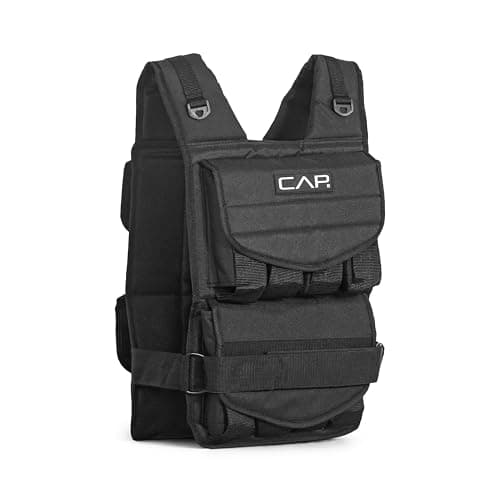
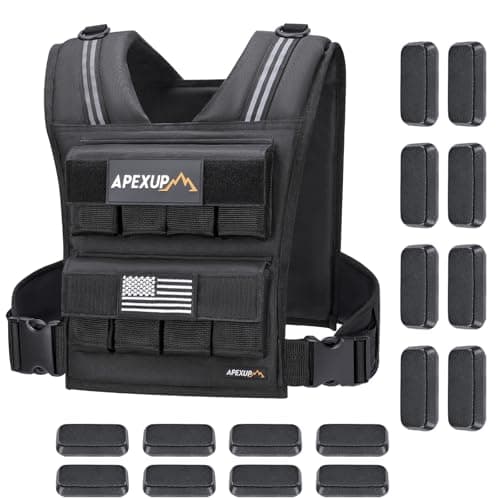
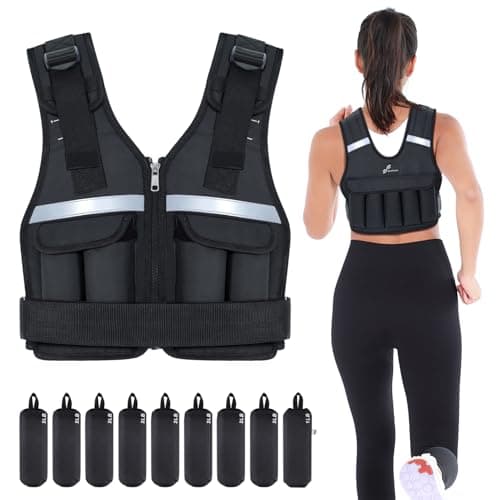
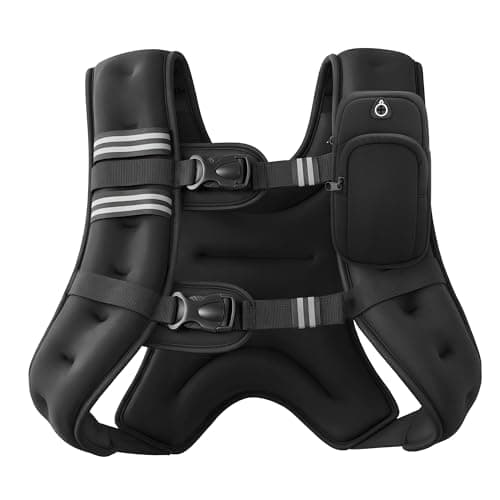
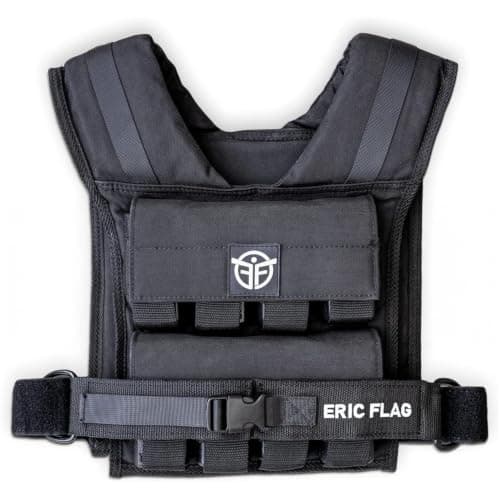
The Eric Flag 40 lb vest is our pick, because it steps in 2.4 lb increments across sixteen removable iron weights and it is the only vest here that publishes what the empty shell weighs — 1.6 lb — which is the number that tells you how much of the advertised load is really load. The CAP vest is the value pick, reaching the same 40 lb ceiling in 2.5 lb packets for well under half the money; the APEXUP uses solid cast iron blocks instead of mineral packets; the Sportneer is the one that properly covers the 2 to 17 lb band and actually washes; and the fixed ZELUS is the cheapest way to own one honest load, with the only published chest range on the page.
A weighted vest is the odd one out in this hub. Everything else on the machines hub is a structure — a tower, a cable stack, a bar bolted to a wall — and every one of them costs you floor or wall. A vest costs you a coat hook. In a room where the doorway pull-up bar and a mat are already the whole gym, it is very often the only piece of equipment left that can make the next six months harder.
What a vest is actually for
It adds load to movements where your body is the bar. Pull-ups, chin-ups, dips, push-ups, step-ups, split squats, carries and loaded walking — all of them get heavier by the exact weight you put in the pockets, and none of them need another square foot of room. That is the whole mechanism, and it is worth being plain about it because the listings in this category are not. Most of them lead with calorie figures and body-composition promises. We are not going to repeat any of those: we describe what the vest weighs and how it adjusts, and what that does for you is a question for someone who can see you train.
What a vest does not do is replace a loaded bar. There is no version of a 40 lb vest that loads a deadlift or a squat the way plates do, and the strongest honest case for one in a small space is as the progression tool for equipment you already own. If your problem is that bodyweight pull-ups have stopped being hard, a vest is the cheapest and smallest solution there is. If your problem is that you cannot load your legs, the honest answer is a trap bar and about five feet of clear floor, or a heavier adjustable kettlebell.
The spec every listing hides: what the vest itself weighs
"40 lb weighted vest" is a claim about the total, and the shell is part of the total on some vests and not on others. Eric Flag publishes both numbers: 40 lb of iron across sixteen pockets, in a shell that weighs 1.6 lb empty. Nobody else on this page publishes an empty weight at all — and on the APEXUP, Amazon's item-weight field says 44.2 lb against a stated 40 lb load, two figures that cannot both describe the same object with no third number to reconcile them.
We print that gap rather than doing arithmetic on a shipping-weight field, because a shipping weight includes packaging and an item weight is frequently just wrong. The Vest empty row on every Spec Blockbelow therefore reads either a published figure or "Not published", four times out of five.
The five things we ranked on
- The increment, before the ceiling.The smallest amount of load you can add is what makes a vest a training tool rather than a single step. 2.4 lb beats 2.5 lb beats "none, it is sewn in", and a 1 lb pack at the bottom of a light range is worth more than another ten pounds at the top.
- Fill type. Solid cast iron blocks, sealed mineral packets, or iron sand stitched in. Blocks do not leak and can be replaced one at a time; sand cannot be removed, which means the vest can never be washed and a seam failure ends it.
- Whether the weights come out. This is a hygiene spec, not a nice-to-have. A vest absorbs everything you sweat into it. Two picks here state outright that every weight removes for washing; the sewn-in vest cannot be washed at all.
- Published fit range.One vest on this page publishes an actual chest range (31.5 to 45 in). The other four say "one size fits most", which is a large claim to make about strapping 40 lb to a torso. We flag the silence on every card.
- Bulk across the chest and shoulders. A thick vest fouls things in a small room: a doorway pull-up bar gives you a few inches of clearance, floor work puts the front pockets against the mat, and a loaded vest changes how you fit through a narrow doorway at all. Padded shoulders and a waist belt are what stop the load moving.
How the five compare
| Vest | Load | Increment | Fill | Empty weight |
|---|
| Eric Flag 40 lb | 0-40 lb | 2.4 lb x 16 | Iron weights | 1.6 lb (published) |
| CAP 2.5-40 lb | 2.5-40 lb | 2.5 lb packets | Iron ore fines | Not published |
| APEXUP 40 lb | To 40 lb | 2.5 lb blocks | Cast iron blocks | Not published |
| Sportneer 2-18 lb | 2-17 lb published | 1 lb, then 2 lb | Weight packs | Not published |
| ZELUS 20 lb | 20 lb fixed | None | Iron sand, sewn in | Not applicable |
The last row is not a failure — it is a different product. A sewn-in vest has nothing to load, nothing to lose and nothing to rattle, and it is the cheapest thing here. You are buying one rung of a ladder instead of the ladder.
How to choose a weighted vest for a small space
1. Start from the movement, not the number
Decide what the vest is going to load before you decide how heavy it should be, because the answer changes the vest. A vest for weighted pull-ups on a doorway bar wants to be thin across the chest and tight to the body, and it wants fine increments, because adding ten pounds to a pull-up is a bigger jump than it sounds. A vest for loaded walking wants pockets for a phone and keys and a comfortable shoulder, and the increment barely matters. A vest for push-ups and floor work wants the weight mostly on the back, because front pockets press into the mat.
2. Buy the increment, not the ceiling
Every vest on this page reaches a ceiling you will probably never need. What you will use every week is the step. Sixteen 2.4 lb weights give you a usable ladder from nothing to 40 lb; one sewn-in 20 lb block gives you 20 lb. The practical test: name the three loads you want this month, and check the vest can make all three. If it can only make one of them, you are buying a fixed vest with extra steps.
This is also where the light vest earns its place. The Sportneer covers 2 to 17 lb in 1 and 2 lb steps, which is the band where a first weighted pull-up or a first loaded walk actually happens — and which the three 40 lb vests cover badly, because their smallest step is a quarter of that whole range.
3. Check the fill, because it decides the vest's whole life
There are three fills in this category and they are not equivalent:
- Solid cast iron blocks (APEXUP). Nothing leaks, one damaged block is one block, and you can count them. The heaviest and most durable option.
- Sealed mineral packets (CAP, and most adjustable vests at this price). Cheaper and quieter against the body. A split packet is messy and the replacement is a customer-service conversation.
- Iron sand stitched in (ZELUS). Cannot be removed, which means the vest cannot be washed and the weight cannot be changed. In exchange it is the cheapest, the simplest and has nothing to lose.
Removable fill is also the washing answer, and it is a real consideration for a vest that lives in an apartment. Sportneer states plainly that every weight extracts for cleaning; Eric Flag states hand wash with the weights out. A sewn-in vest gets wiped down and that is all.
4. Measure the clearance you train in, not just the vest
This is the small-space failure mode. A loaded vest adds an inch or two to your chest and back, and the places a small-space gym puts you are tight already. On a doorway pull-up bar you have a few inches between your chest and the frame at the top of the rep — a thick vest finds it. Under a low basement or attic ceiling you have less headroom standing than you think, and our ceiling height guide covers how to measure it. On a dip station the vest hangs forward and changes your balance point. None of this makes a vest a bad idea; it makes a thin vest with a snug waist belt a better one.
5. Expect noise through the floor, and plan for it
A vest makes you heavier, and a heavier body landing on a floor is louder. Step-ups, jump work and even dismounting a pull-up bar all transmit more through the structure with 40 lb strapped on than without it. If you are above an occupied unit, the fix is the same as it always is here: a firm dense mat where your feet land, not soft foam. Our apartment flooring guide covers what works, and lifting in an apartment is the honest version of the whole noise question. Land quietly or do not land at all — carries and step-downs are vest-friendly in a way that jumping is not.
6. Where the vest actually lives
On a hook. That is the whole storage section, and it is why this page exists on a dimension-first site: a 40 lb vest is the only 40 lb purchase here that occupies no floor at all. A loaded vest on a single hook is a point load on a wall, so use a stud or a proper anchor rather than a drywall screw — and renters should note that one picture hook is a very small hole, which is the opposite of the wall-mounted rack conversation. If the floor is genuinely full, our renter-friendly ideas guide covers what else works without a drill.