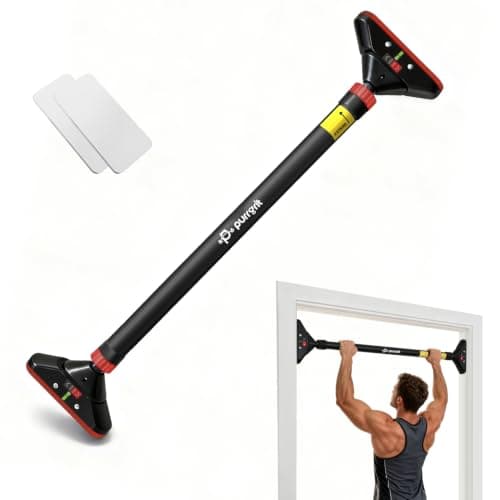
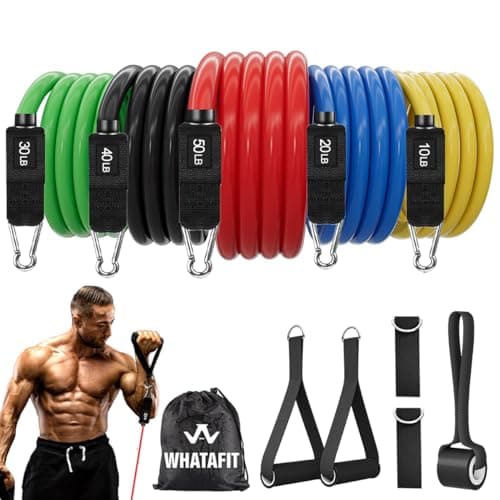
If you buy one thing with a hundred dollars, buy the band set. A five-tube kit rated 10 to 50 lb with a door anchor covers pressing, pulling, rowing, pulldowns and hinging, weighs 2 lb, costs the least of anything on this page and leaves no footprint at all. Add a doorway pull-up bar for the one movement bands do worst, and interlocking floor tiles if you rent. That is three cards, and at the live prices showing on them it comes in under the cap with room to spare. Spend the remainder on either one cast iron kettlebell or an ab roller — and the rest of this page is about which.
We publish budget builds at $300, $500, $1,000, $1,500 and $2,000. This is the bottom rung, and it is a different kind of page from the others, because at $300 and up the question is which equipment to buy and under $100 the question is what you are willing to give up. We never print a total in prose — prices move daily. Add up the live prices on the cards below and buy in the order this page ranks them.
The fork this budget forces
At this cap there are exactly two coherent builds, and mixing them gives you a worse version of both.
Build A — coverage. Band set, doorway pull-up bar, floor tiles, and a jump rope or an ab roller with what is left. Every movement pattern is trained, nothing is permanent, the whole gym fits in one drawer plus a stack of tiles, and you can progress for months by changing bands, tempo and leverage. What you give up is absolute load: a band set rated to 150 lb stacked is not 150 lb on a bar, because a band is slackest exactly where most lifts are hardest — at the bottom.
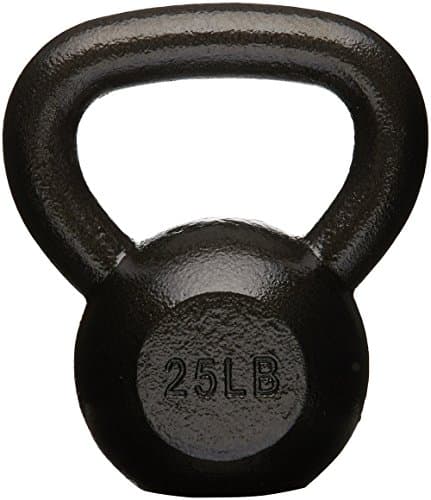
Build B — iron first. One kettlebell, floor tiles, and a band set with what is left. You get a real, logged, repeatable load for swings, goblet squats, presses, rows and carries, and a fixed number you can put in a notebook. What you give up is the pull-up bar and the roller, and the ability to add load without buying another bell at full price.
Our recommendation is Build A, for one unglamorous reason: a single kettlebell is one weight forever. The honest version of a sub-$100 gym is the one that keeps being useful in month six, and the band-and-bar build does that because tension, leverage and rep schemes are all free. Start there, and let the first kettlebell be the thing you buy with the next hundred dollars — which is exactly the order we argue for in what to buy first for a home gym.
What we ranked on
- Movements covered per dollar. Not features. A band set with a door anchor covers five movement patterns; a $25 vibrating gadget covers none. Anything that trains only one pattern had to be very cheap and very good to earn a slot.
- A published load rating, where the thing holds your bodyweight. On a doorway pull-up bar this is non-negotiable, and it is also the spec cheap bars most often omit. Our pick publishes 440 lb static and a 29.1 to 37.4 in doorway range; the cheapest multi-grip bar on the site publishes neither.
- Storage footprint, measured honestly. Under $100 you are almost certainly short of floor as well as money. Four of the five picks here store in a drawer, a closet or flat under a bed. Nothing on this page occupies permanent floor except the tiles, and the tiles lift out.
- Renter reversibility. No drilling, no adhesive, no marks. Everything here is removable, which is the standing rule across this site and the reason renter-friendly home gym ideas exists.
- Whether it is still being used in six months. The cheapest way to waste a hundred dollars is to spend it on something that works and gets boring. Grip variety on a pull-up bar, five band tensions instead of one, a bell weight you chose on purpose: all cheap, all the difference between equipment and clutter.
The two builds, side by side
| Movement | Build A — coverage | Build B — iron first |
|---|
| Horizontal push | Bands (door anchor) + push-ups | Push-ups, floor press with the bell |
| Horizontal pull | Bands (door anchor rows) | Single-arm bell rows |
| Vertical push | Bands overhead press | Bell press — a real logged load |
| Vertical pull | Pull-up bar — the real thing | Band pulldowns only |
| Squat | Band squats, unloaded at the bottom | Goblet squats — properly loaded |
| Hinge | Band deadlifts, light | Swings and deadlifts — the bell's best work |
| Core | Ab roller or rope | Carries and planks |
| Stores in | One drawer + a tile stack | A corner of the floor + a drawer |
Both columns are real training. Build B is better strength work and worse coverage; Build A is better coverage and worse strength work. If you already own a kettlebell or a pair of dumbbells, buy Build A and you have the whole picture for under a hundred dollars.
What $100 cannot buy, stated plainly
This is the part budget roundups skip, so here it is in full. Under $100 you cannot have:
- Adjustable dumbbells. The cheapest honest adjustable sets start well above this cap, and the dial-adjust kind start several times above it. A plate-loaded spinlock set is the first thing to buy at the $300 tier, not this one. Anything advertising "adjustable dumbbells" at this price is a pair of 5 lb handles.
- A bench. Flat utility benches sit just above this budget, and a bench consumes the entire remaining cap. Floor work and a stair step cover it until the next tier — do you need a weight bench is the honest discussion.
- Anything that holds a barbell. The cheapest squat stands are under $100 on their own, but a bar is more than that again and plates more still. A barbell setup is a $400-and-up project; see how much does a home gym cost.
- Cardio equipment.No treadmill, walking pad, bike or rower exists at this price, and the sub-$100 "steppers" are the one category we actively warn about — hydraulic cylinders fade, and the makers say so themselves. Walking is free, a jump rope costs about ten dollars, and the under-$200 cardio page is the realistic entry point.
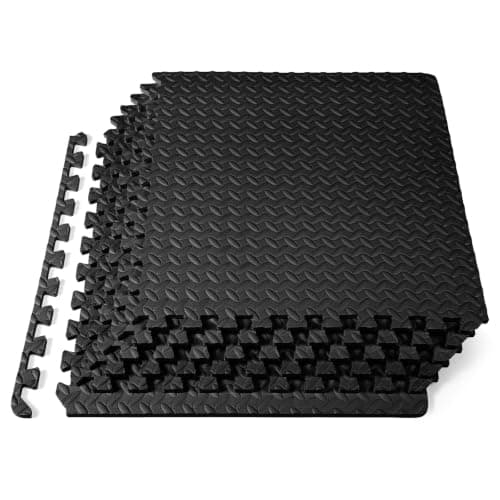
- Enough flooring for a whole room. One pack of interlocking tiles covers roughly 24 sq ft — a training square, not a gym floor. That is the right amount at this budget; buy a second pack later.
Two things to skip at this budget specifically
Multi-piece "home gym kits" sold as a bundle. A bag containing a thin mat, two 2 lb dumbbells, a resistance loop and a skipping rope hits this price point constantly. Every component is the cheapest available version of itself, and the two dumbbells are too light to train with within a fortnight.
Ab belts, vibration gadgets and anything sold on a result rather than a mechanism. If the listing describes an outcome instead of a load, a dimension or a rating, there is nothing to verify. Our full list of what not to buy in a small room is home gym equipment not worth buying.
If you are furnishing a dorm or a short let
Build A is the dorm answer almost by definition: nothing drills, nothing is heavy, nothing is loud enough to annoy a neighbor through a wall, and the whole kit fits in a suitcase when the lease ends. The one caution is the doorway bar — it needs a flat, solid frame, and institutional door frames are often hollow or steel. Measure the frame width and check what it is made of before you order, and read dorm room home gym for the rest of the constraints.
Everything on this page is a product already carried in this site's registry, each with its specs documented on the deeper pages linked from the cards. Prices come from the live price layer and nowhere else — if a card reads "Check price," the feed could not confirm a figure that day, and the ranking here does not change when prices move.
How to spend the hundred dollars, in order
Step 1 — the band set, first, always
Five tubes rated 10, 20, 30, 40 and 50 lb that stack, with handles, ankle straps and a door anchor. The door anchor is the part that matters: it turns any solid door into an anchor point at any height, which gives you rows, pulldowns, chest presses, face pulls and pull-aparts with no frame and no floor. That is the highest number of trainable patterns per dollar available anywhere, at any budget. Ranked alternatives are in best resistance bands for small spaces, and the honest limits of bands against iron are in resistance bands vs dumbbells.
Step 2 — the pull-up bar, if your door frame allows it
A vertical pull is the one pattern bands genuinely cannot replicate, because a band assists you at the top of a pulldown exactly where a pull-up is hardest. A leverage-mount doorway bar needs no fixings at all and comes off in seconds, and the one on this page publishes both a 440 lb static rating and a 29.1 to 37.4 in fit window. Measure your frame first. The makers rule out hollow, glass, carved and thin wood frames, and that exclusion is not marketing — it is the failure mode. More options, with every published rating, in best doorway pull-up bars.
Step 3 — the floor, if you rent or live above someone
Half-inch interlocking EVA tiles, one pack, about 24 sq ft. They protect the floor finish, take the edge off footfall and dropped-weight noise, and lift out with no adhesive when you move. Half an inch of foam will not silence a dropped bell, so do not drop the bell — but it is the single cheapest thing that keeps a deposit intact. Ranked mats and the thickness argument are in best home gym mats, and the noise question in lifting in an apartment.
Step 4 — then pick ONE: a kettlebell or an ab roller
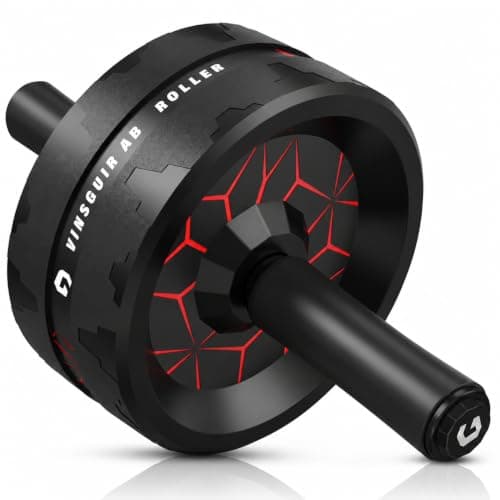
This is where the cap bites. A cast iron bell is real load and real progress, but it is one number forever and it needs a permanent spot on the floor. An ab roller is a few dollars, a published 440 lb rating, a 6.5 by 12 by 6.5 in package, and the hardest anterior core work available at home. If your plan is strength, buy the bell — and buy it heavier than feels comfortable, because the 15 lb bell everyone starts with becomes a doorstop in a month. Sizing guidance is in best kettlebells for small spaces; the roller sits among the alternatives in best ab and core equipment for small spaces.
Step 5 — the ten-dollar extras, if anything is left
A speed rope with a self-locking length adjuster is the cheapest piece of conditioning equipment that is genuinely worth owning, and it needs about a foot of clearance above your reach — best jump ropes for apartments covers the ceiling arithmetic. A suspension trainer is the other ten-to-thirty dollar upgrade worth knowing about, but it needs an anchor above head height, which most rentals do not have — best suspension trainers for small spaces explains what qualifies.
What to buy with the next hundred
The point of a sub-$100 gym is that it is a first purchase, not a final one. The order that has held up across every budget page on this site:
- A plate-loaded adjustable dumbbell set. The single biggest capability jump available for the money, and the backbone of the $300 build.
- A flat or folding bench. Doubles the number of exercises the dumbbells can do — folding benches for a room that has another job.
- A second kettlebell, or a heavier one. Two bells unlock double-bell work and let you actually progress.
- More floor. A second tile pack, once you know where you train.
And one thing not to buy next: a cheap all-in-one tower or a sub-$200 multi-gym. They occupy permanent floor, they load you in fixed planes, and the money is better spent on the dumbbells — machines vs free weights for a small home gym makes the argument with the footprints attached.