Skip to content
RACK:RATIO

HUB 04 · Compact Cardio

The Best Step Platforms for Small Spaces

Cardio and leg work from an object that stores flat under a bed. Ranked on footprint and deck width first, because the width is what decides whether you can step across the platform or only up onto it.

By Stephen V.Reviewed How we research
#ad

We earn a commission when you buy through our Amazon links, at no extra cost to you. It never changes our rankings, and we say so when the cheaper product is the better buy. How this works.

The Step Health Club platform is our pick on the one specification this category mostly ignores: it publishes a user capacity twice over — 350 lb on its own and up to 500 lb with the risers underneath — on a 43 x 16 in high-density polyethylene deck. The BalanceFrom AeroStep is the value pick, with the highest published capacity here (400 lb) on half the floor. The Circuit Fitness by Marcy box is a 16 in square that adjusts to 10 in — the smallest footprint and the tallest step, which makes it a step-up box rather than an aerobics deck. The Step Circuit Size platform has a molded notch that anchors a resistance band. The Tone Fitness step is the budget pick at 5.5 lb, and it publishes no capacity at all.

A step platform is the least glamorous thing on this website and one of the best-suited to it. It is a plastic deck and a stack of risers. It costs less than a single adjustable dumbbell, it takes 1.7 to 4.8 sq ft while you are using it, and then it goes flat under a bed or on edge behind a door. It gives you genuine cardio, step-ups, split squats, elevated push-ups, glute bridges, box work and a seat for dumbbell pressing — from an object with no motor, no console, no cable and nothing to break.

It also has one honest problem, and the first section is about that rather than the products.

First, the thing that disqualifies it for some readers: this is impact

Most of this site's cardio recommendations are quiet by design — a walking pad at a walking pace, a bike trainer that never touches the floor, a mini stepper that moves under hydraulic resistance with both feet staying put. A step platform is none of those things. You are repeatedly lifting your bodyweight and putting it back down on a floor. On a ground floor or a slab that is a non-issue. On the third floor of a wood-frame building, above someone, it is the noisiest thing in this article.

If you live above a neighbor, read that as the constraint it is. A rubber mat helps with surface noise but does very little for the structural thud that travels through a joist — which is the same finding as our page on whether a treadmill bothers downstairs neighbors, and the reason our quietest-cardio page does not rank step platforms at the top. Step work in an upstairs apartment is a middle-of-the-day activity, not a 6 a.m. one.

If you have a ground floor, a concrete slab, a basement or a garage corner, none of this applies and this is one of the best thirty-dollar purchases available to a small gym.

And second: a step platform is not a mini stepper

These two categories get conflated constantly, and they are completely different purchases. A step platform is a static deck you step onto — no moving parts, adjustable height, and it doubles as a bench, a box and a band anchor. A mini stepper is a machine with hydraulic cylinders that you stand on while your feet move up and down; it is low-impact, it has a resistance setting and a step counter, and it does exactly one thing. We rank those separately on best mini steppers for small spaces, and the head-to-head against a walking pad is on mini stepper vs walking pad. No product on this page appears on either of those.

The short version of which to buy: the mini stepper if you want low-impact cardio while standing still and you live above someone; the platform if you want cardio plus a strength tool plus a bench for a third of the price, and the floor below you is not someone's ceiling.

What we ranked on

  • Footprint, first and hardest. This is a dimension-first site and the spread here is almost threefold: 1.7 sq ft for the Step Circuit Size, 1.8 sq ft for the Marcy box, 2.0 sq ft for the Tone Fitness, 2.5 sq ft for the BalanceFrom and 4.8 sq ft for the club-size deck. Every one of them stores flat, so the number that matters is the floor they occupy in use plus the room you need around them.
  • Deck width, which is a different question from footprint. A 43 or 31 in deck lets you step across the platform, travel along it and run choreography. A 16 in square only lets you step up onto it. Both are useful; they are not interchangeable, and the listings do not explain the difference.
  • Height range. Four of five give 4, 6 and 8 in from stackable 2 in risers. The Marcy box reaches 10 in with four risers, which is the only genuinely tall option here and the only one in step-up and box-work territory. The Tone Fitness stops at 6 in.
  • Published user capacity. This is a product whose entire job is holding a person, and the published figures run 275 lb, 300 lb, 350 lb (500 lb with risers) and 400 lb — with one platform publishing nothing at all. No listing states a test standard. We print the figures as the claims they are and we note the omission loudly where there is one.
  • Deck material. High-density polyethylene is what the club-grade platforms use and both The Step models publish it. One publishes shockproof ABS. Two do not name the plastic at all.
  • Surface and feet. A textured or rubber non-slip top and non-skid feet are table stakes; a cushioned top is a real upgrade for anything done on your hands or knees. The Step publishes a non-latex comfort cushion; Marcy publishes a rubber top surface.
  • Floor protection. Both The Step models publish risers described as non-scratch on carpet, concrete or hardwood, which is the only explicit flooring statement in the group — and it matters on hardwood more than anywhere else.
  • Published weight and warranty. Weights here run from 5.5 lb to 20 lb, which decides whether the thing gets carried to the living room or left where it is. Warranties run from 30 days to two years, and two listings publish nothing.

The data problem: one platform claims to weigh 0.2 lb

Two honest notes about what is published in this class. The BalanceFrom listing states, in its own feature bullets, that the platform weighs 0.2 lb, and Amazon's item-weight field agrees with it. A 31 in ABS deck rated to 400 lb does not weigh three ounces. That is a data-entry error rather than a lie, but it means the one spec that tells you how solid the platform feels underfoot is unusable, so our spec row says so instead of repeating it.

The Tone Fitness listing has the opposite problem: it publishes its dimensions to two decimal places and its weight to the ounce, and never states what a person standing on it can weigh. On a $16 platform that is a defensible trade. It is still the reason it ranks fifth.

What a step platform actually does, beyond stepping

This is why the category survives in a small home even though the step-aerobics boom ended thirty years ago. One object, used five ways:

  • Cardio. Stepping up and down at 4, 6 or 8 in is real conditioning work and it needs no machine, no electricity and no subscription. It is the cheapest cardio on this entire website — cheaper even than a jump rope, and far cheaper than anything on our cardio machines under $200 page.
  • Step-ups, split squats and lunges. Loaded with adjustable dumbbells, a 6 to 10 in box turns into genuine single-leg strength work, which is the hardest thing to train in an apartment without a rack.
  • Elevated and declined push-ups. Hands on the deck makes push-ups easier; feet on the deck makes them harder. That is a complete push progression from one object, and it pairs with the kit on push-up bars and parallettes.
  • Glute bridges and hip thrusts. Shoulders or feet elevated. The Marcy listing names glute bridges specifically, and the 10 in setting is the one that makes them work.
  • A bench, at a push. A 43 or 31 in deck at 8 in is a usable surface for floor presses and dumbbell rows. It is not a flat weight bench — it is lower, narrower and has no back — but if the alternative is the floor, it is an improvement, and it costs a fifth as much.

Add the band notch on the Step Circuit Size and you also get a pressing and rowing anchor, which is the one feature in this group that genuinely extends what the category does.

The short answer

Quick picks

#ProductBest forScorePrice
01
The Step The Step Health Club Aerobic Platform, 4 Risers (F1011W)
The Step Health Club Aerobic Platform, 4 Risers (F1011W)

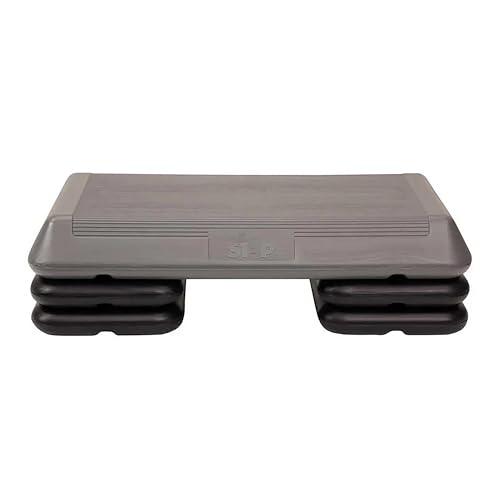
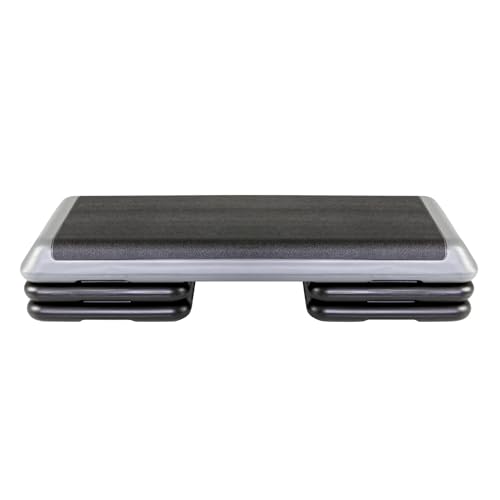
The platform health clubs actually buy, and the only one here that publishes two capacity figures — 350 lb on its own and up to 500 lb with the risers under it. A 43 x 16 in high-density polyethylene deck with a cushioned non-slip top, four 2 in risers for 4, 6 and 8 in heights, and risers stated as non-scratch on carpet, hardwood or concrete.

The club-standard platform, and the only full capacity data
8.3
$94.36Amazon
02
BalanceFrom BalanceFrom Aerobic Step Platform Trainer (AeroStep)
BalanceFrom Aerobic Step Platform Trainer (AeroStep)

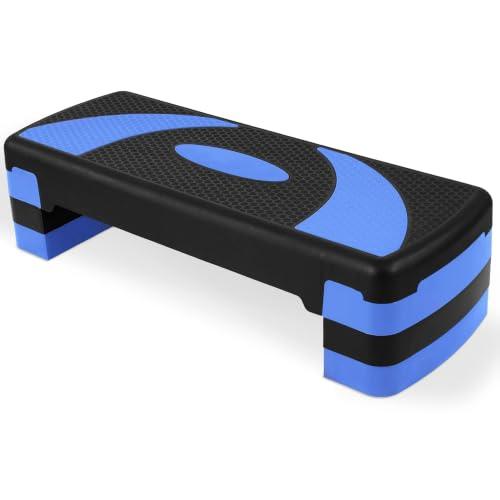
A published 400 lb capacity — the highest figure on this page — on a 31 x 11.5 in shockproof ABS deck with risers for 4, 6 and 8 in, a textured top, rubber feet and rounded edges, at the low end of the price range. It is the capacity-per-dollar pick, with one caveat: the listing's own stated product weight is impossible.

The highest published capacity per dollar
8.0
$29.99Amazon
03
Circuit Fitness by Marcy Circuit Fitness by Marcy Adjustable Step Platform (STEP-GRAY01-4R)
Circuit Fitness by Marcy Adjustable Step Platform (STEP-GRAY01-4R)

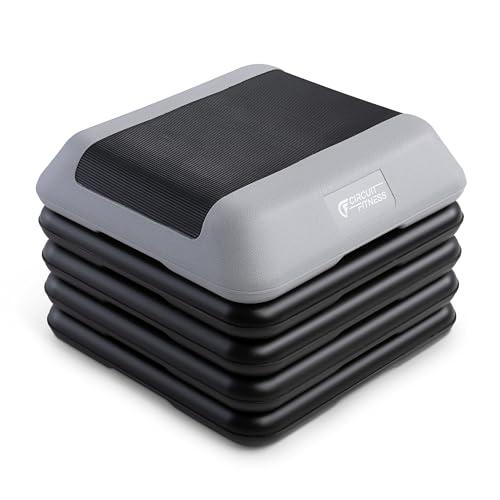
A 16 x 16 in square box rather than a long aerobic deck, which makes it the smallest platform here and the tallest: four risers take it from 4 in to 10 in, which is step-up and plyo-box territory rather than step-aerobics territory. Rubber non-slip top, non-skid feet, a published 300 lb capacity and a 2-year limited warranty.

Step-ups and glute bridges in the smallest footprint
8.5
$33.22Amazon
04
The Step The Step Circuit Size Aerobic Platform (F1015W)
The Step Circuit Size Aerobic Platform (F1015W)

The club brand's small format: a 22 x 11 in high-density polyethylene deck with four 2 in risers for 4, 6 and 8 in, and a notch molded into the platform that holds a resistance band in place. That notch is the one genuinely different feature in this category — it turns the step into an anchor for pressing and rowing.

A platform that anchors a resistance band
7.8
$38.32Amazon
05
Tone Fitness Tone Fitness Aerobic Step (HHBA-TN001YL)
Tone Fitness Aerobic Step (HHBA-TN001YL)

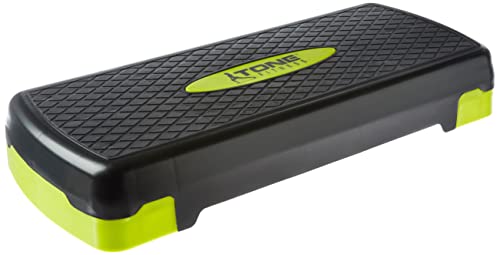
The budget pick, and the lightest thing on this page at 5.5 lb: a 26.8 x 11 in deck with two heights, 4 in and 6 in, a non-slip surface, non-skid feet and a printed workout chart. It publishes its dimensions and its weight and nothing about what it can hold, which is the trade you are making.

The cheapest way to find out if you will use one
7.3
$16.14Amazon

#ad · Live prices from the Amazon Product API, as of November 24, 2026. Where we have no verified live price, we show none — we would rather leave a gap than print a number that has rotted.

In detail

The picks, in full

01
The Step The Step Health Club Aerobic Platform, 4 Risers (F1011W)

The club-standard platform, and the only full capacity data

The Step Health Club Aerobic Platform, 4 Risers (F1011W)

43" x 16" deck350 lb / 500 lb with risers4" / 6" / 8" heightsHDPE, made in USA
8.3/10

The platform health clubs actually buy, and the only one here that publishes two capacity figures — 350 lb on its own and up to 500 lb with the risers under it. A 43 x 16 in high-density polyethylene deck with a cushioned non-slip top, four 2 in risers for 4, 6 and 8 in heights, and risers stated as non-scratch on carpet, hardwood or concrete.

Good

  • Publishes both a standalone and a with-risers capacity — the only platform in this group that states either number twice over
  • 43 in of deck is enough to step across the platform, not just up onto it, which is what aerobic step work actually needs
  • Cushioned non-slip top and non-scratch risers, so it works on a hardwood floor without a mat underneath

Trade-offs

  • Roughly three times the price of the field, and the capacity is the main thing that money buys
  • 20 lb and 43 in long — it stores flat, but it is not a thing you move one-handed
  • 4.8 sq ft in use is the largest footprint here by a wide margin
Footprint
6
Value
7
Build
10
Data published
10

Skip this if…

…the floor you train on is a 6 x 6 ft clearing in a bedroom. A 43 in deck plus the room to step off both sides is more than that space has.

Spec sheet

Type
Adjustable aerobic step platform with 4 stackable risers
Platform size
43" L x 16" W (published)
Footprint
About 4.8 sq ft in use; risers stack under the deck for storage
Heights
4", 6" and 8" (published) — base deck 4" plus four 16" x 16" x 2" risers
Published capacity
Up to 350 lb; up to 500 lb with risers (published)
Deck material
High-density polyethylene with a non-latex comfort cushion top
Surface
Non-slip top, published as easy on hands, feet and back
Unit weight
20 lb (Amazon field)
Floor protection
Risers published as non-scratch on carpet, concrete or hardwood
Warranty
One year (published)
Install / renter
No install; stores on edge against a wall or flat under a bed
$94.36View on Amazon

$119.9921% off

Price as of November 24, 2026. Prices change — Amazon's is the one that counts.

#ad · we may earn a commission from this link to The Step Health Club Aerobic Platform, 4 Risers (F1011W)

02
BalanceFrom BalanceFrom Aerobic Step Platform Trainer (AeroStep)

The highest published capacity per dollar

BalanceFrom Aerobic Step Platform Trainer (AeroStep)

400 lb published31" x 11.5" deck4" / 6" / 8" heightsShockproof ABS
8.0/10

A published 400 lb capacity — the highest figure on this page — on a 31 x 11.5 in shockproof ABS deck with risers for 4, 6 and 8 in, a textured top, rubber feet and rounded edges, at the low end of the price range. It is the capacity-per-dollar pick, with one caveat: the listing's own stated product weight is impossible.

Good

  • 400 lb is the highest published capacity in this group, at the cheapest end of the price range
  • 2.5 sq ft in use — about half the floor of the club-size platform, for the same three heights
  • Rounded edges and rubber feet, which is the right specification for a platform in a room with furniture

Trade-offs

  • The published product weight (0.2 lb) is a data-entry error, so the one spec that tells you how it will feel underfoot is unusable
  • ABS rather than the high-density polyethylene the club-grade decks use
  • No warranty published at all
Footprint
9
Value
9
Build
7
Data published
7

Skip this if…

…you want the number you stand on to come with a stated test method — this capacity figure is a bare claim, like almost every number in this class.

Spec sheet

Type
Adjustable aerobic step platform with 3-level risers
Platform size
31" L x 11.5" W x 8" H at full height (published)
Footprint
About 2.5 sq ft in use
Heights
4", 6" or 8" via risers (published)
Published capacity
Up to 400 lb (published; no test standard stated)
Deck material
Shockproof ABS plastic (published)
Surface
Textured non-slip top with rubber feet; rounded edges
Unit weight
Not published — the listing states 0.2 lb, which cannot describe this platform
Floor protection
Rubber feet; no flooring guidance published
Warranty
Not published
Install / renter
No install; the risers nest and the deck stores flat
$29.99View on Amazon

$36.9919% off

Price as of November 24, 2026. Prices change — Amazon's is the one that counts.

#ad · we may earn a commission from this link to BalanceFrom Aerobic Step Platform Trainer (AeroStep)

03
Circuit Fitness by Marcy Circuit Fitness by Marcy Adjustable Step Platform (STEP-GRAY01-4R)

Step-ups and glute bridges in the smallest footprint

Circuit Fitness by Marcy Adjustable Step Platform (STEP-GRAY01-4R)

16" x 16" footprint4" to 10" heights300 lb published2-year warranty
8.5/10

A 16 x 16 in square box rather than a long aerobic deck, which makes it the smallest platform here and the tallest: four risers take it from 4 in to 10 in, which is step-up and plyo-box territory rather than step-aerobics territory. Rubber non-slip top, non-skid feet, a published 300 lb capacity and a 2-year limited warranty.

Good

  • 10 in is the tallest adjustment here, which is what you need for step-ups, glute bridges and box work rather than aerobics
  • 1.8 sq ft is the smallest footprint on the page — it genuinely disappears into a closet
  • Published 2-year warranty and a rubber rather than plastic top surface

Trade-offs

  • 16 in square is too narrow to step ACROSS, so it does not do classic step-aerobics choreography
  • 300 lb is the lowest published capacity among the platforms that publish one, and you are standing on it at 10 in
  • Deck material is never named, only the rubber surface
Footprint
10
Value
8
Build
8
Data published
8

Skip this if…

…you want to follow a step-aerobics class — the choreography needs a long deck you can travel along, and this is a box.

Spec sheet

Type
Adjustable step / plyo box with 4 risers
Platform size
16" L x 16" W (published)
Footprint
About 1.8 sq ft in use — the smallest on this page
Heights
4" to 10" with 4 risers (published); the 2-riser version covers 4" to 6"
Published capacity
Up to 300 lb (published)
Deck material
Not published; rubber non-slip top surface
Surface
High-quality rubber non-slip top with non-skid rubber feet (published)
Unit weight
10.6 lb (Amazon field)
Floor protection
Non-skid rubber feet (published)
Warranty
2-year limited manufacturer (published)
Install / renter
No install; a 16 in square that lives in a closet corner
$33.22View on Amazon

$52.4137% off

Price as of November 24, 2026. Prices change — Amazon's is the one that counts.

#ad · we may earn a commission from this link to Circuit Fitness by Marcy Adjustable Step Platform (STEP-GRAY01-4R)

04
The Step The Step Circuit Size Aerobic Platform (F1015W)

A platform that anchors a resistance band

The Step Circuit Size Aerobic Platform (F1015W)

22" x 11" deckResistance band notch4" / 6" / 8" heights275 lb published
7.8/10

The club brand's small format: a 22 x 11 in high-density polyethylene deck with four 2 in risers for 4, 6 and 8 in, and a notch molded into the platform that holds a resistance band in place. That notch is the one genuinely different feature in this category — it turns the step into an anchor for pressing and rowing.

Good

  • The band notch is a real second job: the platform becomes the anchor for chest presses, rows and pull-aparts
  • High-density polyethylene and non-scratch risers at the small end of the size range
  • 1.7 sq ft in use, and the risers nest for storage

Trade-offs

  • 275 lb is the lowest published capacity on this page
  • 11 in of depth is narrow for step-ups while holding dumbbells — your foot covers most of it
  • No published unit weight and no published warranty term
Footprint
9
Value
7
Build
8
Data published
7

Skip this if…

…you weigh anywhere near the published 275 lb limit, or you plan to step onto it holding heavy dumbbells. Buy the capacity instead.

Spec sheet

Type
Adjustable aerobic step platform with 4 risers
Platform size
22" L x 11" W (published)
Footprint
About 1.7 sq ft in use
Heights
4", 6" and 8" via four 14.5" x 9.5" x 2" risers (published)
Published capacity
Up to 275 lb (published)
Deck material
High-density polyethylene (published)
Surface
Non-slip top with a molded resistance-band notch (published)
Unit weight
Not published
Floor protection
Risers published as non-scratch on carpet, concrete or hardwood
Warranty
Not published on this listing
Install / renter
No install; the smallest HDPE platform here, stores flat
$38.32View on Amazon

$49.9923% off

Price as of November 24, 2026. Prices change — Amazon's is the one that counts.

#ad · we may earn a commission from this link to The Step Circuit Size Aerobic Platform (F1015W)

05
Tone Fitness Tone Fitness Aerobic Step (HHBA-TN001YL)

The cheapest way to find out if you will use one

Tone Fitness Aerobic Step (HHBA-TN001YL)

26.8" x 11" deck4" or 6" heights5.5 lbNo published capacity
7.3/10

The budget pick, and the lightest thing on this page at 5.5 lb: a 26.8 x 11 in deck with two heights, 4 in and 6 in, a non-slip surface, non-skid feet and a printed workout chart. It publishes its dimensions and its weight and nothing about what it can hold, which is the trade you are making.

Good

  • Cheapest platform on the page and the only one under the price of a single resistance band set
  • 5.5 lb means it actually gets carried out and used, which is the whole battle with step work
  • Publishes its dimensions and its weight precisely, including the 5.91 in assembled height

Trade-offs

  • No published user capacity at all — on a product whose only job is to hold a person
  • Two heights rather than three, so the top step is 6 in and that is the end of the progression
  • A 30-day warranty, which is the shortest term in this group by a factor of twelve
Footprint
9
Value
9
Build
6
Data published
5

Skip this if…

…you are a heavier lifter or you plan to step up holding dumbbells. With no published capacity, there is nothing to check your bodyweight against.

Spec sheet

Type
Aerobic step platform, 2 height settings
Platform size
26.8" L x 11.0" W x 5.9" H (published)
Footprint
About 2.0 sq ft in use
Heights
4" or 6" (published) — two settings, not three
Published capacity
Not published anywhere on the listing
Deck material
Not published
Surface
Non-slip surface with non-skid feet (published)
Unit weight
5.5 lb (published) — the lightest platform here
Floor protection
Non-skid feet; no flooring guidance published
Warranty
30-day manufacturer (published)
Install / renter
No install; light enough to carry in one hand to the living room and back
$16.14View on Amazon

$27.9742% off

Price as of November 24, 2026. Prices change — Amazon's is the one that counts.

#ad · we may earn a commission from this link to Tone Fitness Aerobic Step (HHBA-TN001YL)

Deck width decides what you can do on it

This is the single most useful thing to understand before buying, and no listing explains it.

A long deck (22 to 43 in) is an aerobics platform. You can step up onto it and off the other side, travel along it, straddle it, turn on it. That is what step choreography needs, and it is also what makes the platform usable as an improvised bench. The cost is floor: the 43 in club deck is 4.8 sq ft, which in a small bedroom is a real commitment even if it stores flat.

A short square deck (16 in) is a step-up box. You step up onto it and back down the same side. It does step-ups, split squats, bridges, box work and elevated push-ups, and it goes taller — the Marcy reaches 10 in, two inches above anything else here. It will not do choreography, and it is too small to lie on.

Pick by what you actually intend to do. A reader following along with a class video wants the long deck. A reader building single-leg strength in a closet-sized gym wants the box.

Footprint and storage, measured

PlatformDeckIn useHeightsPublished capacityWeight
The Step Health Club43 x 16 inAbout 4.8 sq ft4 / 6 / 8 in350 lb; 500 lb with risers20 lb
BalanceFrom AeroStep31 x 11.5 inAbout 2.5 sq ft4 / 6 / 8 in400 lbNot published (listing says 0.2 lb)
Circuit Fitness by Marcy16 x 16 inAbout 1.8 sq ft4 to 10 in300 lb10.6 lb
The Step Circuit Size22 x 11 inAbout 1.7 sq ft4 / 6 / 8 in275 lbNot published
Tone Fitness Aerobic Step26.8 x 11 inAbout 2.0 sq ft4 / 6 inNot published5.5 lb

Two things to take from that table. First, every one of these stores flat — the risers nest under the deck and the whole thing slides under a bed or stands on edge behind a door, which puts step platforms firmly in the same category as the gear on foldable home gym equipment. Second, the floor you need in use is bigger than the deck: add about 2 ft in front and behind for stepping off, and 3 ft of swing room if you intend to follow choreography. A 1.7 sq ft platform still wants a 4 x 6 ft clearing around it.

Capacity: read the number, and notice when there isn't one

Four of five publish a figure and the spread is wide: 275 lb, 300 lb, 350 lb (rising to 500 lb with the risers beneath it) and 400 lb. Not one names a test standard, states whether the figure is static or dynamic, or distinguishes a working load from a failure point — and the difference matters here more than almost anywhere else on this site, because stepping is dynamic loading. You land on a platform with more than your bodyweight.

The practical rules we would follow. Leave real headroom between your bodyweight and the published figure, not a few pounds. Add the dumbbells you intend to hold. If you are a heavier lifter, the 275 lb platform and the one with no published figure at all are not for you, and the 350/500 lb club deck is the one that was specified for commercial classes full of strangers. Our page on home gym equipment for heavier users applies the same logic across the rest of the site.

Do you need a mat under it?

Usually not for the platform's sake, sometimes for the floor's. Every platform here publishes non-skid feet, and both The Step models publish risers described as non-scratch on carpet, concrete or hardwood. On carpet, a mat is unnecessary and can make the platform less stable; the honest risk on carpet is a platform that rocks slightly, which argues for the widest deck you can fit.

On hardwood or a floating laminate, a thin mat is cheap insurance against grit under a riser, and it takes the sharpest edge off the surface noise — it does not solve the structural thud, which is the part your neighbor hears. Our ranking is on best home gym mats, and the same question for a different machine is answered on do you need a mat under a walking pad.

Where a platform sits against the rest of the cardio shelf

OptionFloor in useImpactAlso does strength?Rough cost
Step platform1.7-4.8 sq ft, stores flatYes — the loudest hereYes: step-ups, bridges, push-ups, benchLowest
Mini stepperAbout 1.5-2 sq ftLow — feet stay plantedNoLow
Walking padAbout 8-10 sq ft, stores under a bedLow at walking paceNoMedium
Jump ropeA 6 ft circle, stores in a pocketHighNoLowest
Folding exercise bikeAbout 4-6 sq ft, foldsNoneNoMedium

The platform is the only row in that table that answers both the cardio question and part of the strength question, which is exactly why it belongs in a small gym — and the only row with "yes" in the impact column, which is exactly why it does not belong in every apartment. The full low-impact alternatives are ranked on best low-impact cardio machines for small spaces, and if the cheapest possible complete setup is the goal, the platform is one of the best line items on best home gym under $100.

Considered and not ranked

Two listings were checked and left off. The Amazon Basics 27 in aerobic step would have been a natural budget comparison, but it reported only two units left in stock on 2026-11-19 and we do not rank a product that may be gone before you read this. A second BalanceFrom color variant is the same platform on a different listing, and we do not rank the same product twice.
How we picked

We don't run a testing lab

We compiled published specifications, manufacturer documentation and aggregated owner reviews, then scored each product against a published rubric that weights fit-for-small-space, value, install reversibility and build. The scores are judgments from documented research — they are notmeasurements we took, because we don't have a lab and we're not going to pretend we do. Every dimension is cited in Sources.

Questions

Frequently asked

What is the best step platform?
On published specifications, The Step Health Club platform: it is the only one here that publishes two capacity figures (350 lb on its own, up to 500 lb with the risers beneath it), it is high-density polyethylene with a cushioned non-slip top, and its 43 x 16 in deck is wide enough to step across rather than just up onto. If you want the best value, the BalanceFrom AeroStep publishes the highest capacity on the page, 400 lb, on about half the floor and at roughly a third of the price. If floor space is the binding constraint, the 16 in square Circuit Fitness box is the smallest and the tallest at 10 in.
How much space does a step platform need?
The decks themselves occupy 1.7 to 4.8 sq ft, and all of them store flat with the risers nested underneath, so they slide under a bed or stand on edge behind a door. The number that actually matters is the clearing around it: add about 2 ft front and back for stepping off, and about 3 ft of swing room if you plan to follow a class video. In practice even the smallest platform here wants a 4 x 6 ft clear floor while you use it.
Are step platforms too loud for an apartment?
They are the loudest thing in this article, and we would rather say so. Stepping means repeatedly landing your bodyweight on the floor, and that impact travels down through a joist as structural noise that a mat does not fix — the same mechanism covered on will a treadmill bother downstairs neighbors. On a ground floor, slab or basement it is a non-issue. Above a neighbor, treat step work as a daytime activity and look at a mini stepper, a walking pad or a bike if quiet matters more than versatility.
What height should I set the step to?
Four of the five platforms here give 4, 6 and 8 in from stackable 2 in risers, and the Circuit Fitness box reaches 10 in. Start at the base height — 4 in on everything except the Tone Fitness, which has only two settings — and add a riser when the pace stops being the limiting factor. For loaded step-ups rather than cardio, taller is harder, which is where the 10 in setting earns its place. Set both sides identically and check the risers are fully seated before you stand on it.
Is a step platform the same as a mini stepper?
No, and they are different purchases. A step platform is a static plastic deck with adjustable risers: no moving parts, and it doubles as a step-up box, a bridge platform and an improvised bench. A mini stepper is a hydraulic machine you stand on while your feet move, with a resistance dial and a step counter, and it does one thing — low-impact cardio while standing still. We rank those separately on best mini steppers for small spaces, and no product appears on both pages.
How much weight can a step platform hold?
Published figures here are 275 lb, 300 lb, 350 lb (up to 500 lb with the risers under the deck) and 400 lb, and one platform publishes no figure at all. No listing names a test standard or says whether the figure is static or dynamic — which matters, because stepping loads a platform with more than your bodyweight on each landing. Leave real headroom, add the dumbbells you intend to carry, and if you are a heavier lifter choose one of the platforms that publishes a high number rather than one that publishes none.
Can you use a step platform as a weight bench?
For floor presses, dumbbell rows and shoulders-elevated bridges, a 31 or 43 in deck at 8 in works and it is far better than the carpet. It is not a bench: it is lower, narrower, has no back pad and no incline, and the published capacities are for a person standing, not a person plus heavy dumbbells. If pressing is a real part of your training, a proper flat weight bench is the right purchase and the cheap end of that market is covered on best weight benches under $200.
Do I need a mat under a step platform?
On carpet, no — every platform here publishes non-skid feet and a mat can make the deck less stable. On hardwood or floating laminate, a thin mat is cheap insurance against grit under a riser scratching the finish, and it softens surface noise. It will not stop the impact traveling through the floor structure. Both The Step models publish risers described as non-scratch on carpet, concrete or hardwood, which is the only explicit flooring statement in this group. Our mat ranking is best home gym mats.
Is a step platform worth it if I already own dumbbells?
That is arguably the best case for one. Dumbbells plus a 6 to 10 in platform gives you loaded step-ups, split squats, elevated lunges, hip thrusts and a pressing surface — the single-leg and hip work that is hardest to train in a small room without a rack. It is the cheapest capability upgrade available to an existing dumbbell setup, and it is why the platform appears in the kit list on home gym essentials for small spaces.

Keep reading

Receipts

Sources

We don't run a testing lab, and we don't pretend to. Every dimension and rating traces to a manufacturer spec sheet or manual, named and linked above. Where a maker doesn't publish a number, the spec reads "Not published" rather than a guess. Read our full method.