On a hardwood floor, buy a half-inch interlocking foam tile for the training zone and a thin single-piece mat under any machine — in that order. The ProsourceFit EVA tiles are our pick for the lifting area because they spread point load, lift out with no adhesive and leave nothing behind; the thin Rubber King mat is the pick under a treadmill or bike, where you want grip and a flat base rather than cushioning. The thickest, heaviest rubber option is not automatically the best answer on a finished floor, and that is the part most flooring advice gets backwards.
We publish a general mat ranking, a rubber flooring guide and a carpet guide. This page is the hardwood-specific version, and it reaches a different conclusion from the rubber page on purpose: the failure modes of a finished wood floor are not the failure modes of concrete or carpet.
Three ways hardwood fails, and three different fixes
Dents. Wood is soft and gym equipment concentrates weight onto four small feet. A loaded bench, a rack upright or a dumbbell set down in the same spot every session will press a permanent mark into a board, and refinishing is the only repair. The fix is area, not softness: a layer that spreads the load over square inches instead of a square foot. A half-inch interlocking tile does this well; a thin mat does it poorly.
Scratches. These come from grit and from dragging, not from weight. A single piece of plate grit under a bench foot is enough, and a machine shuffled back into place a hundred times does the rest. The fix is a continuous barrier with no gaps — which is an argument for tiles that interlock tightly or a single-piece mat under anything that moves.
Finish damage. The one worth taking seriously and the one with the least published evidence. Polyurethane finishes can react to materials left in prolonged contact, and discoloration under rubber is a widely reported outcome among flooring installers. We have not tested it, no maker in our registry publishes a statement either way, and we are not going to assert a chemistry we cannot cite. What we can do is point at the two picks below that avoid the question entirely: EVA foam, and a TPE tile whose maker states it has no odor and is not crumb rubber.
The practical rule: on a finished floor you care about, do not put black crumb rubber directly onto the wood and leave it for a year. Put EVA or TPE down, or use a rubber-topped tile with a foam base so the layer touching the wood is not the rubber.
Thickness is not the spec you think it is
For dropped weights, thickness is what absorbs the impact. For a static floor under a bench, thickness is what spreads load. For a machine, thickness is a liability — a treadmill or a bike on a thick, soft layer rocks, and a rocking machine makes more noise and wears unevenly.
Which is why the picks below span 3 mm to half an inch rather than all sitting at the top of the range. The thin 3 mm single-piece mat exists for exactly one job: a flat, grippy, continuous barrier under a machine that needs to stand still. The maker also states plainly that it is not recommended over carpet, which is the kind of honest limitation we would rather print than paraphrase.
How the four layers compare
| Layer | Material | Thickness | Format | Best job on hardwood |
|---|
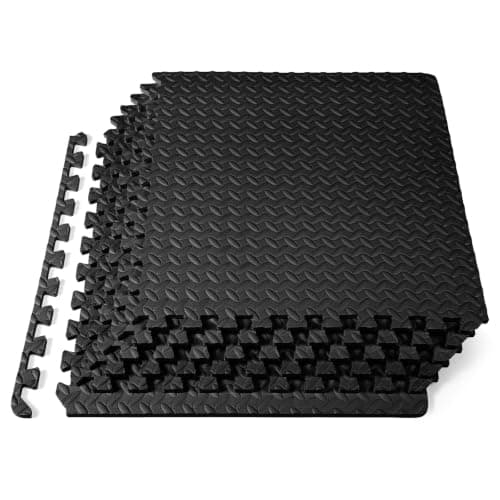
| ProsourceFit puzzle tiles | EVA foam | 1/2 in | 6 interlocking tiles, 24 sq ft | The lifting and bodyweight zone |
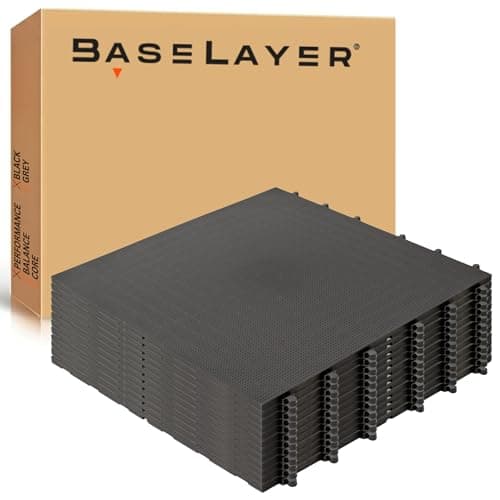
| Baselayer Performance TPE | TPE, not foam or crumb rubber | 1/2 in | 12 interlocking tiles, 30 sq ft | A room that cannot air out |
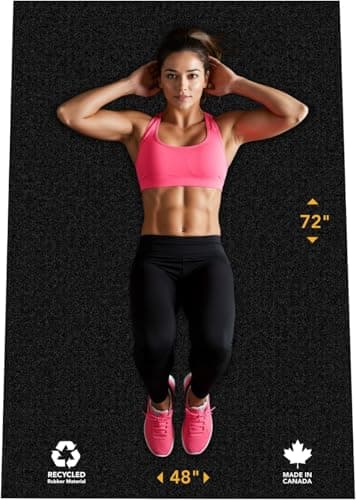
| Rubber King 3 mm mat | Recycled rubber | 3 mm | Single piece, 4 x 6 ft, 13 lb | Under a treadmill or bike |
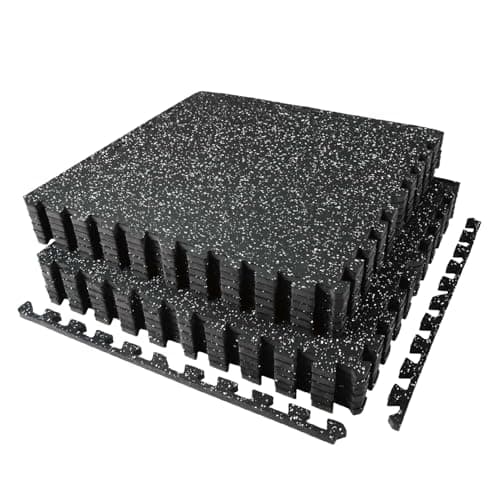
| AIRHOP rubber-top tiles | Rubber top, EVA base | 0.56 in | 12 tiles, 48 sq ft | Heavy gear, with foam against the wood |
The AIRHOP is the interesting one for this page: a dual-layer tile with rubber on top and EVA underneath, so the surface you drop things on is rubber and the surface touching your floor is not. That is the right structure for a hardwood room with heavy equipment, and it is 48 sq ft — an 8 by 6 ft platform — which is enough for a full lifting zone.
Where to put the layer, and where not to
Floor the training rectangle, not the room. A clear area of roughly 6 by 6 feet covers dumbbell and bodyweight work for most people, which is one or two packs of tiles rather than a renovation. Under machines, use a mat sized to the machine plus a few inches on each side; our treadmill space guide has the published footprints to size against.
Two places not to put a layer. Under a wall-mounted rack's working area, if you are lifting a loaded barbell — you want a firm, flat base under your feet rather than foam, and a thick soft tile under a squat is a stability problem, not a floor-protection solution. And wall to wall in a rented apartment, where a full floor is both expensive and unnecessary; interlocking tiles that lift out are the whole point. Our apartment flooring guide covers the renter version.
What about the noise?
On hardwood over joists — a first floor above a basement, or any upstairs room — the floor transmits impact as well as showing it. A half-inch EVA or TPE layer takes the sharp edge off a dumbbell set down, and takes very little off a dropped plate; nothing you can buy makes dropping weights on a wood floor a good idea. If a neighbor or a family member is below, lifting without annoying the neighbors is the page that separates impact, vibration and airborne noise and says which layers help with which.
Buying order for a hardwood room
- Half-inch interlocking tiles for the training zone. EVA or TPE. One or two packs. This is the purchase that prevents dents, which are the only unrepairable failure.
- A thin single-piece mat under each machine. Grip and continuity matter more than cushioning here.
- Felt pads or a rigid board under static feet that sit outside the tiled area — a bench end, a rack upright, a plate tree leg.
- A rubber-topped tile set only if you are loading a barbell or dropping anything, and then with the foam side against the wood.
Keeping grit out, which is free
Most hardwood scratches in a home gym are abrasion, and abrasion needs grit. Two habits remove most of it: train in shoes that do not come in from outside, and vacuum the training area rather than sweeping it, because a broom moves grit around under the edges of tiles. If you lift in a garage-adjacent room, a doormat at the threshold does more for your floor than an upgrade in tile thickness.
Engineered wood, laminate and vinyl plank
The advice above applies with one adjustment: the wear layer on engineered wood and laminate is thin, so scratches go through to a different-colored core and are more obvious than on solid hardwood, while dents are less likely on laminate and more likely on vinyl plank, which is softer. Vinyl is also the surface where the contact-staining question is raised most often, so the EVA or TPE route is the safer one there. None of these materials behaves like concrete — if you are on a slab, our rubber flooring guide is the one to read.
If you rent
Hardwood in a rental is a deposit question, and the answer is the same as the floor-protection answer: interlocking tiles, no adhesive, nothing bonded, lift out on the last day. Keep the mats sized to the training zone so you can move them to look underneath occasionally — a layer left down for two years on a finished floor is exactly the scenario where discoloration gets reported. Our renter-friendly guide covers the rest of the no-install set.