
In a studio, buy for visual footprint as much as physical footprint. Everything should either disappear into storage, hide behind an existing divider, or look enough like furniture that it does not read as gym equipment from the bed. That rules out a rack and rules in a compact, foldable, storable kit.
A studio is a different problem from a small apartment, and the difference is not square footage. In a one-bedroom you can put the gym in the bedroom and shut a door on it. In a studio there is no door. The equipment is in your living room, your bedroom and your office simultaneously, and it is in your eyeline while you eat.
That changes the buying criteria. Physical footprint still matters, but visual footprint matters as much, and setup friction matters more than in any other layout — because a gym that has to be assembled in the middle of the room you are sitting in will not get assembled.
The three constraints, in order
- It has to disappear. Either into storage, behind a divider, or into looking like something else. A folded bench against a wall is fine; a power cage in the middle of a studio is a lifestyle decision.
- It has to be quiet. Studios are usually in multi-unit buildings, often older ones. You share walls, a ceiling and a floor.
- It has to set up in under a minute. Friction in a shared room compounds, because the room has to be reset afterwards too.
The kit
Four pieces, chosen against those three constraints rather than on capability alone.
- Bands with a door anchor. Zero visual footprint, zero noise, and they give you the pulling work a studio cannot otherwise fit. The single highest-value purchase here.
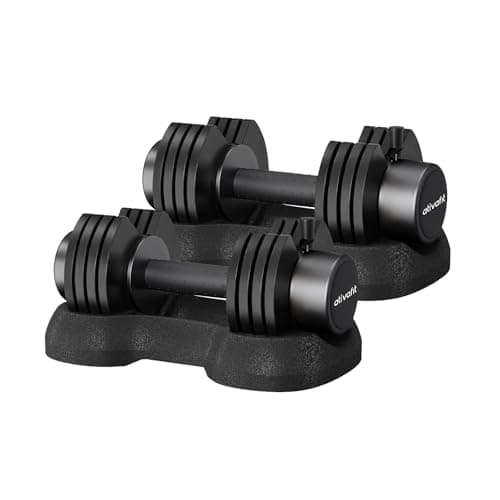
- Light adjustable dumbbells. A compact pair rather than a 50 lb set — the cradle is smaller, they are easier to move, and they sit on a shelf without announcing themselves. Upgrade later if you move somewhere with a door.
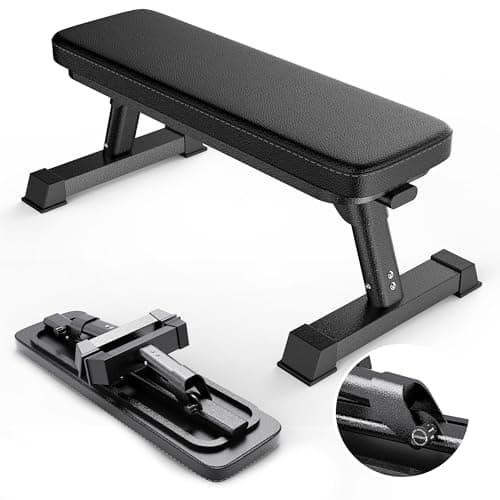
- A flat folding bench. Folds thin, stands behind a sofa or in a wardrobe, and doubles as a seat if it has to.
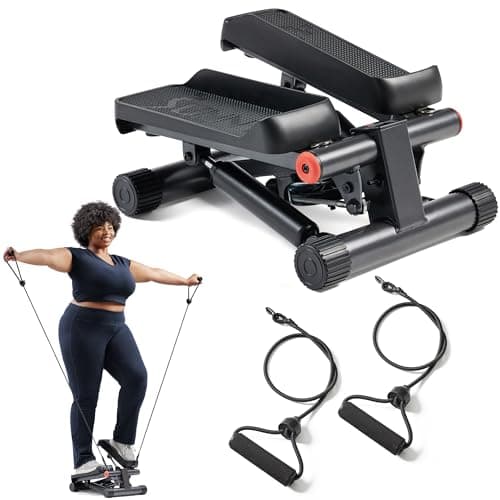
- A mini stepper. About a square foot, no motor, and it lives under a desk permanently. In a studio, a treadmill is not a realistic object; this is.
Add a mirror if the wall allows — see renter-friendly mirrors. In a studio a mirror does double duty: it gives you form feedback and it makes the room read larger, which matters when the room is everything.
Zoning a single room
The trick that makes a studio gym livable is not hiding the equipment — it is defining where the gym is. Three cheap moves:
- Use the divider you already have. A bookshelf, a wardrobe, the back of a sofa. Putting the training area behind it means the gear is not in the sightline from the bed.
- Define the floor. A mat area in a color close to the floor marks the zone without shouting. It also means you always know where you train, which reduces setup friction.
- Give storage a single home. One basket, one shelf, one corner. Equipment scattered across a studio reads as mess in a way it does not in a spare room.
Noise, which is the real constraint
You almost certainly share at least one wall and one floor or ceiling. Three rules that keep a studio gym uneventful:
- Nothing gets dropped, ever. Set weights down under control. This is a technique choice, not an equipment choice, and it solves most of the problem.
- Mats go down before session one. They damp the impact of feet, dumbbells and a bench being moved.
- No jumping above someone. Skipping, box jumps and burpees are repeated impact that a mat softens rather than removes. See lifting in an apartment.
Cardio choice follows from the same logic. A magnetic bike or a mini stepper transmits almost nothing; a treadmill transmits footstrike through the floor regardless of price. Our quiet cardio roundup ranks the category on this.
What not to buy for a studio
- A power cage. It is a permanent four-square-foot object in the room you live in. Even if it fits, it changes the room in a way most people regret.
- A barbell and plate set. A 6-foot bar has to be stored somewhere, plates have to be stored somewhere, and dropping either is off the table. Dumbbells cover more in a studio.
- A treadmill. The footprint is one problem; the impact noise to the unit below is the bigger one.
- Anything that needs assembly each session. In a shared room, friction wins every time.
How this differs from a dorm or a one-bedroom
A dorm has the same visual constraint but usually less floor and a shared occupant, so the kit skews even smaller — see the dorm room home gym. A one-bedroom has a door, which means the corner gym and closet gym layouts open up and a rack becomes possible. Our apartment setup guide plans that version, and home gym ideas for small spaces lists every layout with dimensions.