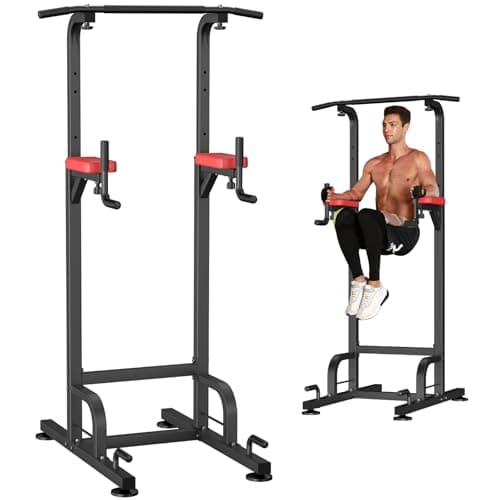
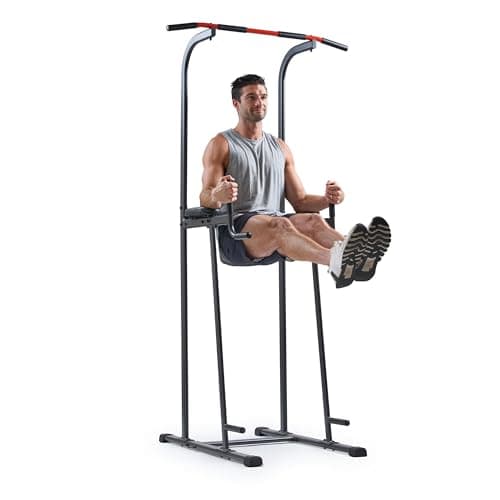
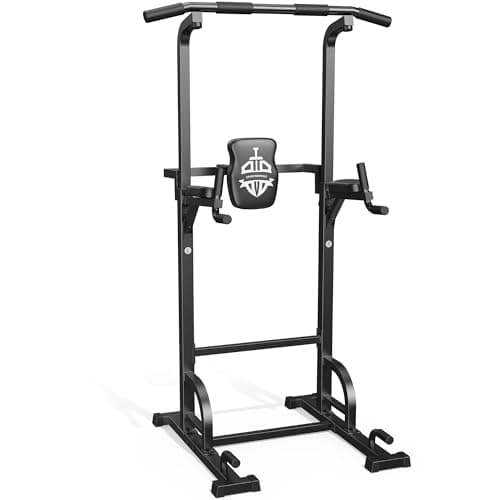
For a small room, the best power tower is the one with the widest base and the lowest ceiling demand you can live with — because sway and headroom, not station count, are what decide whether a tower gets used or gets sold. The SPORTSROYALS tower is our top pick: heavier-gauge steel on a wider base, so it stays planted through dips and full pull-ups. The RELIFE tower is the value route into the same four stations. The Sunny Health tower is the budget alternative from a brand with real parts support behind it.
A power tower is the most capability per square foot in home strength training, and it gets there by using your bodyweight instead of a pile of iron. One upright frame in a corner gives you pull-ups, chin-ups, dips, knee raises and elevated push-ups — the pulling and pressing that a small room usually has to skip. There is no weight to buy, nothing to store, nothing to drop on the floor, and no wall to drill. For a renter, that combination is rare enough to be worth taking seriously before spending on anything larger.
Where towers go wrong is never the station list — every tower in this category advertises the same four. They go wrong on ceiling clearance and on sway. The pull-up bar sits near the top of the frame and you need room above it to hang and pull without clipping the ceiling, which is why a basement or a converted attic is the most common place a tower simply doesn't fit. And because the frame is tall, light and standing on its own, any looseness in the base gets amplified into a wobble you can feel at the bar. Heavier gauge steel and a wider footprint are what fix that, and they are exactly what the cheapest towers economize on.
So our ranking runs in that order. First, footprint — the floor square the frame permanently claims, since a tower does not fold. Second, ceiling clearance — the height the bar needs plus the height you need above it. Third, frame stability — base width and steel gauge, which is what separates a tower you trust from one you brace against the wall. Fourth, adjustability — height settings that let you tune the bar to your ceiling and the dip bars to your frame. We put footprint, ceiling and install type on every Spec Block so you can rule a tower out before it arrives in a box you have to send back.
Adjustability deserves more attention than it usually gets, because it is the setting that rescues an awkward room. A tower with several height positions lets you match the bar to your ceiling rather than hoping the factory guessed right, and it lets a taller lifter raise the dip bars to a depth that does not fold them in half. It also matters over time: the height that suits strict pull-ups is not always the height that suits hanging leg raises. A fixed-height tower is cheaper and simpler, and it is fine if your ceiling has room to spare — but in a room that is already tight, the adjustment range is the difference between equipment and furniture.
The other thing worth planning for is assembly and placement, because a tower is heavy, tall and awkward once built, and you will not want to move it twice. Build it where it is going to live, against a wall if you can, on a level floor, and expect to re-tighten every bolt after the first few sessions — settling hardware is the single most common cause of a tower that suddenly feels loose. Put the frame where nobody has to walk past it mid-set, since the working space around a tower is larger than its base: you need room to swing your legs through a knee raise and room behind you on dips.
One honest caveat up front: a power tower has no way to add external load. When bodyweight pull-ups and dips stop being hard, your options are weighted vests, dip belts or a different machine. If you already know you want to press and pull with real resistance, an all-in-one home gym or a wall-mounted squat rack is a better first purchase. If you want the most training for the least money and the least floor, the tower is very hard to beat.
How to choose a power tower for a small room
Measure your ceiling first, and measure it where the tower will actually stand — not in the middle of the room. You need the bar high enough to hang from with bent knees and enough space above the bar for your head at the top of a pull-up. Rooms around 7 ft of clear height are workable with an adjustable frame set low; anything under that starts forcing compromises, and a low pull-up bar makes the tower's single best exercise unusable. This is the one constraint you cannot fix after purchase.
Base width matters more than rated capacity
Every tower quotes a user weight limit, and almost all of them are well above what most people need. The number that actually changes how a tower feels is base width, because the frame has to resist tipping entirely on its own footprint — there is no wall doing structural work. A wide base and thicker uprights buy you a frame that stays put when you kip a pull-up or swing into a knee raise. That steadiness is what you pay for when you step up from the entry towers.
Remember the tower never folds
A tower claims its square of floor permanently. That square is small, but it is not reclaimable, so put it somewhere you were never going to walk. If the floor has to come back every evening, a fold-flat wall rack is the better shape of solution — see our wall-mounted rack picks. And put mats under it either way: dismounting from a pull-up bar sends a thud through the floor, which our apartment flooring guide covers. If you want to add pulling variety later without adding another footprint, a wall-mounted cable machine pairs with a tower better than a second freestanding frame does.