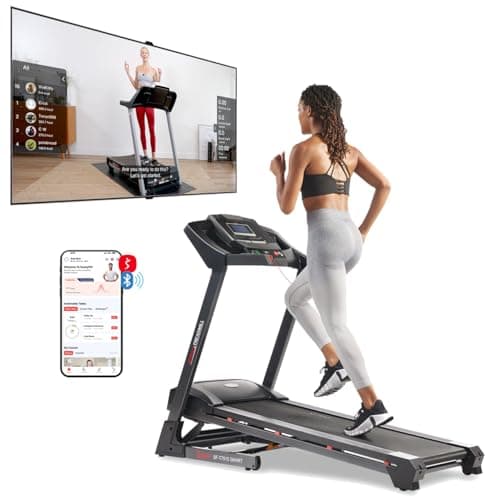
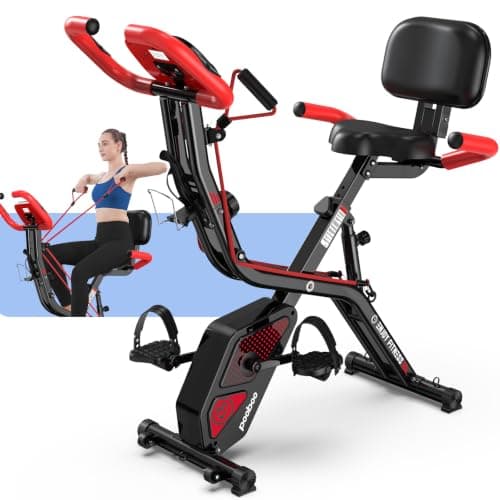
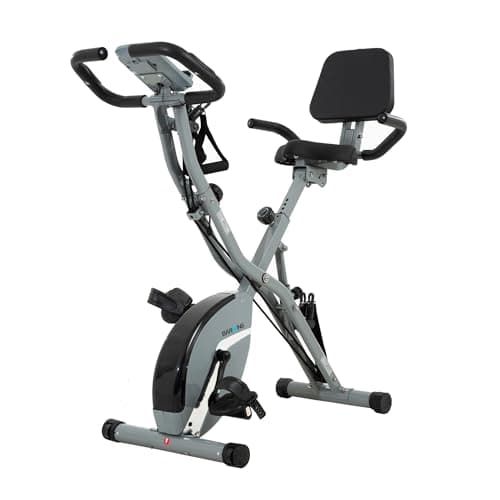
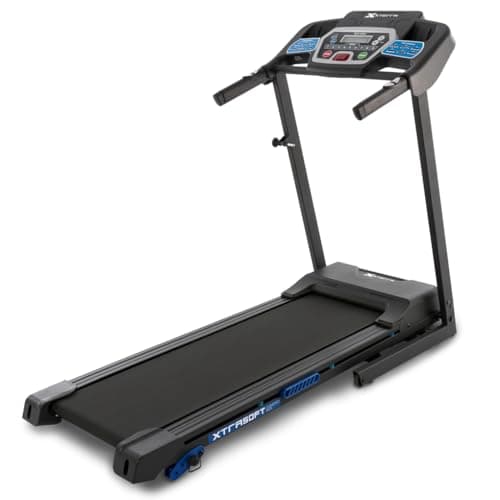
In an apartment above a neighbor, buy the bike: a magnetic folding bike makes no impact noise, folds smaller, costs less and needs no ceiling clearance. Buy the treadmill if you are on a ground floor or a slab, or if walking and running specifically are what will keep you consistent — no bike substitutes for that.
This is the most common cardio fork for a small-space buyer, and most comparisons answer it on calories burned. That is the wrong axis. Both machines will burn what you make them burn. What separates them in a room you also live in is the four things this site always measures: the floor each holds when idle, what the neighbor hears, what the ceiling has to clear, and whether install is reversible.
On three of those four, the bike wins outright. On the fourth — whether you will use it — the treadmill often wins, because walking is a thing people do without deciding to, and cycling is not. The honest answer depends on which constraint is actually binding for you.
Head to head
| Factor | Folding treadmill | Folding exercise bike |
|---|
| Floor in use | About 5 to 6 ft long | About 3 ft long |
| Folded footprint | Upright but tall and heavy | Folds narrow, rolls on wheels |
| Impact to the floor below | Real — footstrike plus motor vibration | Essentially none |
| Motor noise | Yes, always | None — magnetic resistance is passive |
| Ceiling clearance | Deck height plus your standing height | Seated — never an issue |
| Weight to move it | Heavy — often 60 to 100 lb+ | Light — usually under 50 lb |
| Typical price | Higher | Lower |
| Reads or works while using | Walking yes, running no | Yes, comfortably |
The row that decides it for apartment dwellers is the third one. A treadmill puts your full bodyweight through a deck into a joisted floor, roughly 150 times a minute. Nothing about buying a quieter model changes the physics; it changes the motor noise, not the footstrike. We wrote the full version of that in will a treadmill bother my downstairs neighbors.
When the treadmill is genuinely right
Three cases, and they are strong ones.
- You are on a ground floor or a concrete slab. The single biggest objection disappears. Buy the treadmill.
- Walking is what you will actually do. Habit beats optimality. If a bike will sit unused and a treadmill will get 6,000 steps a day out of you, the treadmill is the better machine regardless of what the specification table says.
- You train for running. A bike does not substitute. Nothing does.
If that is you, our folding treadmill roundup ranks the field by folded thickness, and the storage guide covers where a folded one actually goes.
When the bike wins, and it is not close
Upstairs in an apartment, in a shared house, in a room next to a bedroom, or on any budget under about three hundred dollars. A magnetic folding bike makes no impact noise at all because your feet never leave the pedals, and the resistance mechanism is passive magnets rather than a motor. There is nothing to hum, nothing to strike the floor, nothing to transmit.
It also folds better. Most folding bikes collapse to a narrow profile and roll on transport wheels; a folded treadmill is a tall, heavy object that has to be walked into position. In a room that has to be a bedroom again by evening, that difference is the entire decision. Our folding exercise bike roundup covers the field.
The third answer most people should consider
A walking pad is a treadmill with the upright frame removed. It slides under a sofa, has no console mast to clear, and costs less than most folding treadmills. What it gives up is running — most cap out around a fast walk — and handrails.
For a large share of small-space buyers who think they want a treadmill, a walking pad is the machine that actually fits. It does not solve the impact noise problem, but it solves the space problem completely. See walking pad vs folding treadmill for that fork, and the walking pad roundup for picks.
Measure before you decide
Three measurements, in this order:
- Floor length available while in use. A treadmill needs about six feet plus run-off space behind it. A bike needs about three.
- Where it goes when folded. Standing height for a treadmill, and the width of the gap you plan to roll a bike into.
- Doorways and stairs. A folding treadmill is a heavy, awkward box. Check the route from the front door before ordering, not after.
What goes underneath either one
A mat, always. Under a treadmill it damps vibration into the floor and catches belt dust; under a bike it stops the feet marking a floor and stops the frame creeping. On carpet, both machines need a firm surface to sit level on — see home gym on carpet and our gym mat roundup.
The third machine in this argument is the rower, which beats both on upper-body work and on noise through the floor and loses on the lane it needs in use. We ran that comparison in rowing machine vs treadmill for small spaces.