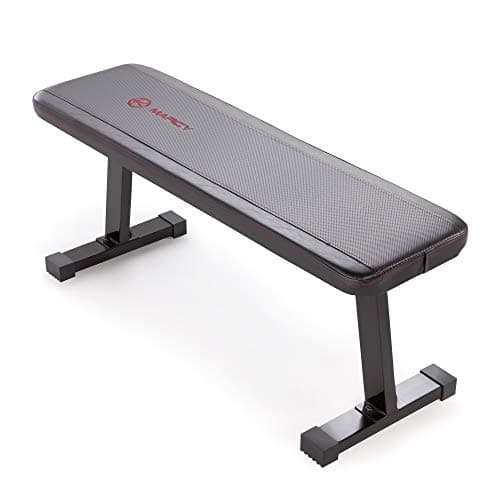
If you are shopping by weight capacity, the spec you want is the maker's published figure and the detail you want is which figure it is — a "600 lb" bench and a "600 lb max user" bench are different products. The Marcy flat utility bench is our starting pick because it publishes a straightforward 600 lb rating at a price below most adjustable benches, and a flat bench has the simplest load path of anything in a home gym.
This page exists because capacity is the most inconsistently published spec in home fitness, and shopping around it is genuinely harder than it should be. We are not going to offer advice about bodies, training or health — that is not what this site is for and we are not qualified to. What we can do is what we do everywhere else: read the published numbers carefully, print them with their source, and say plainly when a maker has not published one at all.
Three different numbers, all called "capacity"
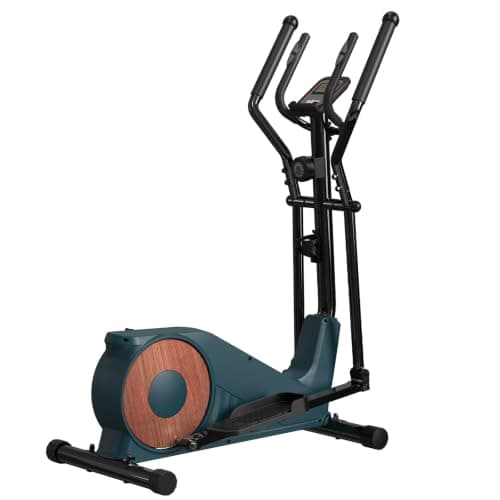
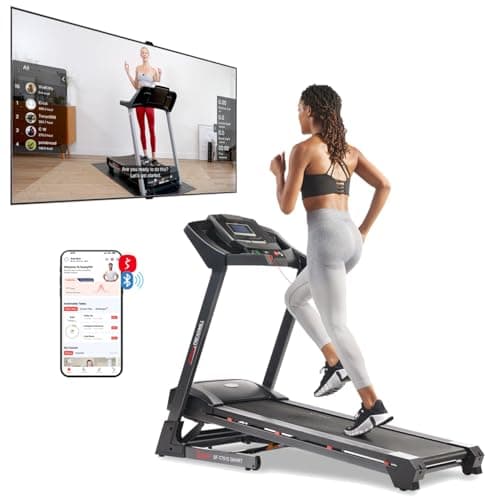
- Max user weight. The person only. This is the figure that matters most and the one least often printed. The Sunny SF-T7515SMART treadmill publishes 300 lb; the XVGVSV E317 elliptical publishes 400 lb as a rated load.
- Total rated load. The person plus everything they are holding. Marcy publishes 600 lb total for its MD-857 Olympic bench and a separate 300 lb max user weight for the same product — both real, both on the same spec sheet, and mistaking one for the other is how people end up over a limit without knowing it.
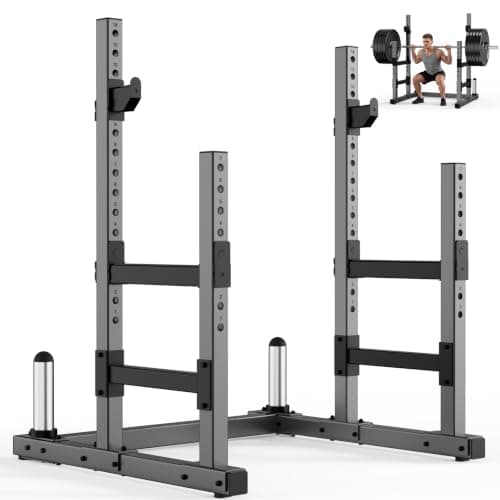
- Component ratings. Some makers rate parts separately, which is the most useful disclosure of the three. The PASYOU squat stand publishes 2,400 lb total, split as 1,800 lb on the lower bars and 600 lb on the J-hooks — a level of detail that lets you check the actual load path rather than trusting a headline.
When a listing contradicts itself
It happens more than you would expect, and our policy is to print both numbers rather than choose the flattering one. The Bowflex 3.1S bench is the clearest example on this site: its Amazon spec table states a 300 lb maximum user weight while its own feature bullets state 480 lb. We carry that discrepancy on the product's Spec Block verbatim, because a reader shopping on capacity needs to know the number is unsettled.
Where a maker publishes nothing at all, we write "Not published — confirm on listing" and we mean it: contact the seller before ordering if the number matters to you. Several popular compact machines, including two of the folding exercise bikes we rank, publish no capacity figure whatsoever. That is not a reason to assume the worst, but it is a reason not to guess. Our how much weight can a weight bench hold page goes through the bench version of this problem in detail, including why the pad and the frame are rated differently.
What to look for, in order
- A published max user weight with headroom. Not at your number — above it, because the rating is a static figure and training is not static.
- A simple load path. A flat bench carries the load straight down four legs. An adjustable bench carries it through a hinge and a ladder bracket. The flat bench is the stronger object at any given price, which is why it leads this page.
- Base width, not just the rating. Stability and capacity are different things. A wider base is steadier under a shifting load regardless of what the sticker says.
- Published warranty length. A maker that warrants a frame for three years has told you something about the frame. The Sunny treadmill here publishes 3 years frame and 180 days parts; many listings publish nothing.
- Step-over and seat height, for cardio. A practical fit question that has nothing to do with capacity and gets ignored in every roundup. Ellipticals publish a pedal step height when they publish anything at all.
Where compact gear is weakest
Honest answer, because it affects what to buy: the lightweight folding end of the market is where capacity ratings are lowest and least documented. Two of the compact ellipticals we rank publish 220 lb; the YOSUDA folding model publishes a 350 lb load rating but its maker also sets a 5 ft 9 in user height limit, which is a different kind of fit constraint entirely. Folding exercise bikes are the worst category for disclosure in our whole registry.
The pattern is not surprising — a frame that folds has hinges, and hinges are where ratings go to be conservative. If a published high capacity is the priority, the non-folding and freestanding options on this page are where to look first, and the trade you are making is floor space for a printed number.
The four picks
These are ordered by how we would buy them for a small space, not by the size of the rating: the bench first because it is the cheapest sturdy thing in any home gym, then cardio by published rating, then the rack whose maker breaks its rating down by component. Each card carries the live price and the published capacity on its Spec Block.
Flooring matters more at higher loads
Two reasons, and both are practical rather than alarming. A heavier total load on four small feet is a higher pressure at each contact point, so a firm layer that spreads it protects the floor and keeps the equipment level — which is itself a stability question. And a frame standing on compressible carpet is less stable under a shifting load than the same frame on a firm surface. Our mat ranking, rubber flooring guide and home gym on carpet cover the layer stack for each case.
The floor structure is a separate and much less worrying question. Residential floors are designed around a distributed live load, and a compact home gym plus the person using it is well inside that. Our floor load guide works through the arithmetic and flags the few cases worth asking a professional about.
Ask the seller, and get it in writing
If the number matters and the listing does not publish it, message the seller through Amazon and keep the reply. It is a two-minute step that takes a "not published" into a documented answer, and it is far better than inferring a figure from a product photo. We do the same thing when we compile these pages, and where a maker has not answered, the Spec Block says so rather than filling the gap.
Bodyweight equipment is rated too
Easy to overlook because it is cheap. Doorway pull-up bars, dip stations and power towers all carry published ratings, and some of them are high — the Sportneer doorway bar we rank publishes 440 lb, which is more headroom than most benches. Our doorway pull-up bar ranking and power tower ranking print the figure on every product, and the towers with wider bases are noted as the sturdier option rather than just the pricier one.