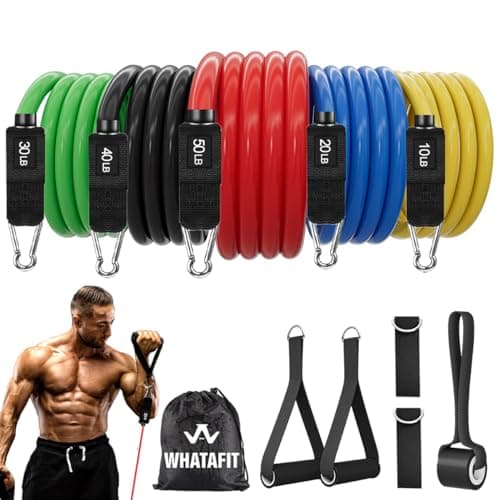
Buy in this order: resistance bands, adjustable dumbbells, a folding bench, a doorway pull-up bar, floor mats. That sequence covers push, pull, hinge, squat and carry in under thirty square feet, and every step is useful on its own if you stop there. The order matters more than the brands.
Beginner home gym advice usually fails in one of two directions. Either it recommends an all-in-one machine that costs a thousand dollars and trains you worse than dumbbells, or it recommends the full garage kit — rack, bar, bumpers, bench — which is a lot of money and a lot of floor to commit before you know whether you will still be training in March.
This page takes the third route: buy in a sequence where each purchase is independently useful, cheapest first, so the total commitment scales with how much you actually train. If you stop after item one you have spent thirty dollars and own a real training tool. If you get to item five you have a complete small-space gym that cost you nothing you regret.
What a beginner actually needs to train
Five movement patterns cover essentially all of strength training: push, pull, hinge, squat and carry. A useful home gym is one that lets you load all five. Anything that adds a sixth machine before it covers the five is buying variety before it buys the basics.
| Pattern | Covered by | Bought at step |
|---|
| Push (horizontal and vertical) | Bands, then dumbbells + bench | 1 and 3 |
| Pull (horizontal) | Bands with a door anchor | 1 |
| Pull (vertical) | Doorway pull-up bar | 4 |
| Hinge | Dumbbell Romanian deadlifts | 2 |
| Squat and lunge | Bodyweight, then dumbbells | 0 and 2 |
| Carry | Dumbbells | 2 |
Step 1: bands, because they cost nothing and prove the habit
Thirty dollars, a drawer, no noise, no lease implications. A band set with a door anchor gives you rows and pulldowns — the hardest patterns to fit into a small room — from day one. If you are still using them three times a week a month later, that is your signal to spend real money. If you are not, you have lost thirty dollars rather than three hundred.
Our band roundup covers the sets, and bands versus dumbbells explains why this is the right first purchase rather than a consolation prize.
Step 2: adjustable dumbbells
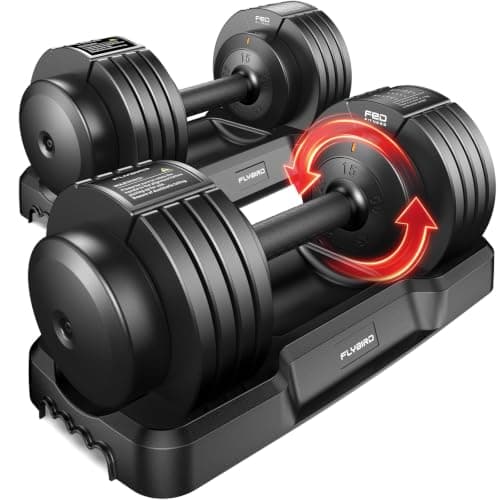
The single highest-value purchase in a small home gym. One pair replaces a rack of fixed weights, covers pressing, rowing, hinging and single-leg work, and occupies about two square feet of shelf. A beginner does not need 50 lb per hand on day one — a lighter pair is cheaper and less intimidating, and you can upgrade later.
Buy on increment size rather than top weight. Small jumps are what let you progress consistently. See best adjustable dumbbells for the field and adjustable versus fixed for why this beats a fixed set in a small room.
Step 3: a folding bench
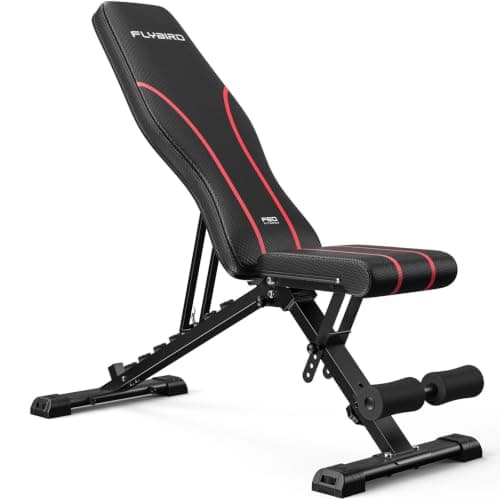
A bench roughly doubles what a pair of dumbbells can do: pressing at multiple angles, supported rows, step-ups, hip thrusts. A folding one stores upright in about a square foot, so it costs almost nothing in permanent floor.
Check the published weight capacity, and remember it includes you — we explain that in how much weight a bench can hold. Our folding bench roundup only lists models whose makers publish a number.
Step 4: a doorway pull-up bar
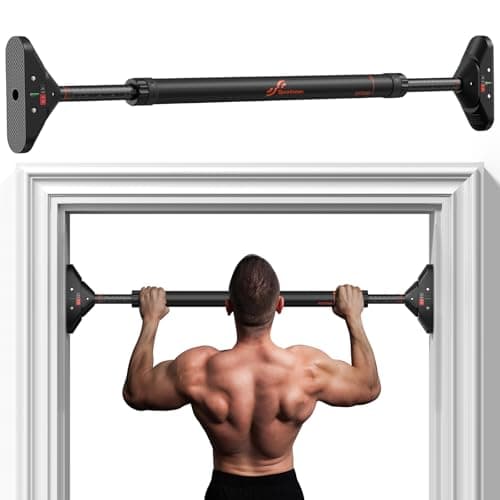
About thirty dollars for the movement pattern nothing else in a small room covers well. A leverage-mount bar needs no drilling, seats in seconds, and comes down when guests arrive. Bent knees at the bottom of the rep change nothing about the training effect.
See our doorway pull-up bar roundup, and power tower versus doorway bar if you are tempted by the bigger frame.
Step 5: mats
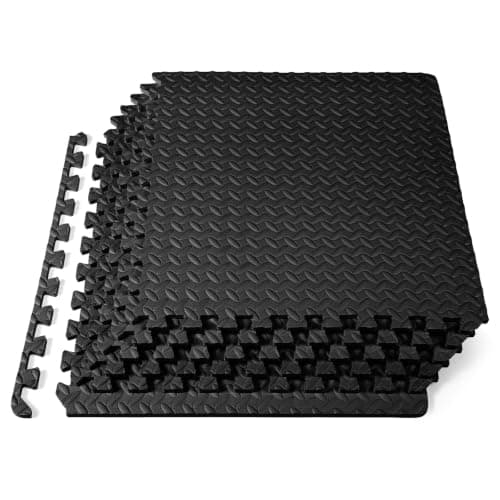
Last in the list and first in the room. Half-inch interlocking tiles protect the floor, soften what the neighbor hears, and make floor work bearable. Put them down before the first session rather than after the first scuff. Our gym mat roundup covers sizing.
What to skip as a beginner
- All-in-one machines. They lock you into fixed movement paths, take a permanent footprint, and cost more than this entire list. Our all-in-one buying guide explains when they do make sense — it is not here.
- A barbell and rack, initially. Excellent equipment, wrong first purchase. You need floor, ceiling and technique before it earns its space. It is the natural step after this list, not before it.
- Ab machines. Covered in core equipment for small spaces. Buy a twenty-dollar ab roller instead, later.
- Cardio machines, at first. Walking is free and outside. Add a machine when weather or schedule genuinely stops you.
When to stop following this list
When you know what you are training for. A beginner kit is deliberately general; once you have a goal — a squat number, a pull-up number, running distance — the next purchase should serve it specifically. Our under $500 build and under $1,000 build show what the next tiers actually buy.