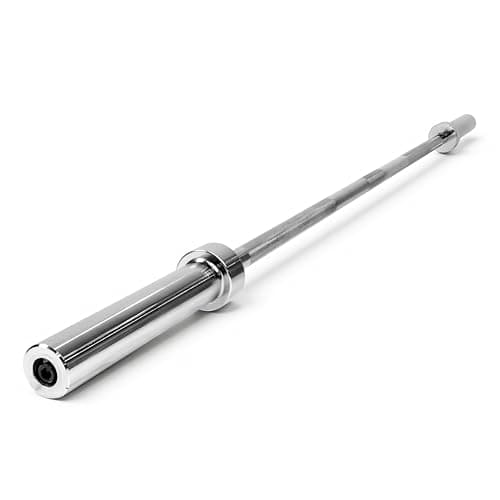
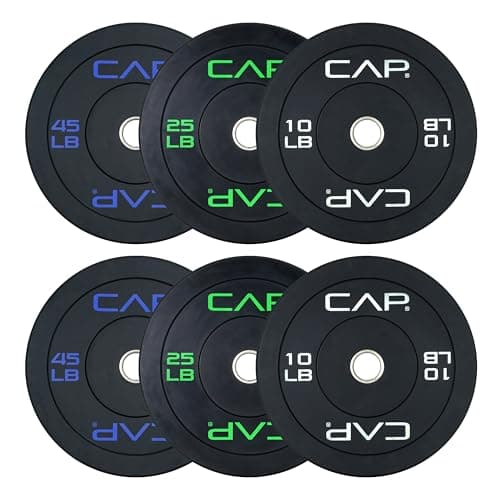
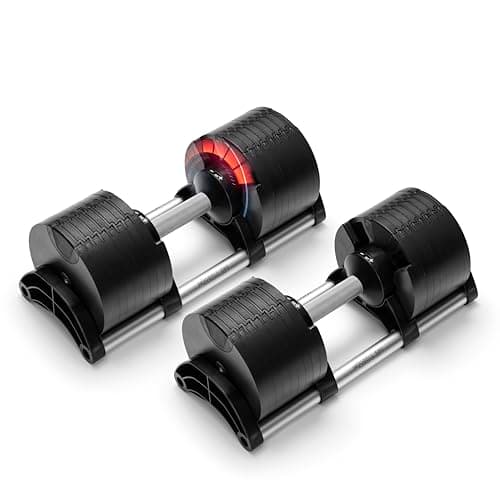
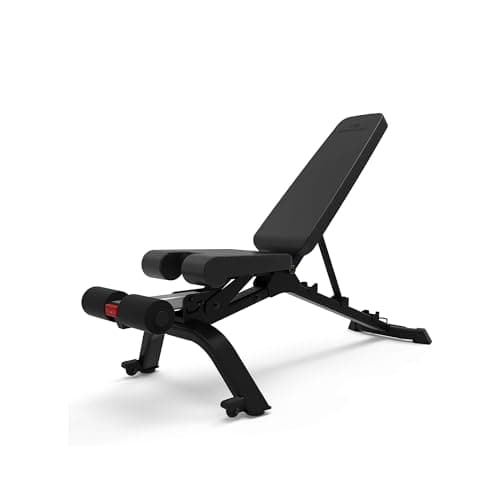
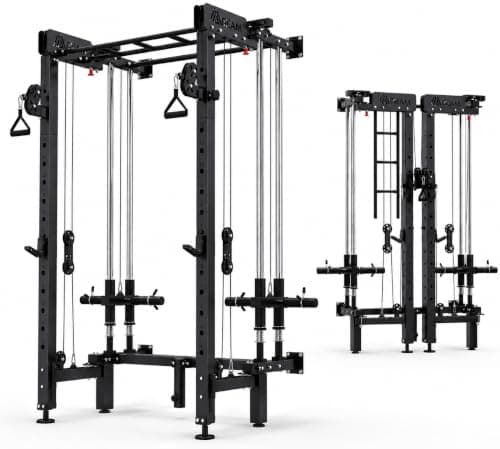
At this tier the build changes shape: a folding wall-mounted rack with a pulley, a 6-foot Olympic bar, a bumper plate set, premium adjustable dumbbells and a bench that stows upright. Five pieces that cover barbell work, cable work and dumbbell work — and fold back to a clear floor.
We are not going to print a total, for the same reason we do not on the under-$1,000 build: every price on this site renders live from the retailer and moves week to week. Treat "under $2,000" as the design constraint this list was chosen against — five pieces meant to sit inside one budget together, with the live prices on the cards settling the arithmetic on the day you buy.
The genuine change from the tier below is not more equipment. It is that the barbell finally earns its place. Under $1,000, a bar and a plate set eat so much of the budget that the rest of the gym suffers, so the honest advice there is a plate-loaded cage and value dumbbells. At this tier you can buy a real bar, real bumpers, and still afford dumbbells you will not replace.
Why a folding wall rack rather than a cage
This is the decision that defines the build. A four-post cage at this budget is entirely possible and would be the obvious choice in a garage. In a small room it is the wrong object, because it owns its floor permanently and needs the ceiling for a pull-up bar.
A folding wall rack with an integrated pulley does more of what matters here: it has catch bars, it does cable work, and it folds to a few inches of wall depth so the floor comes back between sessions. The cost is that it bolts into studs, which makes it an owner-or-permissive-lease purchase. If you cannot drill, substitute a freestanding cage from our compact power rack roundup and accept the permanent footprint.
What each piece is doing
| Piece | Job | Floor when idle |
|---|
| Folding wall rack with pulley | Squat, press, catch bars, cable work | A few inches of wall depth |
| 6 ft Olympic bar | Barbell work in a narrow room | Hangs on the rack or a wall hook |
| Bumper plate set | Load, quietly, on a shared floor | Wall pegs or a tree |
| Premium adjustable dumbbells | Everything the bar does badly | About 2 sq ft of shelf |
| Stowable bench | Pressing angles, supported rows | About 1 sq ft, upright |
How to allocate an under-$2,000 budget
Roughly: half on the rack and the barbell system, a third on dumbbells, and the rest on the bench and the floor. The principle is the same one that governs the lower tiers — spend on the frames you buy once, save on the parts you can upgrade later.
What changes at this budget is that "buy once" becomes achievable for the two pieces you touch every session. A premium adjustable dumbbell pair and a well-finished bench are purchases you will still be using in a decade. The plates are the item most people over-buy: 160 lb of bumpers plus a 28 lb bar is 188 lb on the bar, which is more than enough for most people for years, and you can add plates one pair at a time later.
Why bumpers rather than cast iron here
In a garage, cast iron is the value choice and the correct one. In an apartment or a shared building, bumper plates are worth the premium for one reason: what they sound like when they touch the floor. A rubber-coated plate set down on a mat is a thud; a cast iron plate is a ring that travels through the building.
Bumpers also have a practical downside in a small room worth knowing — they are physically thicker per pound than iron, so a short bar's sleeves fill up faster. Our weight plate roundup covers that trade properly.
Why a 6-foot bar, not a 7
A 7-foot competition bar needs about 9 feet of clear wall to rack and unrack without knuckling the walls. Plenty of spare bedrooms are 10 by 11 feet, and once a rack is against one wall the usable width is gone. A 6-foot Olympic bar takes the same 2-inch plates, sits in the same J-hooks, and fits a room that a 7-foot bar does not.
If you measured and you genuinely have the width, buy the 7-footer — length buys sleeve room and stability. See best barbells for small spaces for the full length math.
What this build deliberately leaves out
Cardio.Same reasoning as the tier below: a treadmill or rower would have to come out of the rack's share, and cardio is the thing you can improvise outdoors. If daily steps are your actual problem, drop the bumpers to a lighter set and add a walking pad.
A dedicated cable machine.The rack's integrated pulley covers pulldowns and rows, which is the bulk of what a cable stack is for. A separate machine at this budget would cost the barbell. See compact cable machines if cables matter more to you than a bar.
Flooring is not optional, and it is not on the list. Budget for mats separately — a rack, a bar and 160 lb of plates on a bare floor is a deposit problem. Our gym mat roundup covers what survives rack feet.
Before you buy any of it, measure
- Ceiling height at the exact spot, minus mat thickness. See ceiling height for a home gym.
- Clear wall width for the bar, plus about 18 inches beyond the bar length.
- Stud positions where the rack goes. If they are not where you need them, the whole build changes. Our installation guide covers this.
- Floor load if you are above ground level — see the floor load guide.
As always: we do not run a lab
Zero of these units have been tested by us, because we do not have a testing facility and will not pretend otherwise. What you get is published manufacturer dimensions and load ratings, install requirements read carefully, owner feedback at scale, and a ranking weighted for whether it fits. Our methodology page sets out exactly how that works.