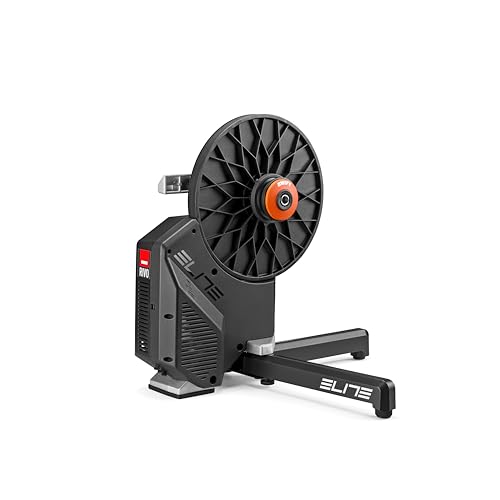
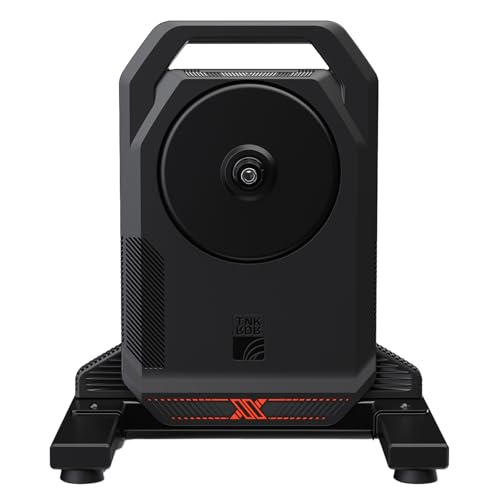
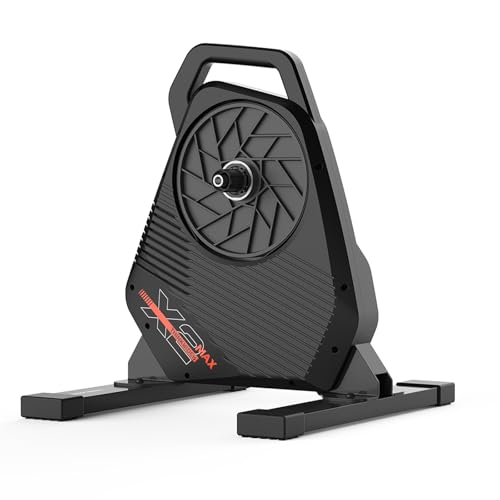
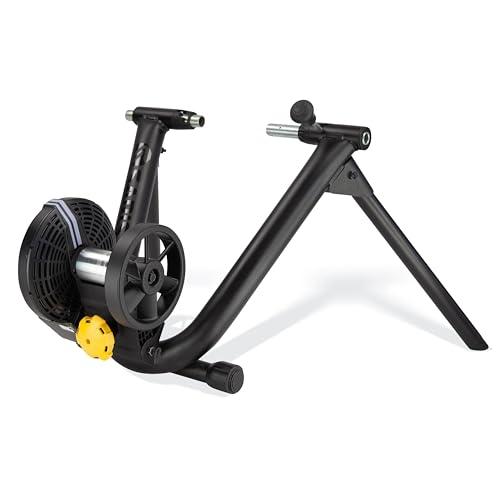
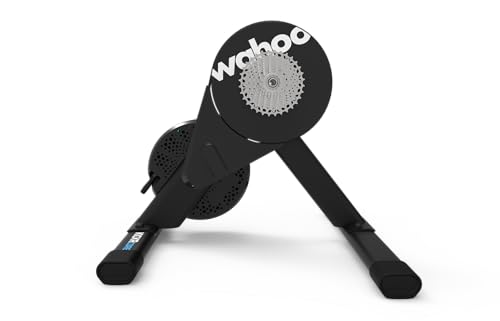
The Wahoo KICKR CORE 2 is our pick for a reason that has nothing to do with watts: the variant we link ships with an 11-speed cassette already fitted, so your bike bolts on and rides. The Elite Rivo is the small-space choice — folding legs and a carry handle on a 22 lb unit. The ThinkRider XXPRO publishes the widest gradient and the highest power ceiling here and generates its own electricity. The ThinkRider X2Max is the cheapest direct drive and the only trainer in the class that publishes a decibel figure. The Saris M2 is the budget pick and the deliberate exception: a wheel-on trainer that still lets an app control the resistance.
A smart trainer is the quietest serious cardio machine you can put in a small room, and the only one that puts no impact into the structure of a building at all. On a direct-drive unit you take the rear wheel off your bicycle and bolt the frame to a cassette on the trainer itself; the unit measures your power and, when an app tells it to, changes its own resistance to match a virtual hill. That is the whole difference from the wheel-on trainers we rank separately: no tire wear, no roller noise, and a power number the app can hold you to.
It still needs a bicycle. If you do not own one, nothing on this page makes sense — a trainer plus a bike costs more and takes more floor than a spin bike, and a folding exercise bike stores far smaller. Own a bike already and this is the best value in home cardio, which is why it sits on a small-space site at all.
The spec the listings bury: the cassette
A direct-drive trainer has no rear wheel, so it needs a cassette — the sprocket cluster your chain runs on. Three of the four direct-drive units here handle that differently, and the price comparison is meaningless until you know which:
- Cassette included, fitted. The Wahoo KICKR CORE 2 variant we rank states an 11-speed cassette in its own title and lists 8 to 13 speed compatibility. Nothing else to buy, nothing to fit, and every app sees a conventional trainer.
- A Zwift Cog instead of a cassette. The Elite Rivo ships a pre-installed Zwift Cog and a Click shifter: one wide sprocket plus 24 virtual gears you change from the handlebar. It fits 8 to 12 speed drivetrains with no derailleur adjustment, and it works beautifully — inside an app. Your own gears do nothing.
- No cassette, and one maker says so. The ThinkRider X2Max listing states plainly that the cassette is not included. The XXPRO listing does not address it either way. Budget for the part and for fitting it, or for a bike shop doing it, before you call either one cheap.
- No cassette needed at all. The Saris M2 is wheel-on: your existing wheel and cassette stay on the bike. That is most of why it is the cheapest machine here.
What we ranked on
- Published power accuracy. The figures here run from ±1% to ±5%, and the pattern is instructive: the established brands publish the looser numbers (±2% Wahoo, ±2.5% Elite) and the cheapest direct drive publishes the tightest (±1% on the ThinkRider XXPRO, with no stated test method). We rank a published method-free ±1% below a brand-backed ±2%, and we say so rather than pretending the claim settles it.
- Maximum simulated gradient. 16% to 25%. This is what the trainer can physically make hard enough to feel like a climb, and it is the one spec where the budget units genuinely beat the expensive ones on paper.
- Deployed footprint.2.36 to 4.42 sq ft by each listing's own dimensions. As with the wheel-on class, the trainer is not really the footprint — your bike is, at roughly 11 sq ft once the front wheel is on a block — but the trainer decides whether the setup can be broken down and carried.
- Whether it folds or carries. Exactly one of these five publishes folding legs and an integrated handle. In a room with another job, that is the difference between an appliance and a piece of furniture.
- What the listing publishes at all. Noise, weight, accuracy, gradient, max power, cassette, adapters: seven specs, and no trainer here publishes all seven. The ones that publish more rank higher, because a number you can check beats an adjective you cannot — the same rule we applied to the wheel-on class.
- Power supply. Most need an outlet. The ThinkRider XXPRO publishes self-generation and the Elite Rivo publishes two standalone modes that work with no app and no power source. In a spare room with one socket behind a desk, that matters more than it sounds.
How the five compare
| Trainer | Drive | Accuracy | Max grade | Footprint | Cassette | Published noise |
|---|
| Wahoo KICKR CORE 2 | Direct | ±2% | 16% | 3.26 sq ft | 11-speed included | Not published |
| Elite Rivo | Direct | ±2.5% | 18% | 4.42 sq ft | Zwift Cog + Click | Not published |
| ThinkRider XXPRO | Direct | ±1% claimed | 25% | 2.56 sq ft | Not published | Not published |
| ThinkRider X2Max | Direct | ±2% | 18% | 2.36 sq ft | Not included | 58 dB at 30 km/h |
| Saris M2 | Wheel-on | ±5% | Not published | 3.06 sq ft | Uses yours | 69 dB at 20 mph |
Footprint is length multiplied by width from each listing's published dimensions, divided by 144, and it excludes the bike. Maximum power, which we have left out of the table to keep it readable, runs 1800 W on the Wahoo, 2000 W on the X2Max, 2100 W on the Elite and 2500 W on the XXPRO — numbers that matter to a sprinter and to almost nobody else, since a strong amateur peaks around a quarter of the lowest figure there.
The noise question, answered properly
Two of these five publish a measured figure and three do not. The ThinkRider X2Max states about 58 dB at 30 km/h; the wheel-on Saris M2 states 69 dB at 20 mph. Those two numbers tell you everything about the class.
Roughly 11 dB is a large perceived difference, and the reason for it is mechanical rather than marketing: on a wheel-on trainer the sound is your rear tire running on a steel roller, and on a direct-drive unit the tire is not in the system at all. What is left is your own drivetrain — chain on cassette — plus a belt and a flywheel inside a case.
For a shared building, the more important point is the one no decibel figure captures. Nothing in this class strikes the floor. There is no impact to transmit through a structure, which is exactly the opposite of the full-size treadmill and why a trainer is a reasonable thing to own at 6 a.m. above a sleeping neighbor. The whole ranking by noise is in quietest cardio machines for apartments, and a mat under the setup takes the last of the frame buzz out — best home gym mats.
What a smart trainer costs you beyond the box
The subscription, usually. A smart trainer without an app is an expensive fixed-resistance trainer. The controllable resistance only does its job when software drives it, and the mainstream platforms are paid monthly. Both the Elite and the Saris include a trial — twelve months of My E-Training on the Rivo, one month of Rouvy on the M2 — and the Rivo additionally publishes two standalone modes that work with no app at all. Price the software in before you compare these to a dumb trainer.
A cassette and possibly a tool. See above. On the two ThinkRider units this is a real line item.
Sweat, which indoors has nowhere to go. It lands on your stem, headset and top tube, and salt is unkind to all three. A towel over the bars and a wipe-down after each session is the entire fix. A mat catches the rest and protects a rented floor — apartment home gym flooring.
A fan, which is not optional. Outdoors you make your own airflow; on a trainer you do not, and a session that would feel easy on the road becomes unpleasant in a closed spare room. A cheap floor fan changes the experience more than any upgrade on this page.
Considered and not ranked
- Wahoo KICKR CORE 2 with Zwift Cog and Click. The same trainer as our top pick at the same price, with the Zwift Cog and shifter in the box instead of an 11-speed cassette. If you ride exclusively in Zwift, buy that variant instead — it is the better box for that one use. We ranked the cassette version because it is the one that works identically in every app and with your own gears.
- Elite Avanti Zwift Ready.Publishes a tighter ±1% accuracy than the Rivo alongside 2100 W and an 18% climb, from an established brand — genuinely the most interesting spec sheet we found. It was showing "Only 3 left in stock" when we checked, which fails our availability rule, so it is not ranked. Worth a look if it comes back properly stocked.
- Elite Rivo without the Zwift bundle. The same trainer a little cheaper with the cassette left out. Once you add a cassette the saving mostly evaporates, and the bundled version arrives ready.
- Wahoo KICKR V6. The flagship — ±1%, 2200 W, a 20% grade and Wi-Fi race mode. Its listing did not report a stock status when we checked, which fails our availability rule.
- Every classic wheel-on trainer. Deliberately a separate page. They are cheaper, they wear your tire, and they cannot control their own resistance: best indoor bike trainers for small spaces.
Everything above was verified live on 2026-11-12 and every ranked trainer showed in stock. Prices on the cards come from the live price layer, never from this text — as a bracket, the wheel-on Saris sits just under $200, the two ThinkRider units in the low hundreds, and the Wahoo and Elite in the mid-hundreds.
Before you buy: four checks on your own bike
1. Count your rear sprockets
Direct-drive compatibility is quoted in speeds — 8 to 13 on the Wahoo, 8 to 12 on the Elite. Count the sprockets on your rear wheel. If you are on an 11-speed drivetrain, the Wahoo variant we rank arrives with the matching cassette already fitted and you are done. On an older 8, 9 or 10 speed setup you can still use either trainer, but check whether the included cassette matches your shifters before ordering.
2. Look at your rear axle
The Elite Rivo publishes adapters for both quick-release 130-135 mm frames and 142 x 12 mm thru axles, which covers nearly every road and gravel bike sold in the last fifteen years. The other listings are less explicit. A quick-release wheel has a thin skewer with a flip lever; a thru axle is a thick threaded rod. Know which you have before you order, because it is the most common reason a trainer goes back.
3. Decide where the bike lives, not where the trainer lives
The trainer is 2.4 to 4.4 sq ft and one of them folds. The bicycle is about 68 in long and does not fold at all, and with the front wheel on a block the whole setup occupies roughly 11 sq ft while you ride. If the bike already lives in the hallway, this class costs you nothing in floor. If it lives in a basement bike room two flights down, you will carry it up twice a week for a month and then stop. That honest sequence is the same one in foldable home gym equipment.
4. Work out which app you are actually buying
A smart trainer is a peripheral. Zwift's virtual-shifting setup is what the Elite Rivo and the Wahoo Zwift Cog variant are built around; TrainerRoad, MyWhoosh, Rouvy and Kinomap all appear on the Elite listing; the ThinkRider units advertise Bluetooth and ANT+ with mainstream software, and the Saris is Zwift certified with dual ANT+ FE-C. Pick the app first, then buy the trainer that names it.
Smart trainer versus the other cardio options
| Option | Floor when idle | Impact into the floor | Resistance control | Best at |
|---|
| Smart trainer + your bike | 2.4-4.4 sq ft; one folds and carries | None | App-controlled, published accuracy | Structured training in a quiet room |
| Wheel-on classic trainer | 2.2-3.5 sq ft, folds | None | Fixed levels by hand | Cheapest real cardio, if you own a bike |
| Spin bike | 5.7-6.9 sq ft, permanent | None | Manual knob | Seated endurance with no bike to own |
| Full-size treadmill | 14.5-18.5 sq ft, permanent | A lot — it is your bodyweight, repeatedly | Speed and incline on the console | Running, in a room you own |
Read the last two rows together if you share a building. A smart trainer and a full-size treadmill are both serious cardio machines; only one of them is a conversation with the neighbor below. If running specifically is the goal, the treadmill pages are the right place. If cardio is the goal and the room is shared, this page is.
What a trainer does not give you
No strength work of any kind. A bike trains one plane of movement and nothing that loads your upper body or your spine, and a gym that is only a trainer leaves everything else on the table. The cheapest honest additions are a way to hang from something and a way to add weight to your own bodyweight — doorway pull-up bars and dip belts between them cost less than the cassette on some of these trainers. The spending order for a whole room is in what to buy first for a home gym.