Buy adjustable load first — a pair of adjustable dumbbells, with the Bowflex SelectTech 552 as the default for most small rooms, because nothing else on this site creates as many movements per square foot. Buy floor protection second, because it is cheap and it is what makes the first purchase usable in a rental. Buy a no-drill pull-up option third, since pulling is the pattern a dumbbell gym is short of. Buy a folding bench fourth. A rack, a cardio machine and a cable station all come after those four, and we will argue for why.
This is a different question from what you need and from what fits a budget. Both of those are lists. This is a sequence, and the sequence matters because the common failure in a home gym is not buying the wrong thing — it is buying the right things in an order that leaves you with a bench and nothing to lift, or a rack and no plates.
The rule the order follows
Buy the thing that adds the most movements you cannot currently do, per square foot and per dollar. That single rule produces the order below, and it also explains the items it pushes to the back: a bench adds range to movements you already have, and a rack adds load to movements you already have. Both are genuinely good purchases. Neither is first.
The sequence: adjustable dumbbells, then mats, then a doorway or wall pull-up bar, then a folding bench. After that, the branch depends on you — a rack if barbell work is the goal, a walking pad if daily movement is, a cable station if pulling variety is. Not before.
What to look for at each step
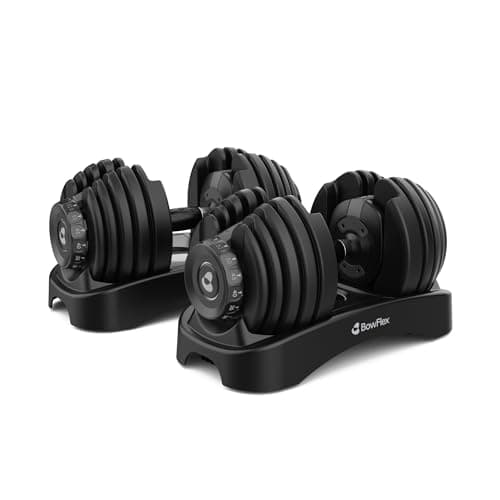
- Load: the adjustment mechanism and the increments. A dial changes weight inside a rest period and the Bowflex gives 2.5 lb steps to 25 lb, which is the finest granularity in the category. A selector pin is shorter at every weight and nearly plastic-free. Our dial versus pin comparison is the decision, and the ranking is the model.
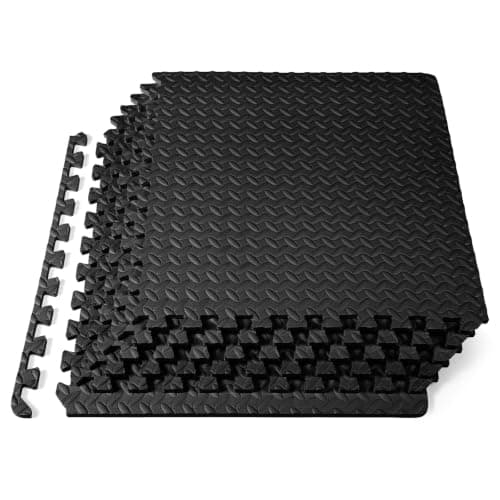
- Floor: thickness and whether it lifts out. Half-inch interlocking EVA tiles protect a finished floor, cut impact noise and leave no adhesive behind — 24 sq ft per pack, which covers most of a training rectangle. Our mat ranking has the thicker options for dropped plates.
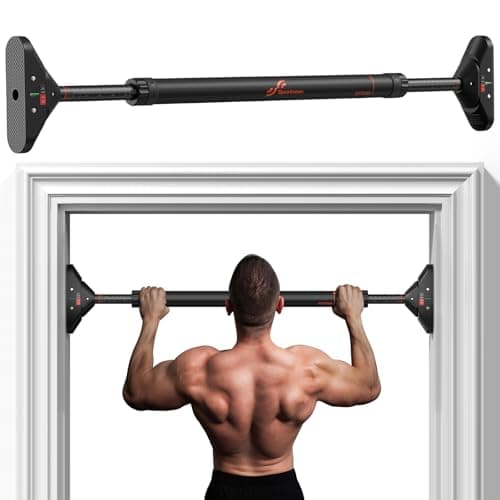
- Pulling: the published rating and the doorway width. A leverage-mount doorway bar needs a reveal to brace against and a width inside its published range — the Sportneer covers 29.5 to 37 in and publishes a 440 lb rating. Measure the frame before ordering; the doorway bar ranking explains what to look for and the wall-mounted ranking is the drilled alternative.
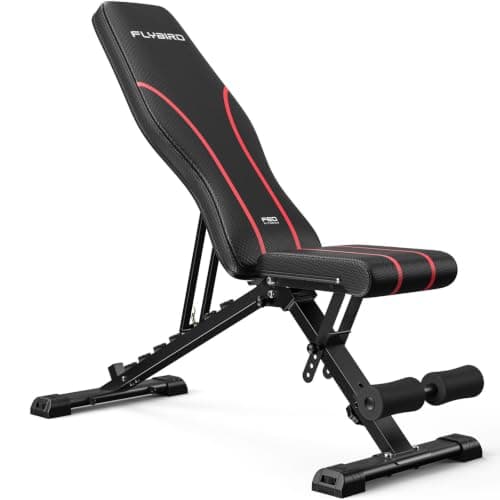
- Bench: does it fold, and through what angle range. Decline through steep incline is the widest useful span, and a bench that folds flat stands against a wall. The folding bench ranking is the list, and do you need a bench is the honest test for whether this step is yours at all.
Why load comes before everything
A pair of adjustable dumbbells gives you presses, rows, squats, lunges, hinges, carries and overhead work on day one, from about two square feet of floor. Nothing else in this registry is close on that measure. They also work without a bench (floor presses, standing presses), without a rack and without a mat — which is exactly what you want from a first purchase, since it cannot be stranded by the absence of a second.
If the budget will not stretch to adjustables, the substitute is not a cheaper dumbbell set — it is a resistance band kit, which gives horizontal pulls and pulldowns from a door anchor and fits in a drawer. Our bands versus dumbbells comparison is honest about where bands fall short, and the band ranking is the list.
Why mats come second, not last
Because the second purchase people actually make is usually a mistake caused by skipping this one. Dumbbell ends mark a finished floor, floor pressing on bare boards is unpleasant, and in an apartment the floor is also your relationship with the person below you. A pack of tiles costs less than almost anything else on this site. Put them under the training rectangle, not the whole room — our 10x10 room build has the area arithmetic, and home gym on carpet covers the case where the floor is already soft.
Why pulling comes third
A dumbbell gym is press-heavy by default. Rows help, but nothing in a dumbbell-only setup loads a vertical pull, and that is the gap a bar closes for under forty dollars and zero square feet — a doorway bar lives in the frame and comes down in seconds. If your frames are trimless or unusually wide, the drilled or ceiling-mounted options in our wall-mounted bar ranking are the fallback, and a power tower is the freestanding version at a real footprint cost.
Why the bench is fourth and not first
A bench adds the bottom few inches of a press, an incline angle and a stable elevated base. Those are real gains and they are gains on movements you can already do — which is the definition of a later purchase. It also takes about 6 sq ft in use and roughly a foot of wall depth folded. Buy it when your dumbbells are heavy enough that the bottom of the press is your limiting factor; our bench decision page puts a number on that.
What comes fifth, and how to choose the branch
After four purchases you have a complete small-space strength gym. The fifth purchase is where people diverge, and all three branches are legitimate:
Three things to buy later than you want to
- A barbell. Without a rack it is a floor-press and deadlift tool, which is fine — but a bar plus plates is three purchases and a second footprint. The dumbbells versus barbell arithmetic is the honest version.
- A mirror. Useful, genuinely, and never the thing that was stopping you. Our renter-friendly mirrors page exists for when it is time.
- An all-in-one machine. Sized for a garage, priced like four purchases, and it replaces movements you can already do. Our all-in-one guide is honest about the footprint.
If you can only buy one thing
Buy the dumbbells. A single pair of adjustables at a sensible weight range is the only purchase on this site that is a complete gym by itself — press, row, squat, hinge, carry, from two square feet, with no second purchase required to make it work. Everything else on this page makes that pair better. Our $300 build is this sequence with prices attached, and the $500 build is where the bench stops being a stretch.
What this page will not tell you
What to train, how often, or what results to expect. We rank equipment on published specifications and dimensions — our methodology says exactly what that means and what it does not. The order above is a purchasing argument about movements per square foot, not a program.