Nobody shopping for a home gym needs a brand ranked on vibes. What decides whether a machine works in a 10 ft bedroom is whether its maker publishes the folded dimensions, the maximum user weight and the rider fit range — and after ranking the same catalog across more than 150 pages, we can tell you exactly who does. This guide sorts the brands you will actually meet on Amazon by that one standard. It makes no claim about build quality, longevity or customer service, because those need testing we have not done. It makes a great many claims about documentation, because that is written down and checkable.
Read this guide the way you would read a label. A brand that publishes a folded footprint, an inseam range and a capacity figure is a brand you can plan a room around before you spend anything. A brand whose listing headlines 660 lb and buries 264 lb is not necessarily building a worse bench — but it is making you do the work, and in a space-constrained room that work is the purchase.
The one standard that matters in a small room
Every page on this site ranks on published numbers, in this order: the footprint in use, the footprint stored, the capacity, and the fit range. That is not a stylistic choice. It is what a renter with 60 sq ft of usable wall actually needs, and it is the reason how much space do you need for a home gym is one of the most-read pages here.
So the brand test is simple. For any product you are about to buy, ask the listing:
- What are the assembled dimensions, and are they plausible? A listing whose only figure is obviously a shipping carton has told you nothing. We have hit this repeatedly — most recently on a spin bike whose published footprint was narrower than any assembled bike of its type.
- What are the folded dimensions? Half the folding equipment on Amazon publishes none, which turns the entire reason you bought it into a guess.
- What is the maximum USER weight — not the total rated load? These are different numbers and titles always carry the bigger one.
- Does it state who it fits? Height, inseam or reach. On seated machines this is the difference between a daily habit and a resale listing.
Brands that publish the numbers
Sunny Health & Fitnessis the most consistently documented Amazon-native brand in this space, and it is the brand that appears on more pages of this site than any other. Model numbers are real and stable (SF-B1995, SF-RB422003, SF-T7515), structured dimensions are usually assembled dimensions, and Sunny will publish an inseam range when a machine has a seat — its Nova cycling bike states 28 to 35.8 in of inseam for riders 5 ft 0 in to 6 ft 4 in, which almost nothing else in that price band does. Sunny also describes its own 18 lb flywheel as "entry-level" rather than dressing it up, which is the single most trust-building sentence we have read on a listing this year. The gap: capacity. The same Nova listing publishes no maximum user weight at all.
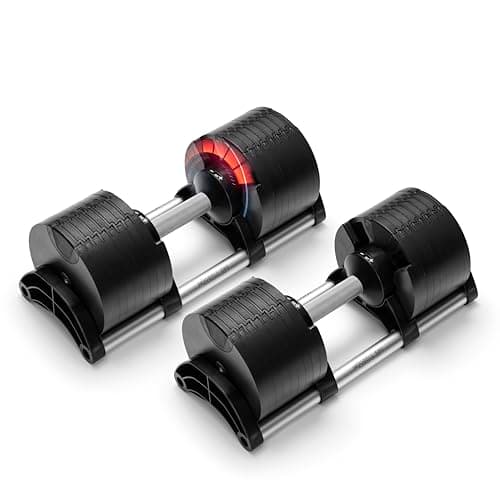
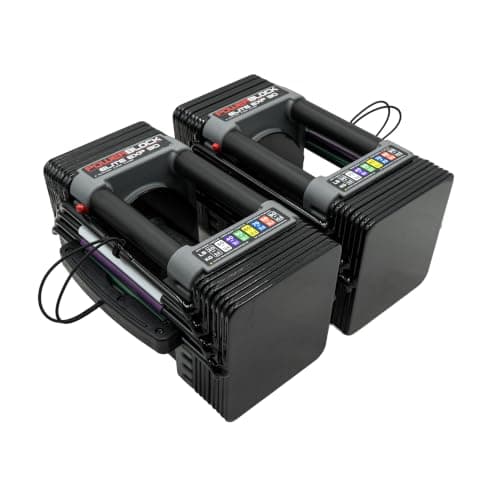
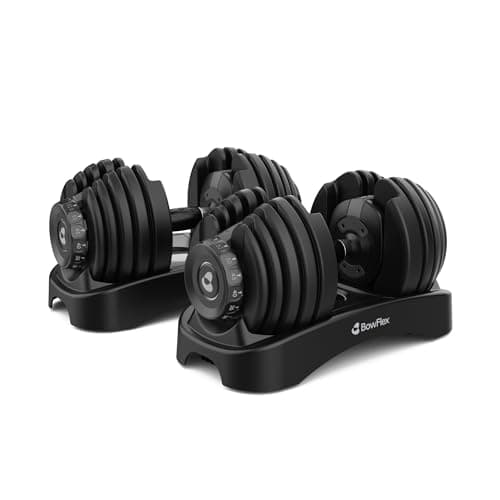
PowerBlock and Nuobell are the two adjustable-dumbbell brands whose published specs survive contact with a tape measure. Both publish per-hand weight ranges, increments and the block or handle dimensions that decide whether the pair fits a shelf — which is why both sit at the top of best adjustable dumbbells and why the three head-to-heads on this site (Bowflex vs PowerBlock, PowerBlock vs Nuobell, Nuobell vs Bowflex) can be decided on numbers rather than on adjectives.
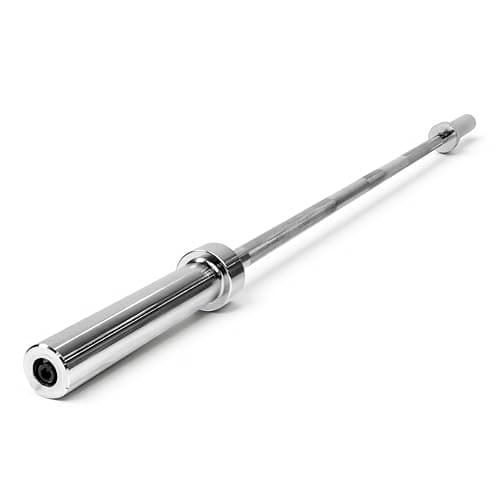
CAP Barbell is the plainest-dealing brand on this site. Its bars and plates publish length, weight, sleeve diameter, knurl and rated load, and it does not pretend a 25 lb 5 ft bar is something it is not. A CAP listing rarely tells you anything exciting and rarely tells you anything false, which in the barbell category — where length is everything in a small room, see best barbells for small spaces — is exactly what you want.
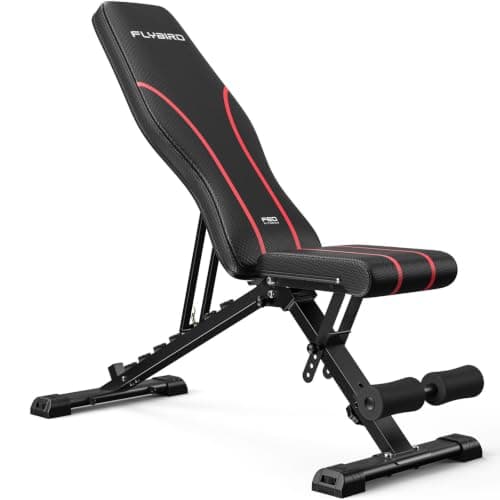
FLYBIRD publishes the folded dimensions of its benches, which sounds like a low bar until you notice how many folding benches do not. That one habit is why a FLYBIRD bench is the default recommendation in best folding weight benches and why it appears in most of the budget builds on this site.
TRX publishes rated loads on its straps and anchors, which matters because a suspension trainer is the one product class here where a published load is a safety figure rather than a marketing one. It is also the brand most likely to omit dimensions entirely on a secondary product — the TRX Push-It publishes neither dimensions nor a rated load, and we said so on best push-up bars and parallettes rather than quietly ranking it anyway.
Brands whose listings contradict themselves
These are not accusations of bad equipment. They are documented cases where one listing publishes two different numbers, and in every case the smaller number is the one to plan around.
- Bowflex— the 3.1S bench listing states a 300 lb maximum user weight in its spec table while the feature bullets say 480 lb. Both numbers are on the same page. We plan around 300. Bowflex's dumbbells, by contrast, are among the best-documented products on this site.
- Soozier— the A91-243 storage bench headlines 660 lb on Amazon, which is a TOTAL rated load. Soozier's own spec sheet for the identical SKU states 264 lb maximum user weight. That is the number that decides whether the bench suits you, and it is a third of the headline. Full working on best weight benches with storage.
- MERACH — the UltraWalk W60 walking pad headlines 400 lb beside a published sustained rating of 330 lb. Both are real; only one is relevant to daily use. MERACH also builds the cheapest bike on our spin bike roundup and publishes both of its contact-point adjustment ranges in inches, which most of its rivals do not — this is a brand that documents fit well and headlines capacity badly.
- pooboo— the W216 recumbent's own bullets state 49.84 x 28.78 in while Amazon's structured item dimensions report 43 x 18.5 in, a difference of nearly seven inches of length. We print both and plan around the larger, because the failure mode of trusting the smaller figure is a machine that does not fit the space you cleared.
- YOSUDA— sells the friction and magnetic versions of one cycling bike as variants of a single listing, and the magnetic variant's title still carries the words "Brake Pad" from its sibling. The bullets on that variant also name a color the variant selector does not sell. The bike itself is our top pick in its class; the listing is a trap for anyone who reads the title instead of the variant.
- Synergee— the Resistance Bow publishes three different weights for one product across one page (4.6 lb in Amazon's field, "only 5 lbs" in one bullet, "only 6 lbs: bow, bands, bag and all" in another). It is still the best-documented product on best portable home gyms, which tells you how low the bar is in that category.
Brands that publish a headline instead of a spec
A large share of Amazon home gym equipment comes from brands whose entire catalog exists on Amazon: MERACH, YOSUDA, pooboo, UREVO, JOROTO, Soozier, SPORTSROYALS, RELIFE, Mikolo and a rotating cast of five-letter names. They are not interchangeable and they are not automatically bad — several of them make our top picks. What they share is a documentation pattern:
- A confident number in the title with no mechanism behind it. The clearest example on this site is incline: three of five walking pads we ranked advertise a grade of 6 to 16% that turns out to be flip-out legs you set by hand with the belt stopped. The percentage is real; the implication is not. See best incline walking pads.
- Decibel claims with no measurement.We have logged claims of 15, 20, 25 and 54 dB across this site. Every one is a maker's marketing figure with no third-party test behind it, and we never repeat one as fact.
- A carton in the dimensions field. Common enough in compact ellipticals that one 15.5 in stride machine listed itself as 23.8 in tall. Two otherwise-good candidates were dropped from best compact ellipticals for exactly that.
- A brand name that is not the manufacturer. The EVO Gym is sold under Nomadix Fitness while Amazon names EASTEEL as the manufacturer. It is the top pick on its page on the strength of its published band ratings — but you should know whose product it is before a warranty question arises.
Brands we cannot cover, and why
If you have spent any time reading about home gyms you will have met Rogue Fitness, PRx Performance, REP Fitness, Bells of Steel and Titan Fitness. Several of them build the most space-efficient equipment in existence — PRx's fold-flat racks are the reference design for the category.
This site is Amazon-only, and most of those brands sell direct. That is an editorial constraint we would rather state than hide: where a brand-direct product is the genuinely better answer, our page says so even though we cannot link it. A fold-flat PRx rack in a garage that can take lag bolts into studs is a better object than anything on best wall-mounted squat racks. What we can do is rank what is actually buyable on Amazon honestly, which is what every other page here does.
Two brand-adjacent things worth knowing. Nautilusowns Bowflex and Schwinn's fitness line, so a Bowflex dumbbell and a Schwinn bike are corporate siblings — that tells you nothing about either product, but it explains the shared spec-sheet style. And Marcy (Impex) is the oldest name you will meet on Amazon in this category; its listings are frequently the sparsest, with the NS-653 folding recumbent publishing neither a maximum user weight nor a resistance level count. Old brand, thin listing.
How to buy against a brand you have never heard of
Most of the equipment that fits a small apartment is made by brands with no reputation to trade on. That is survivable if you buy on published numbers rather than on the name. The checklist we use on every page of this site:
- Demand a plausible assembled footprint.Compare the dimensions field against the product's own feature bullets. If they disagree, plan around the larger figure. If only one exists and it looks like a box, treat the listing as publishing nothing.
- Separate max user weight from total rated load. Titles carry the bigger number. Spec tables and manufacturer spec sheets carry the smaller one. Stay 30 lb under whichever is smaller.
- Treat an empty warranty field as a warranty of zero. Several of our top picks publish no term at all; that is information, and it belongs in the price comparison.
- Ignore every decibel figure. Nobody in this category measures noise independently. What you can reason about is mechanism: contact versus no contact, impact versus no impact. That is how quietest cardio machines for apartments is actually ranked.
- Prefer the brand that publishes the boring number. Folded depth, inseam range, belt length, rated load. A maker that fills those fields in is telling you it expects the product to be measured.
The five picks below, and why they are here
These are not "the five best brands." They are one well-documented product from each of the brands that consistently publishes what a small-space buyer needs — the practical output of everything above. Prices come from the live price layer; nothing is typed into this page.
Brand-by-brand, in one table
| Brand | Where you meet it | What it publishes well | What to check yourself |
|---|
| Sunny Health & Fitness | Cardio, benches, racks, steppers | Stable model numbers, assembled dimensions, rider fit and inseam ranges | Maximum user weight — missing on some listings, including the Nova bike |
| Bowflex (Nautilus) | Adjustable dumbbells, benches, treadmills | Dumbbell ranges, increments and dimensions | Bench capacity: the 3.1S states 300 lb in the table and 480 lb in the bullets |
| PowerBlock | Adjustable dumbbells | Per-hand range, increments, block dimensions, expansion path | Which expansion kit a given set accepts |
| Nuobell | Adjustable dumbbells | Range, increments, handle length, adjustment mechanism | Price volatility — this is the one category where the live price moves a lot |
| CAP Barbell | Bars, plates, trap bars, racks | Length, weight, sleeve diameter, knurl, rated load | Which bar length actually fits your rack and your room |
| FLYBIRD | Benches, dumbbells | Folded dimensions, backrest angles, capacity | Pad width if you bench wide |
| Marcy (Impex) | Benches, bikes, smith machines | Model numbers and assembled dimensions | Capacity and resistance detail — the NS-653 publishes neither |
| MERACH | Bikes, rowers, walking pads | Contact-point adjustment ranges, app compatibility | Capacity headlines — the W60 leads with 400 lb beside a 330 lb sustained rating |
| YOSUDA | Bikes, rowers, ellipticals | Capacity, rider fit, flywheel weight | Which variant you are buying — one listing sells two mechanisms |
| pooboo | Bikes, recumbents | Capacity, seat and leg-length ranges | Footprint — its own figures and Amazon's can differ by seven inches |
| TRX | Suspension trainers, accessories | Rated loads on straps and anchors | Dimensions on secondary products — sometimes absent entirely |
| Rogue, PRx, REP, Titan | Brand-direct racks and benches | Generally the best documentation in the industry | Not covered here — this site is Amazon-only, and these sell direct |
Does brand matter more at some price points?
Yes, and not in the direction you would expect. Under about $150, brand tells you very little: a $40 bench-and-band accessory is being made in the same few factories whatever name is printed on it, and the thing to compare is the published spec, not the logo. Between about $150 and $600 — adjustable dumbbells, benches, bikes, racks, the heart of this site — brand starts to mean something concrete, because that is where documentation habits diverge and where a warranty is worth having. Above about $1,000, you are mostly outside Amazon and inside the brand-direct world, where the equipment is better and we cannot link it.
The budget pages on this site are built on exactly that logic: the $300 build buys on spec, the $1,000 build buys on brand where it matters, and the $2,000 build is where you stop compromising on documentation.
What we will never tell you about a brand
We have not stress-tested a frame, cycled a bearing to failure or timed a warranty claim. So this guide contains no claim about which brand lasts longest, which has the best customer service or which is "commercial grade" — a phrase that appears on listings for equipment weighing 50 lb and means nothing. Our methodology page states exactly what our scores are drawn from: published specifications, manufacturer documentation and aggregated owner feedback. Anything we have not seen, we say we have not seen.
What this guide can do is save you the most expensive mistake in a small room, which is buying equipment whose real dimensions you discover after delivery. Brands that publish boring numbers are the ones that make that mistake impossible.