Skip to content
RACK:RATIO

HUB 02 · Adjustable Dumbbells & Free Weights

Dumbbells vs Barbell for a Small Home Gym

Both routes put about 100 lb of iron in the room for similar money. One needs two square feet and nothing else; the other needs nine feet of wall, a rack and a permanent corner. That is the whole decision.

By Stephen V.Reviewed Published How we research
#ad

We earn a commission when you buy through our Amazon links, at no extra cost to you. It never changes our rankings, and we say so when the cheaper product is the better buy. How this works.

For almost everyone in an apartment, a bedroom or a shared room, adjustable dumbbells are the right answer — not because they train you better, but because they are one purchase that needs no structure, and a barbell is three purchases that need a rack, nine feet of wall and a corner you are willing to give up permanently. Buy the Bowflex SelectTech 552 if you want the default, or the PowerBlock Elite EXP if the shortest possible handle matters. Go barbell only when you have the floor and you specifically want to squat, bench and press heavy — and when you do, the honest shopping list is a 6 ft bar, a cast iron plate set and a freestanding squat stand, all three, because a bar on its own is not a gym.

Here is the number that reframes this argument. A pair of 52.5 lb dial dumbbells is 105 lb of iron. An entry barbell package — a 28 lb six-foot bar plus a 75 lb cast iron plate set — is 103 lb. Same iron, similar money, almost to the pound. So the question was never "which gets me more weight". The question is what each one asks of your room, and on that axis the two routes are not close.

What each route actually costs in floor

This is a dimension-first site, so start with the tape measure rather than the training theory. Using the published footprints of the five products below:

  • The dumbbell route. Two objects, each 16.9 x 8.3 in on the Bowflex or roughly 12 x 6 in on the PowerBlock. Stood side by side in a corner that is about two square feet, including the tray. There is no setup, no clearance requirement, and nothing to assemble. You pick them up, you train where you stand, you put them back.
  • The barbell route. A 6 ft bar needs 72 in of length plus room at each end to rack and unrack it — call it an 8 to 9 ft wall, and that is with the short bar, not a 7-footer. The plates need somewhere to live. And the rack: the PASYOU squat stand sets up at 36 in deep by 43 in wide, which its own listing puts at about 10.8 sq ft. Add the lane you stand and walk in and the realistic allocation is five times the dumbbell footprint.

That is the entire comparison in one paragraph, and it is why this page ranks the dumbbells first. Everything below is about the cases where the barbell is still worth the floor — because there genuinely are some, and the honest version of this page does not pretend otherwise.

What the barbell does that dumbbells cannot

Three things, and they are real:

  • It loads your legs past what your arms can carry. This is the big one. To squat with dumbbells you have to get them into position by hand, which caps you at roughly what you can hold — around 105 lb total on the pair here. A barbell sits on your back, so your legs are limited by your legs and not by your grip and shoulders. If heavy squatting is the point of your training, a barbell is not a preference, it is a requirement.
  • It progresses in small, cheap steps forever. Dial dumbbells stop at a fixed ceiling — 52.5 lb per hand on the Bowflex, 50 lb on a Stage 1 PowerBlock — and getting past it means buying a new pair or an expansion kit. A bar takes another plate, and a 2.5 lb plate costs very little. Over years, that is the cheaper progression path.
  • It is the only way to bench and overhead press with real load from a rack. Dumbbells press fine and arguably more safely, but the top end is again set by what you can get into position on your own.

And here is what the barbell demands in return, which the lifting content online tends to skip: a bar you cannot escape is a safety problem, not a space problem. A failed dumbbell press ends with two dumbbells on the floor beside you. A failed barbell bench press ends with a loaded bar on your chest, and in a home gym with nobody else in the room, that is the risk you are actually buying a rack to manage. That is why the rack is on this list as a pick rather than a footnote, and why do you need a squat rack at home is the next page to read if you lean barbell.

What dumbbells do that the barbell cannot

  • They work in a room with no clear wall. No length requirement, no rack, no clearance arc. A 7 ft bar in a 9 ft room is a geometry problem before it is a training problem; a dumbbell has no geometry.
  • Each side works independently. Your weaker arm cannot hide behind the stronger one, and the range of motion at the top and bottom of a press is longer. That is a genuine training advantage, not a consolation prize.
  • They are quiet and they put nothing on the floor at speed. A dial dumbbell is never dropped in normal use. A loaded barbell set down onto a floor — even under control — is the single heaviest point load a small home gym creates, and in an apartment above an occupied unit that is the thing that ends home gyms. Read can your apartment floor hold a home gym and lifting in an apartment before you choose the bar upstairs.
  • They are one purchase. You unbox them and train. The barbell route needs a bar, plates, a rack and usually a bench and a mat before the first useful session.

How the two routes compare

Dial dumbbell pairEntry barbell package
Total iron105 lb (52.5 x 2)103 lb (28 lb bar + 75 lb plates)
Purchases neededOneThree minimum — bar, plates, rack
Floor needed~2 sq ft stored, none in use~10.8 sq ft for the stand alone, plus an 8-9 ft wall
InstallNoneNone for a freestanding stand; drilling for a wall rack
Heavy squatCapped by what you can holdCapped by your legs
Progression past the startNew pair or expansion kitOne more plate
Failed-rep riskDrop them beside youNeeds a rack with catches
Noise / floor loadLow — never dropped in useHigh — plates meeting a floor
Can it be put awayYes, into a closetBar and plates yes; the rack realistically no

Read the "purchases needed" row next to the "total iron" row and the real asymmetry appears. The two routes arrive at the same weight, but the dumbbell route gets there in one box and the barbell route gets there in three, with the third one — the rack — costing more floor than the other two combined. Any comparison that puts a bar against a dumbbell without the rack in the frame is not comparing the thing you would actually own.

The five picks below are therefore split deliberately: two dumbbell routes, then the three pieces of the barbell route in the order you would buy them. If the barbell column is where you are landing, read all three cards as one purchase, because that is what it is.

The short answer

Quick picks

#ProductBest forScorePrice
01
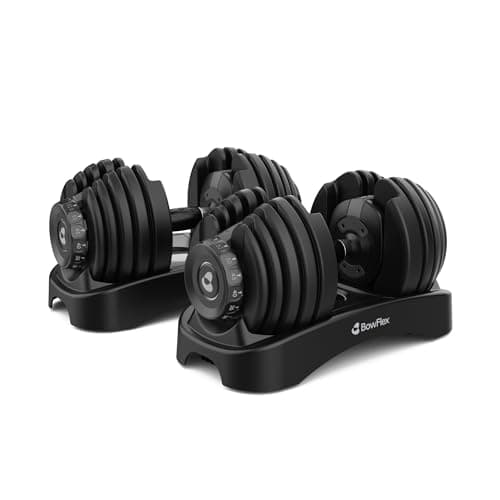
Bowflex Bowflex SelectTech 552 (Results Series)
Bowflex SelectTech 552 (Results Series)

The default answer for a reason: one dial takes each dumbbell from 5 to 52.5 lb in fine steps, and the pair replaces a rack of fifteen. The dial mechanism is the thing you're really buying, and Bowflex's is the most refined.

Most small-space lifters
8.8
$399.99Amazon
02
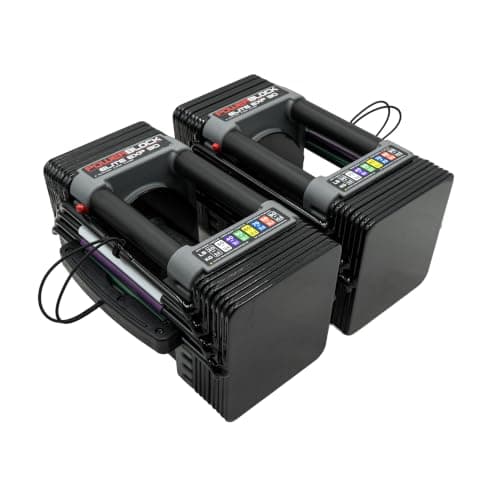
PowerBlock PowerBlock Elite EXP
PowerBlock Elite EXP

The most space-efficient adjustable we rank. The block shape is shorter than a dial dumbbell at every weight, there's almost no plastic to crack, and expansion kits take it to 70 or 90 lb without buying a new pair. PowerBlock has since discontinued the EXP line, so what sells now is remaining stock.

The smallest footprint
9.3
$399.00Amazon
03
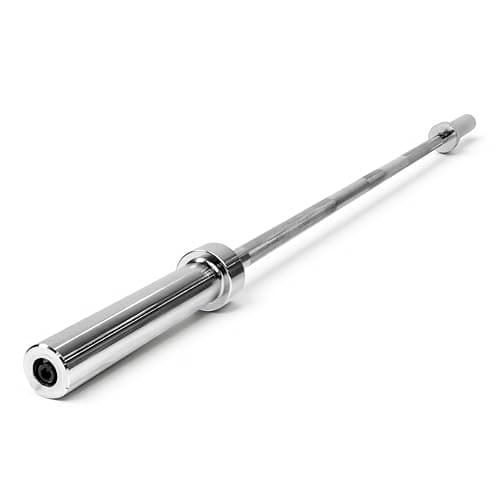
CAP Barbell CAP 28 lb 6 ft Olympic Barbell (Chrome)
CAP 28 lb 6 ft Olympic Barbell (Chrome)

A foot shorter than a competition bar and still a true 2-inch Olympic bar, so it takes the same plates and sits in the same J-hooks. In a room where a 7-foot bar clips the walls on the rack-out, this is the bar that makes the lift possible at all.

The small-room default
9.0
$64.72Amazon
04
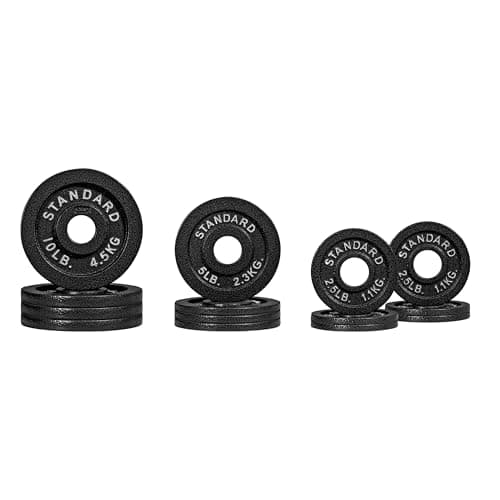
CAP Barbell CAP Barbell 75 lb Classic Olympic Cast Iron Plate Set
CAP Barbell 75 lb Classic Olympic Cast Iron Plate Set

Cast iron is thinner per pound than any bumper, which is exactly what a 5 or 6 foot bar with stubby sleeves needs. It is louder and harder on floors, so it belongs on a mat — but pound for inch and pound for dollar, nothing beats it.

Short sleeves and small budgets
9.3
$89.89Amazon
05
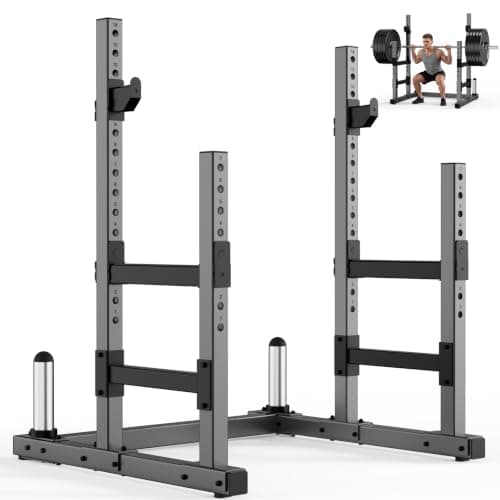
PASYOU PASYOU SR30Pro Adjustable Squat Rack Stand
PASYOU SR30Pro Adjustable Squat Rack Stand

Two independent freestanding uprights you can set to any width, then move or store when done — no wall, no drilling, no landlord conversation. The rack for people who can't put a hole in anything.

Renters who can't drill
8.0
$219.99Amazon

#ad · Live prices from the Amazon Product API, as of October 25, 2026. Where we have no verified live price, we show none — we would rather leave a gap than print a number that has rotted.

In detail

The picks, in full

01
Bowflex Bowflex SelectTech 552 (Results Series)

Most small-space lifters

Bowflex SelectTech 552 (Results Series)

5–52.5 lb / hand2.5 lb steps to 2515 settingsDial adjust
8.8/10

The default answer for a reason: one dial takes each dumbbell from 5 to 52.5 lb in fine steps, and the pair replaces a rack of fifteen. The dial mechanism is the thing you're really buying, and Bowflex's is the most refined.

Good

  • Fine 2.5 lb steps at the low end — good for small-muscle work
  • Refined dial that rarely mis-seats plates
  • Replaces 15 pairs in the footprint of one

Trade-offs

  • Long at low weights — the whole 52.5 lb handle length even at 10 lb
  • Plastic tray parts can crack if dropped on a hard floor
Fit
9
Value
8
Install
10
Build
8

Skip this if…

…you routinely drop dumbbells or train past 52.5 lb per hand — the plates aren't rated for drops and there's no heavier version of this model.

Spec sheet

Weight range
5–52.5 lb / hand
Increments
2.5 lb (to 25), then 5 lb
Replaces
15 pairs of dumbbells
Footprint (each)
16.9 × 8.3 in (published)
Install / renter
Freestanding — zero install
Noise / floor
Low — never dropped in normal use
$399.99View on Amazon

Price as of October 25, 2026. Prices change — Amazon's is the one that counts.

#ad · we may earn a commission from this link to Bowflex SelectTech 552 (Results Series)

02
PowerBlock PowerBlock Elite EXP

The smallest footprint

PowerBlock Elite EXP

5–50 lb / handExpandable to 90 lbSelector pinAll-metal core
9.3/10

The most space-efficient adjustable we rank. The block shape is shorter than a dial dumbbell at every weight, there's almost no plastic to crack, and expansion kits take it to 70 or 90 lb without buying a new pair. PowerBlock has since discontinued the EXP line, so what sells now is remaining stock.

Good

  • Shortest handle length at every weight — best for narrow benches
  • Almost no plastic; the part that usually fails isn't there
  • Upgrade path to 90 lb without a second purchase

Trade-offs

  • The block-in-block shape takes practice to grip naturally
  • Adder weights for 2.5 lb micro-jumps are a separate purchase
  • Discontinued by PowerBlock — its current catalog is the Pro 100 EXP and the Elite USA 90, though PowerBlock still sells the EXP expansion kits
Fit
10
Value
8
Install
10
Build
9

Skip this if…

…you want the familiar round-dumbbell feel — the cage shape is polarizing, and some people never warm to it.

Spec sheet

Weight range
5–50 lb / hand (Stage 1)
Expandable to
70 or 90 lb with kits
Footprint (each)
~12 × 6 in — shortest here
Adjust
Selector pin
Install / renter
Freestanding — zero install
Noise / floor
Low — solid metal, no rattle
$399.00View on Amazon

Price as of October 25, 2026. Prices change — Amazon's is the one that counts.

#ad · we may earn a commission from this link to PowerBlock Elite EXP

03
CAP Barbell CAP 28 lb 6 ft Olympic Barbell (Chrome)

The small-room default

CAP 28 lb 6 ft Olympic Barbell (Chrome)

6 ft long28 lb bar2 in Olympic sleevesChrome finish
9.0/10

A foot shorter than a competition bar and still a true 2-inch Olympic bar, so it takes the same plates and sits in the same J-hooks. In a room where a 7-foot bar clips the walls on the rack-out, this is the bar that makes the lift possible at all.

Good

  • A full foot shorter than a 7 ft bar without dropping to 1 in sleeves
  • Fits between narrow squat-stand uprights and inside most compact racks
  • Cheap enough to be a second bar for a tight room

Trade-offs

  • Shorter sleeves hold less plate than a full-length bar
  • 500 lb rated — real, but below the 7-footer if you load near-maximal
Fit
10
Value
9
Install
10
Build
7

Skip this if…

…you already have the wall-to-wall width for a 7 ft bar and plan to load it heavy — length buys you sleeve room and stability you can't get back.

Spec sheet

Overall length
6 ft (72 in)
Bar weight
28 lb
Sleeve type
2 in Olympic — takes standard plates
Finish
Chrome
Rated load
500 lb (per listing)
Wall clearance needed
6 ft plus room to rack — fits a 8-9 ft wall
$64.72View on Amazon

Price as of October 25, 2026. Prices change — Amazon's is the one that counts.

#ad · we may earn a commission from this link to CAP 28 lb 6 ft Olympic Barbell (Chrome)

04
CAP Barbell CAP Barbell 75 lb Classic Olympic Cast Iron Plate Set

Short sleeves and small budgets

CAP Barbell 75 lb Classic Olympic Cast Iron Plate Set

75 lb setCast iron2 in OlympicThinnest per lb
9.3/10

Cast iron is thinner per pound than any bumper, which is exactly what a 5 or 6 foot bar with stubby sleeves needs. It is louder and harder on floors, so it belongs on a mat — but pound for inch and pound for dollar, nothing beats it.

Good

  • Fits far more weight onto a short bar than bumpers do
  • Cheapest way to add load
  • Never degrades — cast iron outlives the lifter

Trade-offs

  • Loud on a hard floor and unforgiving if dropped
  • Will chip a floor without a mat under it
Fit
9
Value
10
Install
10
Build
8

Skip this if…

…you live above someone and cannot put mats down — this is the plate most likely to generate a complaint.

Spec sheet

Type
Cast iron Olympic plates
Set weight
75 lb total
Plate breakdown
Not published — confirm on listing
Sleeve fit
2 in Olympic
Noise
High — steel on steel and steel on floor
Thickness per lb
Thin — most weight per inch of sleeve
$89.89View on Amazon

$99.9910% off

Price as of October 25, 2026. Prices change — Amazon's is the one that counts.

#ad · we may earn a commission from this link to CAP Barbell 75 lb Classic Olympic Cast Iron Plate Set

05
PASYOU PASYOU SR30Pro Adjustable Squat Rack Stand

Renters who can't drill

PASYOU SR30Pro Adjustable Squat Rack Stand

FreestandingNo installAdjustable height2,400 lb total
8.0/10

Two independent freestanding uprights you can set to any width, then move or store when done — no wall, no drilling, no landlord conversation. The rack for people who can't put a hole in anything.

Good

  • Zero install — the true renter rack
  • Set to any rack width
  • Can be moved out of the way or stored

Trade-offs

  • Less stable than a bolted or four-post cage
  • No pull-up bar, and nothing joins the two uprights overhead
Fit
8
Value
8
Install
10
Build
6

Skip this if…

…you lift heavy and want the security of a full cage with catch bars — freestanding stands are less forgiving of a failed rep.

Spec sheet

Type
Freestanding squat stand (pair of uprights)
Folded depth
Uprights move / store apart
Rated load
2,400 lb total — 1,800 lb on the lower bars, 600 lb on the J-hooks
Set-up footprint
36" D x 43" W x 58" H (about 10.8 sq ft, per listing)
Install / renter
Freestanding — no drilling, renter-safe
Ceiling needed
Standard — no overhead bar
Unit weight
63 lb for the pair
$219.99View on Amazon

Price as of October 25, 2026. Prices change — Amazon's is the one that counts.

#ad · we may earn a commission from this link to PASYOU SR30Pro Adjustable Squat Rack Stand

How to decide, in order

1. Measure the longest clear wall in the room

Do this before anything else, because it can settle the question in thirty seconds. Stand a tape against your longest unobstructed wall and read the number:

  • Under 8 ft of clear wall: buy dumbbells. Even a 6 ft bar needs room at both ends to get into and out of the hooks, and a bar you have to angle around a doorframe is a bar you will stop using. Our best barbells for small spaces page covers the 5 ft and 6 ft bars that exist for exactly this constraint, if you want to see how far the format can be shrunk.
  • 8 to 10 ft: a 6 ft bar and a freestanding stand will work, and a 7 ft bar probably will not. This is the band where the short bar earns its existence.
  • Over 10 ft, with a corner you can commit: the barbell route is fully open, and you can consider a full cage rather than a stand. Compare in power rack vs squat stand.

Then check the ceiling, which trips people up after they have already bought the bar: pressing overhead needs your standing reach plus the bar plus clearance. Ceiling height for a home gym has the measurement, and squat racks for low ceilings covers what to do when the answer is bad.

2. Decide whether you will train alone, with nobody in the room

Most home gym lifters will. That single fact changes the barbell shopping list, because the rack stops being a convenience and becomes the piece that catches a failed rep. The PASYOU stand below publishes 2,400 lb total — 1,800 lb on the lower safety bars and 600 lb on the J-hooks — which is the kind of margin you want for the job. It is freestanding and needs no drilling, which is the reason it is the rack on this page rather than a wall-mounted unit.

If the answer to "will I bench alone" is yes and you do not want to buy a rack, the honest conclusion is the dumbbell route, not a barbell with no catches. The dumbbell version of a failed press is unpleasant; the barbell version is the thing safety-bar marketing exists for. Our do you need a weight bench page covers the other half of that setup.

3. Be honest about your ceiling weight, not your dream weight

The dumbbell ceiling on this page is 52.5 lb per hand (Bowflex) or 50 lb per hand with kits to 70 or 90 lb (PowerBlock). For pressing, rowing, curling and single-leg work, that is a long runway — most people never exhaust it. For a back squat it is not, because you have to get the weight into position.

So the real question is which lifts you actually intend to do heavy. If the answer is squats and deadlifts with real load, you want a bar. If it is "get strong generally in a room I also sleep in", the dumbbells will take you years, and the expansion path on the PowerBlock takes the ceiling to 90 lb per hand without buying a second pair — which covers most pressing anyone will ever do at home. For the heavier end of the dumbbell market see heaviest adjustable dumbbells.

There is also a third route that this page is not about but that keeps the heavy pull without the rack: a trap bar is loaded and lifted from the floor, so there is nothing to unrack and no failure position to escape. Best trap bars for small spaces covers it, and it is the one barbell-family purchase that does not drag a rack behind it.

4. Count the real cost of the barbell route before you compare prices

We do not print prices in prose on this site — the cards above read live from the price layer, and a number typed into a paragraph is stale within days. But the structure of the cost is worth stating plainly: the dumbbell route is one line item, and the barbell route is at least three, usually four or five once you add a bench and a mat under the plates. When people say a barbell is cheaper, they are comparing a bar to a pair of dumbbells, which is comparing one item to a complete solution.

Where the barbell genuinely wins on money is later. Plates are the cheapest weight per pound you can buy and they never become obsolete, so the lifter who trains for a decade ends up ahead. The lifter who is not sure they will still be training in six months is far better off with one box that resells easily. Our how much does a home gym cost page works through the full build, and best home gym under $500 shows what a dumbbell-first build looks like at a fixed budget.

5. Check which plates your bar can actually take

One barbell-route detail that catches people out: a short bar has short sleeves, and bumper plates are much thicker per pound than cast iron. A 75 lb cast iron set fits on a 6 ft bar comfortably; the same weight in rubber bumpers may not. That is why the plate pick on this page is cast iron rather than bumpers, and the trade is noise — cast iron is loud and unforgiving on a floor, which is fine on a slab and a problem upstairs. Our best weight plates for small spaces page covers the choice properly, and apartment home gym flooring covers what goes underneath.

6. The answer most small rooms arrive at

For what it is worth, the build this site sees work most often in an apartment is dumbbells first, then one barbell-family item that needs no rack — a trap bar or a pull-up bar — rather than a full barbell setup squeezed into a room that cannot hold it. Below even that, the cheapest load-free pressing you can add is a pair of push-up bars or parallettes, which store in a drawer and need no floor at all. The dumbbells cover pressing, rowing, carrying and single-leg work from day one in two square feet. If and when the room gets bigger, the bar and the rack are still there to buy, and nothing you already own becomes redundant.

If you are starting from zero, home gym essentials for small spaces puts this decision in the order of the whole build, and machines vs free weights is the fork one level above this one. If you have already decided on dumbbells and just want the ranking, go to best adjustable dumbbells.
How we picked

We don't run a testing lab

We compiled published specifications, manufacturer documentation and aggregated owner reviews, then scored each product against a published rubric that weights fit-for-small-space, value, install reversibility and build. The scores are judgments from documented research — they are notmeasurements we took, because we don't have a lab and we're not going to pretend we do. Every dimension is cited in Sources.

Questions

Frequently asked

Are dumbbells or a barbell better for a small home gym?
Dumbbells, for almost any room under about 10 ft of clear wall — not because they build more strength, but because they are one purchase that needs no structure. A barbell is three purchases (bar, plates, rack) and the rack alone takes about 10.8 sq ft on the stand we recommend. The barbell wins when you specifically want to squat and press heavy and you have a corner you can commit permanently.
Can you build real strength with just adjustable dumbbells?
For pressing, rowing, carrying, curling and single-leg work, yes, for years — 52.5 lb per hand is a long runway, and a PowerBlock with expansion kits reaches 90 lb per hand. The genuine limit is the heavy back squat and deadlift, where the weight has to be got into position by hand, so your grip and shoulders cap your legs. If those two lifts are the point of your training, you want a bar.
Do you need a squat rack if you buy a barbell?
For squatting and benching with meaningful load and nobody else in the room, yes — the rack is what catches a failed rep, which is a safety function and not a convenience. For deadlifts, rows, cleans and overhead presses taken from the floor, no. That split is the whole subject of do you need a squat rack at home, and a trap bar is the barbell-family option that skips the question entirely.
How much space does a barbell setup need compared to dumbbells?
A dial dumbbell pair is about two square feet stored and needs nothing in use. A 6 ft barbell needs 72 in plus room at each end to rack and unrack — realistically an 8 to 9 ft wall — and the freestanding stand on this page sets up at 36 x 43 in, which its listing puts at about 10.8 sq ft. Add a walking lane and the barbell route asks for roughly five times the floor. How much space do you need has the measuring method.
Is a barbell cheaper than adjustable dumbbells?
The bar is cheaper than the dumbbells. The setup is not — you also need plates and a rack before the first useful session, and usually a bench and a mat. Where the barbell wins is over time: plates are the cheapest weight per pound available and they never go obsolete, so a lifter still training in five years comes out ahead. Someone unsure they will still be at it in six months is better off with one resellable box. See how much does a home gym cost.
Can you squat with dumbbells instead of a barbell?
You can, and goblet squats, split squats and Bulgarian split squats all load legs hard with surprisingly little weight. What you cannot do is match a heavy back squat, because the dumbbells have to be held — around 105 lb total on the pair here, which a trained lifter's legs will outgrow long before their grip does. The usual workaround in a small room is single-leg work, where 50 lb per hand is plenty for a long time.
Which is better for an apartment above other people?
Dumbbells, clearly. A dial dumbbell is never dropped in normal use, while a loaded barbell set down on a floor is the heaviest point load a small home gym produces, and no mat makes a real drop quiet. If you go barbell upstairs, cast iron plates make it louder than bumpers and control matters more than flooring. Read can your apartment floor hold a home gym and lifting in an apartment first.
What about kettlebells instead of either?
A kettlebell is the third option and a good one in a tiny room: one object, no pair to store, and it swings and carries in ways neither of these do. It is worse than dumbbells for pressing volume and symmetrical work, and worse than a bar for heavy loading. We compare them directly in kettlebell vs dumbbells for small spaces and rank the adjustable versions in best adjustable kettlebells.
If I buy dumbbells now, is a barbell later a waste?
No — this is the one sequencing question with a clean answer. Dumbbells stay useful forever next to a barbell: accessory pressing, rows, single-leg work and anything you do on a bench. The reverse is less true, since a bar without a rack has a short movement list. Buying dumbbells first and adding a bar when the room allows costs you nothing in redundancy, which is why it is the order we recommend.
Do I need a bench for either route?
For dumbbells, not immediately — floor presses, standing work and single-leg work cover a lot — but a bench unlocks the incline and the bottom of a press. Do you need a weight bench works through it honestly. For the barbell route a bench is effectively mandatory if benching is on the list, and it has to be a bench rated for the load, which is the subject of how much weight can a weight bench hold.

Keep reading

Receipts

Sources

We don't run a testing lab, and we don't pretend to. Every dimension and rating traces to a manufacturer spec sheet or manual, named and linked above. Where a maker doesn't publish a number, the spec reads "Not published" rather than a guess. Read our full method.