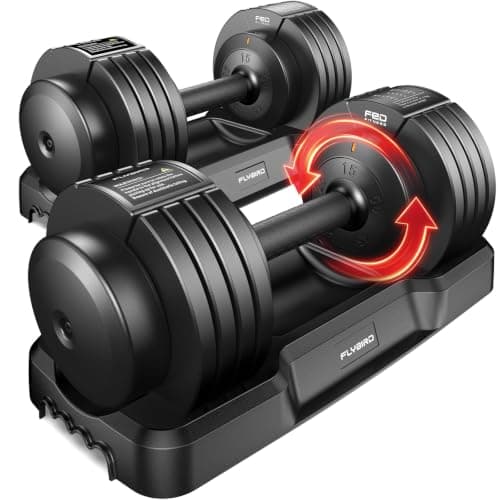
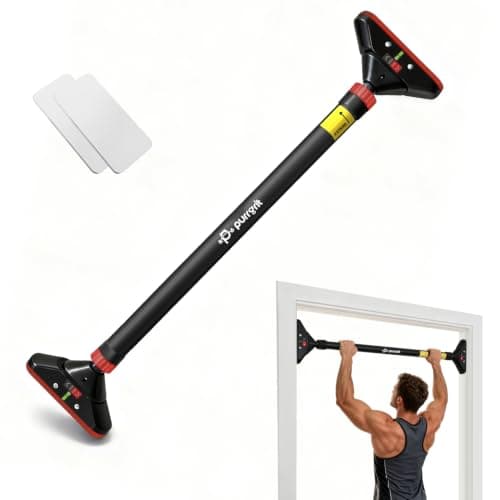
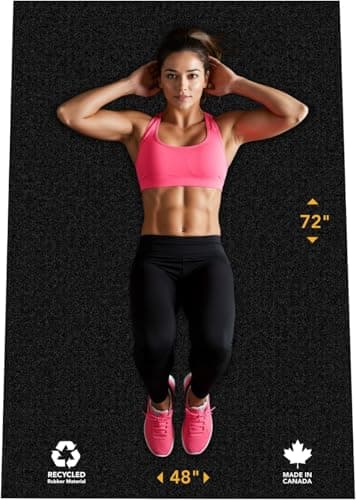
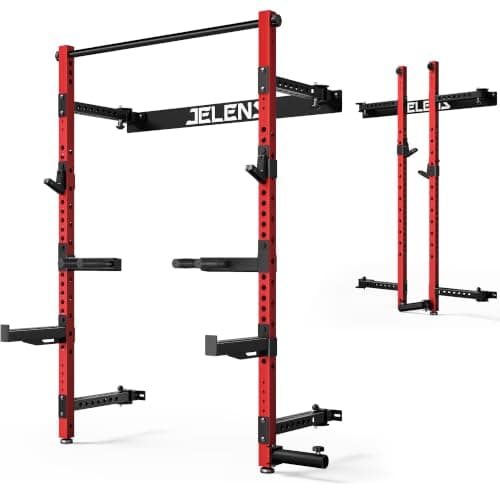
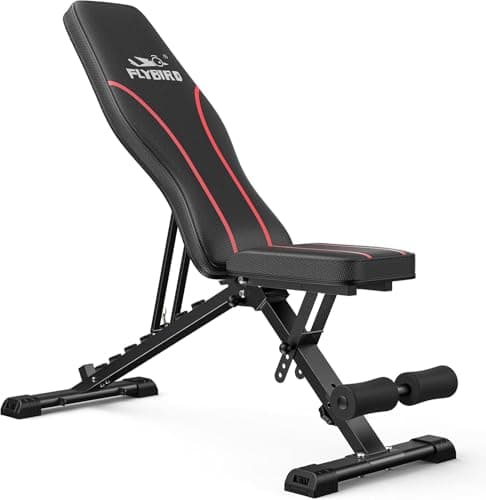
Start with the hiding place, not the equipment. Measure the clearance under your bed, the depth behind your door when it is open, and the width of the gap beside your wardrobe — then buy gear that fits those three numbers. Done in that order, a complete strength setup disappears in about ninety seconds: a bench that folds flat and slides under the bed, one pair of adjustable dumbbells instead of a rack, a doorway pull-up bar that lifts out leaving no holes, and a 13 lb mat that rolls up behind a door. Done in the other order, you own a gym and a resentful housemate.
This page exists because "hidden home gym" is a different question from "small home gym." People searching for it usually have the space — a bedroom, a living room, a guest room — and a constraint that has nothing to do with square footage: the room has another job, and a rack of iron in the corner of it is a visible, permanent announcement that someone in the household has a hobby. Our small-space roundup solves for floor area. This one solves for visibility.
The five hiding places, and the number each one needs
Measure these before you shop. They are the real specification for this kind of gym.
- Under the bed — measure the clearance, not the area. A standard divan or platform bed gives 6 to 10 in of clearance; a bed frame on legs often gives 11 to 13 in. This is where folded benches, mats, bands and sandbags live. It is the single most valuable number on this page, because it is the only hiding place in most bedrooms that is already empty. We treat it in full in under-bed weight storage ideas.
- Behind an open door — about 4 to 6 in of depth, floor to head height. An open internal door leaves a dead triangle nobody uses. A rolled mat, a folded bench on its end, a pair of parallettes or a trainer in a bag all fit there and are invisible while the door is open, which is most of the time.
- Inside a closet — measure the floor, then the shelf. One pair of adjustable dumbbells in their tray takes about the footprint of a shoebox and a half. A closet also hides the thing nothing else does: a bar or a kettlebell, which look like nothing else in a bedroom. The whole-room version of this is home gym in a closet.
- Flat against a wall — 4 to 6 in of projection. Not hidden exactly, but flat enough to read as a fixture rather than as equipment, and the only option that holds a barbell. This needs studs and a landlord who does not mind holes, so it is the one hiding place that is not available to everyone.
- In plain sight, as furniture. A wooden bench with a storage rack, a storage ottoman, a bench that reads as a window seat. The honest note is that this category is small, usually wooden, and rarely publishes the capacity figures we normally insist on — we flag that where it applies rather than recommending around it.
What we ranked on
- Does it actually vanish, or merely get smaller? The test is whether a visitor sitting in the room would know. A folding bench on its end behind a door passes. A power tower in the corner with a towel on it does not.
- Ninety seconds, one person, no tools. If putting the gym away is a project, it stops happening in week three and you own a visible gym again. Every pick here is a one-person, tool-free job.
- Reversibility. No adhesive, no holes, nothing that needs patching. The one exception on this page is the folding wall rack, and we say exactly what it costs you.
- Training value per hidden cubic foot. Hiding is not the goal; training is. A piece that disappears completely but trains one movement badly loses to a piece that needs a closet and trains six.
- Published numbers, as everywhere on this site. Rated loads, folded states, coverage, thickness. Where a maker does not publish a figure, the card says so.
The ninety-second gym, piece by piece
| Piece | Hiding place | What it trains | Put-away time |
|---|
| Folding adjustable bench | Under the bed, or on its end behind a door | Every pressing angle, rows, step-ups | About 15 seconds |
| One pair of adjustable dumbbells | Closet floor, or a cupboard | Everything a dumbbell trains, at five loads | About 20 seconds |
| No-screw doorway pull-up bar | Under the bed or on top of a wardrobe | Pull-ups, chin-ups, hanging core work | About 20 seconds |
| Rollable 4 x 6 ft mat | Rolled, behind a door or beside a wardrobe | Floor work; protects the floor and the lease | About 20 seconds |
| Folding wall rack (if you can drill) | Flat to the wall, 4-6 in of projection | Barbell squats, presses, pull-ups | About 15 seconds |
The first four of those need no permission from anyone and leave no mark. That is the core hidden gym, and it trains every movement pattern except a loaded squat. The fifth is the upgrade for owners — or renters with an unusually relaxed landlord — and it is the only way to get a barbell into this kind of room.
What cannot be hidden, and what to do about it
Honesty matters more than completeness here, so: four things people hope to hide and cannot.
A barbell and plates. A 7 ft bar does not fit under a bed, behind a door or in a wardrobe, and plates are the densest, most awkward objects in home fitness. A 6 ft bar plus a plate tree in a closet is the closest you get — short barbells and plate storage are the two pages that make it survivable. If barbell training is the point, accept a visible rack and read best folding squat racks instead.
Cardio machines, with two exceptions. Treadmills, air bikes and spin bikes all occupy permanent floor. The exceptions are a walking pad, which slides under a couch or a bed on its own wheels, and a wheel-on bike trainer, which folds into a bag — though the bicycle it needs is not hiding anywhere.
A mirror, if you want one. The compromise that works is a full-length leaning or over-door mirror, which reads as decor rather than as gym equipment — renter-friendly home gym mirrors ranks the no-drill options.
The noise, which is not a visual problem but will get you noticed anyway. A hidden gym in a shared household still needs to be a quiet one. Set weights down rather than dropping them, keep the mat under everything, and read lifting in an apartment before the first early-morning session.
Three rooms, three versions of the same kit
A bedroom. Bench and bar go under the bed, dumbbells in the closet, mat behind the door. Train in the 6 x 4 ft of floor at the foot of the bed — which is roughly what a bench press and a set of dumbbell rows actually need. Our room-specific version is home gym in a bedroom.
A living room. The hardest room, because it is the one with guests in it. Here the furniture route earns its keep: a storage bench or ottoman that holds the dumbbells and reads as seating, with the mat rolled behind a sofa. Full treatment in living room home gym.
A shared or studio apartment. Everything on this page plus the discipline to put it away every time. The one addition worth making is a band set, because it trains five patterns from a drawer and needs no floor at all — best resistance bands for small spaces. The whole studio playbook is home gym for a studio apartment.
Every pick on this page is a product already in this site's registry, documented on the deeper pages the cards link to. Prices come from the live price layer and never from this text — the four reversible pieces together sit in the mid-hundreds, and the wall rack is a separate decision in the $200-plus bracket.
Build it in this order
1. Measure three gaps, today
Under-bed clearance, door-swing depth, closet floor width. Write them down. Almost every disappointed "space-saving" purchase on this site traces back to someone buying a folded dimension without knowing the gap it had to fit. The general method is in how much space do you need for a home gym, and the gear ranked purely by folded size is in foldable home gym equipment.
2. Buy the bench first, not the weights
This is the opposite of our usual advice, and the reason is the hiding place: a bench is the bulkiest thing in a hidden gym, so it decides whether the whole plan works. A flat-folding adjustable bench with a published load rating that stands on its end or slides under a bed makes everything after it easy. Ranked alternatives are in best folding weight benches, and the fold-flat ones specifically in best adjustable benches for small spaces.
3. One pair of adjustable dumbbells, never a rack of fixed ones
Five fixed pairs is five times the hiding problem. One adjustable pair in a tray is a closet purchase. The mechanism matters for durability and for how fast you can change load mid-set — dial vs pin explains the trade, and best adjustable dumbbells ranks the field. One caution that belongs on this page specifically: adjustable mechanisms are not drop-rated, and a hidden gym tends to mean training on a thin mat over a hard floor. Set them down — can you drop adjustable dumbbells.
4. A removable pull-up bar, and check the frame before you order
A leverage-mount doorway bar is the only pull-up solution that leaves nothing behind, and the published fit window is the spec that matters: measure the inside width of your door frame and check it is flat and solid. The makers rule out hollow, glass, carved and thin decorative frames, and that exclusion is the failure mode rather than marketing. Every published rating and window is collected in best doorway pull-up bars.
5. One rollable mat, not interlocking tiles
Tiles are cheaper per square foot and better for a permanent corner, but twenty-four loose puzzle pieces are a worse hiding problem than a single 13 lb roll. For a gym that goes away every session, a one-piece 4 x 6 ft mat is the right trade. Note that the maker of ours does not recommend it over carpet — on carpet, read home gym on carpet first. The full mat ranking, tiles included, is best home gym mats.
6. Only then consider the wall
A folding wall rack is the one piece here that changes what you can train — it is the difference between dumbbells and a barbell. It is also holes in a wall, into studs, with a landlord conversation attached. Before you commit, read are wall-mounted squat racks safe and wall-mounted vs freestanding. If drilling is out, the no-holes alternative is a pair of freestanding squat stands, which store apart in a closet corner but do not hide while you are using them.
The honest limits of a hidden gym
- Setup friction is real. Ninety seconds out and ninety seconds back is three minutes a session. That is the tax you pay for a room that does not look like a gym, and it is the single biggest reason hidden gyms get abandoned. Keep the pieces in the same places every time so it never becomes a decision.
- You will train lighter than you would in a garage. Nothing here holds a barbell unless you drill, and adjustable dumbbells top out well below what a loaded bar does. For most people that ceiling is years away; for a strong lifter it is immediate, and the honest answer is a garage corner rather than a bedroom.
- Hiding gear does not make it quiet. The floor below hears the mat and the set-downs, not the storage.
- Some of the prettiest options publish the worst numbers. Wooden furniture-style benches that read as decor frequently omit a maximum user weight or headline a total capacity far above it. Where we rank one, the contradiction goes on the card — and if a listing publishes nothing, we would rather you had the plain steel bench that does.